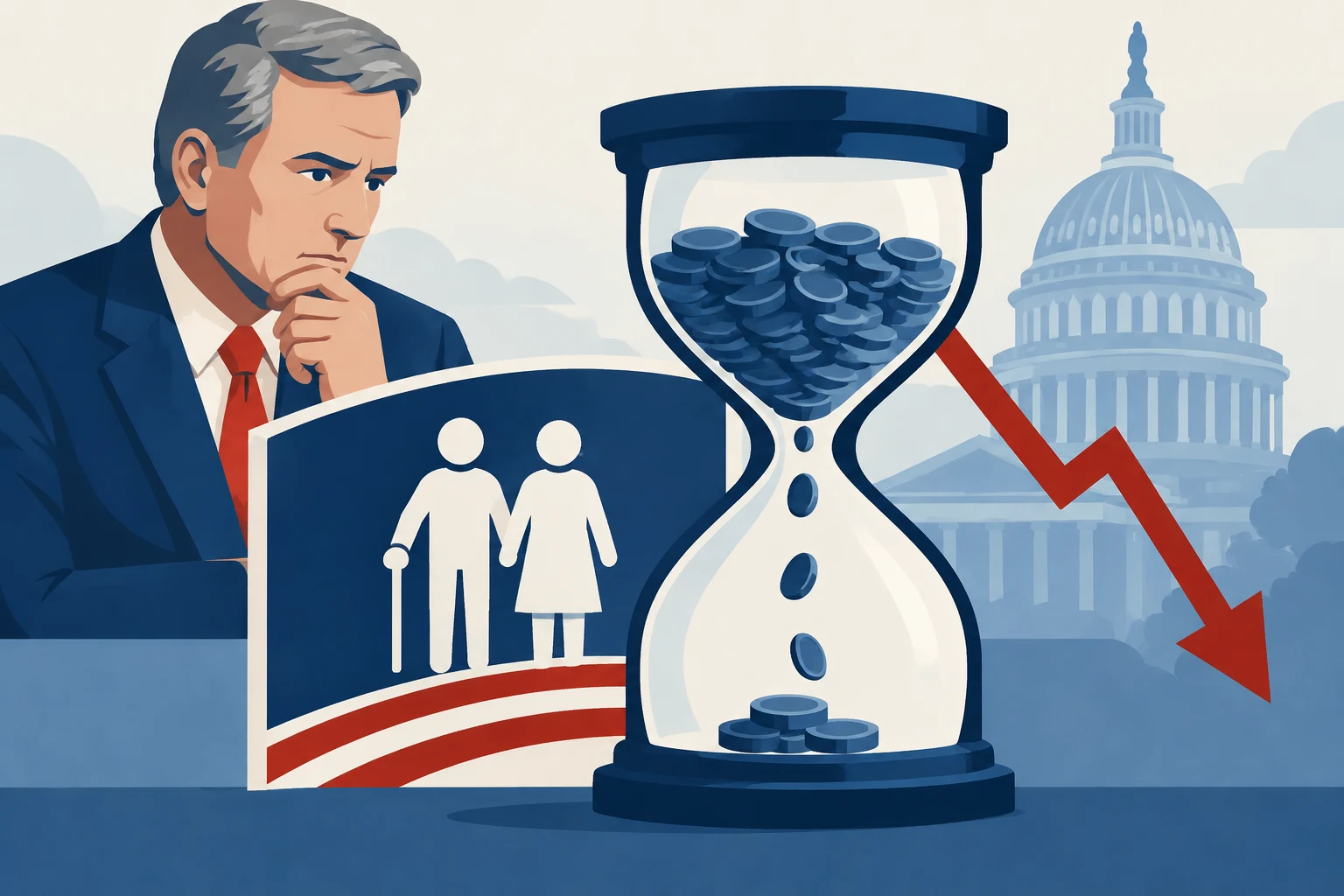
Sen. Bill Cassidy, a Louisiana Republican, warned that Congress has limited time to address Social Security’s financing gap, arguing that larger cost-of-living adjustments could increase pressure on the program’s trust fund. His remarks were reported by Fox Business on Oct. 17, 2026, as beneficiaries anticipate a 3.6% adjustment for 2027.
The report said the increase would add roughly $75 a month per beneficiary. Cost-of-living adjustments are intended to help recipients manage rising expenses, but higher payments also contribute to the program’s costs. Cassidy said the projected increase reflected recent inflation and could speed the trust fund’s depletion.
Cassidy estimated that the fund could be exhausted in about five and a half years. He warned that, under the scenario he described, current law would then require a 28.5% reduction in benefits. He also raised the possibility that Congress might instead borrow to continue paying benefits. These were Cassidy’s projections and characterization of the possible outcomes, as presented in the report.
The report did not provide an independent analysis of the trust fund estimate or explain the assumptions behind the 2027 adjustment figure. It also did not include a response from the Social Security Administration or other lawmakers on Cassidy’s proposal.
Cassidy has proposed putting $1.5 trillion into a separate investment account to help narrow the projected shortfall. The report said he wants Congress to act before the funding situation worsens, but did not detail how the account would be financed or administered.
The debate involves both the program’s long-term finances and beneficiaries’ ability to cover expenses. Bill Sweeney, AARP’s senior vice president, said 76% of older adults surveyed by the organization believe the annual adjustment is insufficient to keep up with inflation. He said many rely on Social Security and its yearly increase to help pay their bills. The report did not provide further information about the survey’s methodology.
The account presents the competing concerns as a challenge for lawmakers: addressing Social Security’s projected financing gap while preserving the purchasing power of benefits. It does not report that Congress has adopted Cassidy’s proposal or reached an agreement on broader changes to the program.