

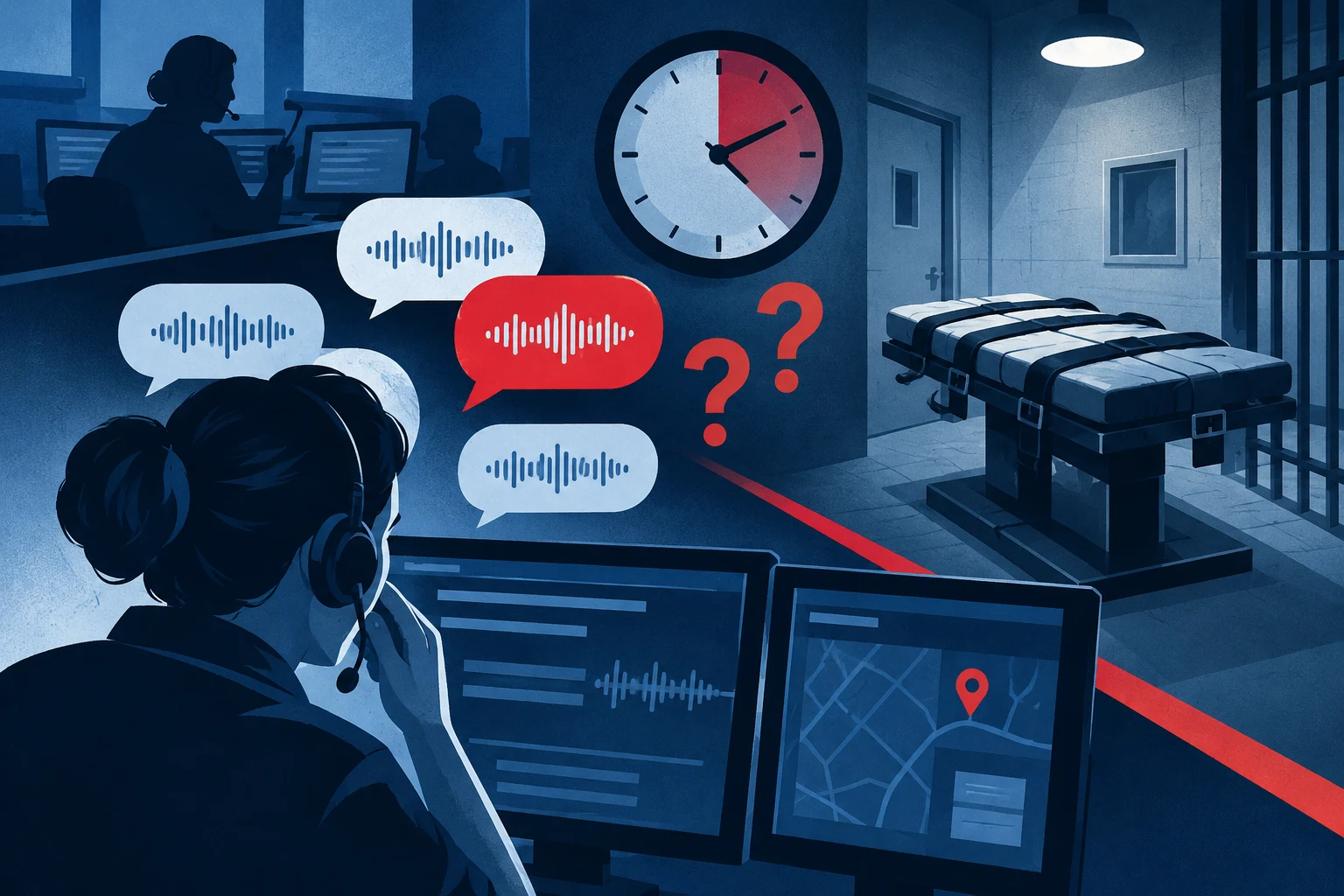
Emergency dispatch recordings reviewed by The Associated Press show uncertainty among dispatchers and prison staff after Tennessee’s Sept. 30, 2026, execution attempt on death row inmate Christa Pike failed.
An initial caller reported that Pike had not died and needed medical help, but could not provide a code dispatchers sought to confirm the report. In recorded exchanges, dispatchers discussed whether the call was genuine and whether to send an ambulance or police. At about 9:03 p.m., a dispatcher said supervisors had classified the report as false and that no medical assistance was needed at Riverbend Prison.
A dispatcher then called the prison to verify the report. The employee who answered said they had not been told anyone from the facility had called. Pike’s attorney, Kelly Gleason, separately called 911 at about 9:08 p.m. and said Pike was alive and needed urgent care, according to the recordings.
Around that time, a first responder reported that someone at the prison gate was insisting the emergency was real. Prison control cleared responders to enter at about 9:11 p.m. Pike was taken by ambulance to a hospital by 9:34 p.m., the AP reported.
Tennessee officials administered two doses of pentobarbital during the execution attempt. According to the source account, the state’s protocol did not permit a third dose. Pike was hospitalized and placed on a ventilator; her attorneys said she regained consciousness on Oct. 6 and was returned to a women’s prison on Oct. 10 for continuing medical care.
Pike was convicted in 1996 of first-degree murder and conspiracy to commit first-degree murder in the 1995 killing of 19-year-old Colleen Slemmer. Gov. Bill Lee paused state executions after the failed attempt pending further review.