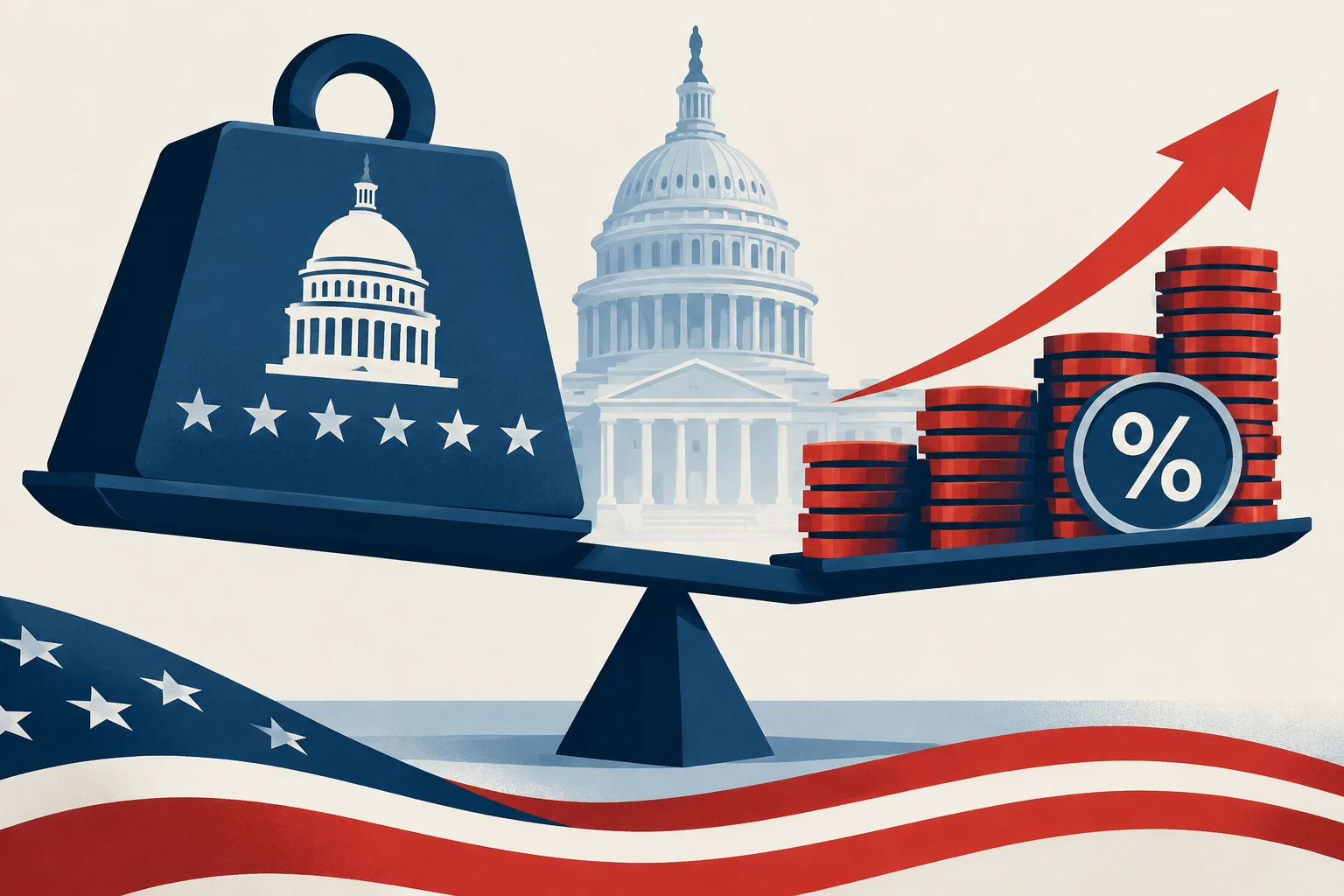
The U.S. federal budget deficit reached a preliminary $1.993 trillion in fiscal year 2026, which ended Sept. 30, according to figures released by the Congressional Budget Office. The total was $218 billion, or 12%, higher than the $1.775 trillion recorded in fiscal 2025.
Federal receipts rose 3% to more than $5.4 trillion, while spending increased 6% to nearly $7.4 trillion, the CBO data showed. The figures are preliminary.
Net interest payments on the national debt had the largest reported spending increase, rising $115 billion, or 11%, from the previous fiscal year. The CBO attributed the increase to a larger debt balance and higher long-term interest rates.
Spending also increased for major benefit programs. Social Security outlays rose $86 billion, Medicare spending increased $77 billion, and Medicaid spending was up $55 billion. The CBO linked the changes to factors including benefit levels, enrollment and payment rates.
Individual income and payroll tax receipts rose $255 billion, or 6%. Corporate income tax collections fell $70 billion, or 16%, which the source attributed in part to investment deductions under the One Big Beautiful Bill Act. Customs duty receipts, including tariffs, declined $22 billion, or 11%. The CBO said collections fell beginning in May as the administration issued refunds after the Supreme Court struck down the IEEPA tariffs.
Maya MacGuineas, president of the Committee for a Responsible Federal Budget, described the deficit as among the highest in U.S. history outside a war or recession and urged policymakers to pursue deficit reduction. That assessment and recommendation are hers; the CBO data provide the reported budget figures.