
FORT POLK, La. — The Joint Readiness Training Center at Fort Polk staged an October competition to test how Army units use small unmanned aircraft systems, or drones, and respond to opposing drone activity in a simulated combat environment.
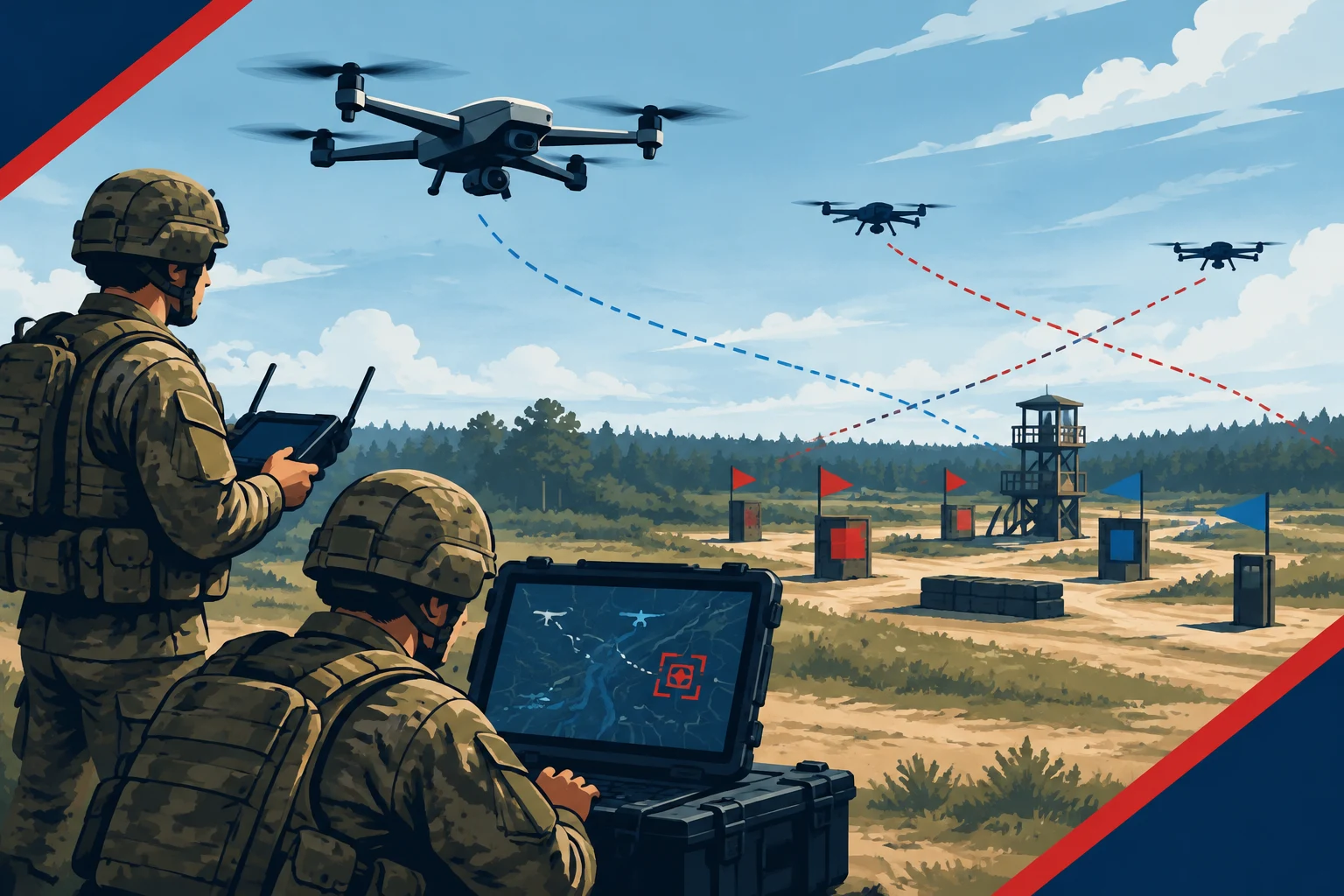
Operation Viper Watchtower included opposing teams with different tasks. Hunter teams sought to locate and neutralize enemy unmanned aircraft, while drone teams worked to control airspace and detect, track and engage threats using simulated indirect fire. The event’s stated purpose was to build tactical skills and readiness through a competitive exercise involving reconnaissance and drone operations.
The competition followed an industry expo held Oct. 6. Industry partners demonstrated technologies and capabilities, and attendees—including local schoolchildren, soldiers, government civilians and media—were invited to view demonstrations and learn about the systems. A live-fire drone demonstration took place around midday Oct. 7, before the competition began that night.
The force-on-force exercise took place in the Peason training area. One team came from the 1st Battalion, 509th Infantry Regiment, which serves as the training center’s opposing force. The other represented the 3rd Mobile Brigade Combat Team, 10th Mountain Division. The exercise challenged teams to infiltrate an area while finding opposing forces and avoiding detection.
Warrant Officer Travis Slentz of the 3rd Mobile Brigade Combat Team said training with unmanned aircraft is important as warfare changes. He said keeping soldiers familiar with the technology would help prepare them for future training at the center.
Sgt. Benjamin Lozano, also of the 3rd Mobile Brigade Combat Team, said the battlefield use of drones has demonstrated their impact on warfare. He described Fort Polk’s training as a way to help rotational units practice identifying and fighting threats, and said soldiers are increasingly cross-training to operate drones.
Sgt. Darius Shumpert of the 1st Battalion, 509th Infantry Regiment, said the competition presented less predictable conditions than some routine training. Teams had to search a large area without knowing the opposing force’s location, he said. Shumpert added that the exercise tested concealment and the ability to locate an opponent without being detected, while encouraging teams to use drones in a combat-like scenario.
After scores were tallied at dawn Oct. 8, the 3rd Mobile Brigade Combat Team, 10th Mountain Division, finished first. Mark Leslie, director of Fort Polk’s Directorate of Plans, Training, Mobilization and Security, called the competition demanding and said drone use needs to be incorporated into military operations alongside other capabilities.
Leslie said the event was intended to provide realistic training and encourage wider integration of the lessons across Army formations. He also said that, despite naming a winning team, soldiers from both sides left better trained and more prepared to take what they learned back to their units.