


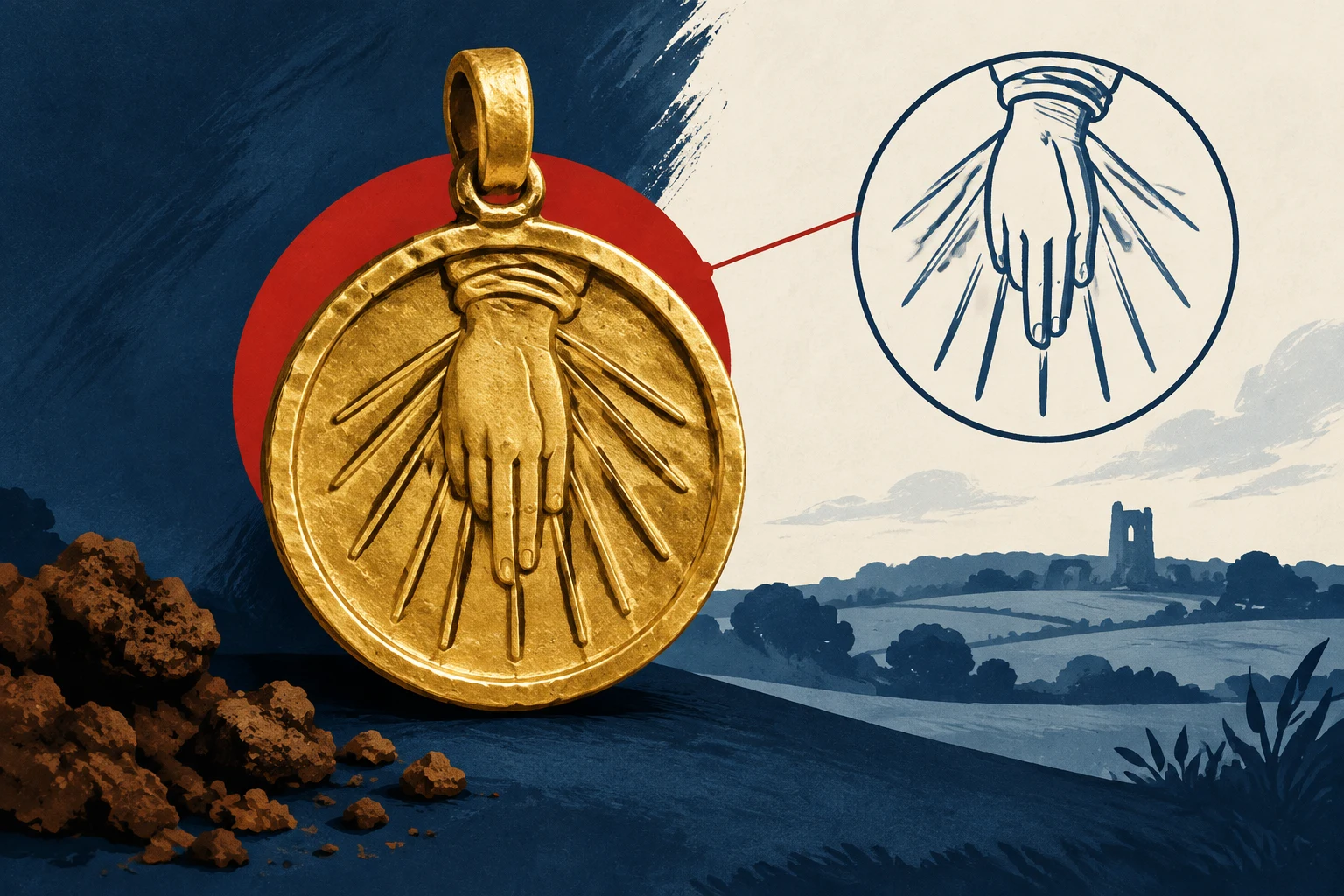
Nick Berry, a 58-year-old metal detectorist from Northampton, England, found a gold pendant while searching farmland near Ashmansworth in Hampshire, according to Bournemouth News and Picture Service (BNPS). The site is close to Highclere Castle, the 19th-century estate known as a filming location for “Downton Abbey.”
Berry told BNPS he was searching with two other people when his detector gave a strong signal. After digging, he saw gold in the hole. He said he felt emotional as he lifted the object and recognized that it appeared to be Anglo-Saxon. Berry said he has been metal detecting for more than 30 years but had not encountered anything similar.
The pendant is thought to date from the ninth or tenth century. Its hand-shaped design has small indentations, and Berry said it appeared to be in very good condition after he removed the mud. He suggested it may have been worn around the neck as a talisman by someone of high status. That interpretation of its owner and use is not established in the supplied account.
Julian Evan-Hart, editor of Treasure Hunting magazine, told BNPS the object likely represents the “Hand of God.” He said the symbol appears on some late Saxon and Viking-era silver coins and in later church art. The pendant’s precise meaning and original purpose remain matters of expert interpretation.
No other artifacts were found nearby, BNPS reported. That absence may indicate the pendant was lost, though the account does not establish how or when it came to be buried. Berry reported the find to a local finds liaison officer, and it was later sent to the British Museum for examination. BNPS said the pendant has been declared treasure.
Under the treasure process described by BNPS, Berry and the landowner could receive payment based on the pendant’s market value if a museum or another public institution acquires it. The report said its value could reach five or six figures in pounds, but no formal valuation was provided. Berry said the item weighs 1.6 grams and described its gold as high carat, while acknowledging that he did not know its worth.
Berry called the discovery the find of a lifetime and said he did not expect to find another like it. The report also mentioned other recent discoveries by detectorists in Britain: three Bronze Age gold bracelets found near Carlisle and a metal detectorist’s role in the uncovering of a Roman settlement in the Cotswolds. Those finds are separate from the Hampshire pendant.