Prince Harry’s MasterClass course on grief debuted Oct. 8, renewing discussion about his public accounts of the death of his mother, Princess Diana. The course, titled “Redefining Grief: Building Resilience Through Loss,” features a conversation with neuroscientist and grief specialist Dr. Mary-Frances O’Connor.
The Daily Mail reported that Harry received $100,000 plus a share of subscription revenue. The outlet said a spokesperson confirmed MasterClass paid him but declined to provide additional details. Forbes has previously reported that most MasterClass instructors receive at least $100,000 and a revenue share of at least 30%. Fox News Digital said it sought comment from Archewell and MasterClass.
The course was reportedly filmed in California in summer 2026, after MasterClass approached Harry about a grief class in 2025, according to People magazine. It was released ahead of World Mental Health Day on Oct. 10. People reported that the project supports Scotty’s Little Soldiers, a U.K. charity for young people whose parents died during or after service in the armed forces, and Comfort Zone Camp, a U.S. nonprofit that runs bereavement camps for children.
Harry described learning of Diana’s death when he was 12 and said he did not cry until her burial, then went nearly two decades without crying. He said he had mistaken emotional restraint for strength and had not known how to process his loss. In his 2023 memoir, “Spare,” he wrote that his father, King Charles III, did not hug him when telling him Diana had died, though he recalled the king putting a hand on his knee and offering reassurance.
Harry also said he had felt guilty about being happy, as if joy would show disloyalty to his mother. He said he eventually came to believe that she would have wanted him to be happy. He credited therapy with helping him acknowledge his grief, saying a few sessions taught him more about himself than he had learned in years.
The course includes Harry’s account of experiencing what he called an “adrenaline crash” after moving to Canada with Meghan and their son, Prince Archie, in late 2019. He said he felt unable to function around the house and experienced depression for about two weeks. Harry also described panic during royal engagements, including anxiety associated with putting on formal clothing and traveling to work.
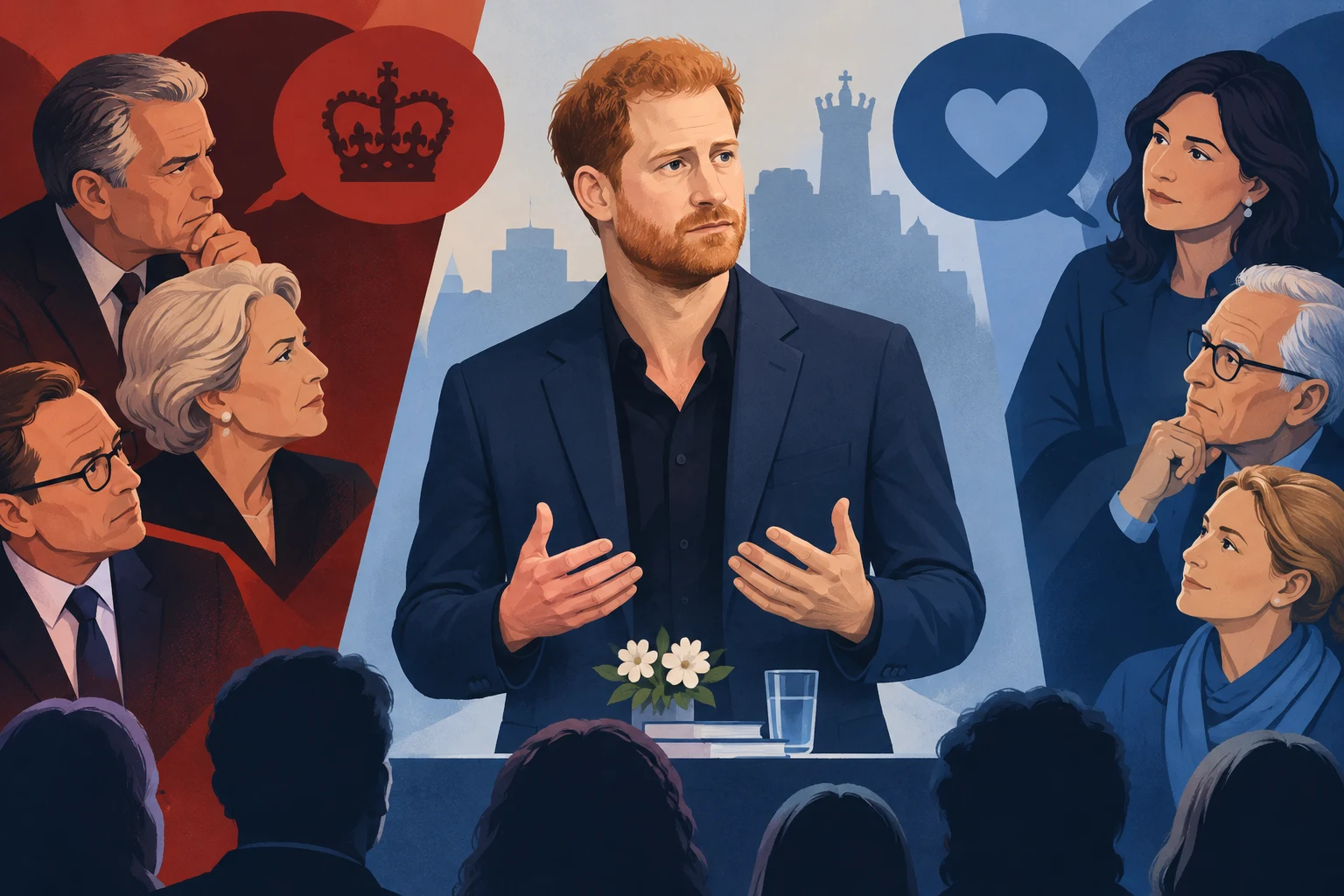
The couple stepped back from senior working royal duties in 2020, citing intrusive British media coverage and insufficient palace support, according to the supplied account. Helena Chard, a British broadcaster and photographer, questioned the timing and framing of Harry’s disclosures, saying his repeated public discussion of Diana’s death could be seen as a way to make money. She also described the newly shared account of depression after the move to Canada as changing the narrative and said she found it suspect. Those are Chard’s assessments, not independently established conclusions.
Royal expert Hilary Fordwich likewise criticized Harry’s repeated public treatment of his grief and said he had not dealt with it well. Other commentators offered a different interpretation. Broadcaster Ian Pelham Turner said he viewed the course as a brave effort to encourage discussion of mental health, rather than a bid for attention or sympathy. Richard Fitzwilliams said Harry was likely to keep emphasizing how Diana’s death affected him, particularly if he proceeds with a documentary project.
People reported that Harry is considering ideas to mark the 30th anniversary of Diana’s death in 2027 and has contacted some of her relatives and friends. The magazine said no documentary had been finalized or confirmed. The Times reported that Prince William does not intend to make a film about Diana for the anniversary and has turned down documentary offers, partly to avoid further conflict with Harry. The brothers have taken differing approaches to commemorating their mother, with Harry discussing his experiences publicly and William generally keeping his grief out of the spotlight.