

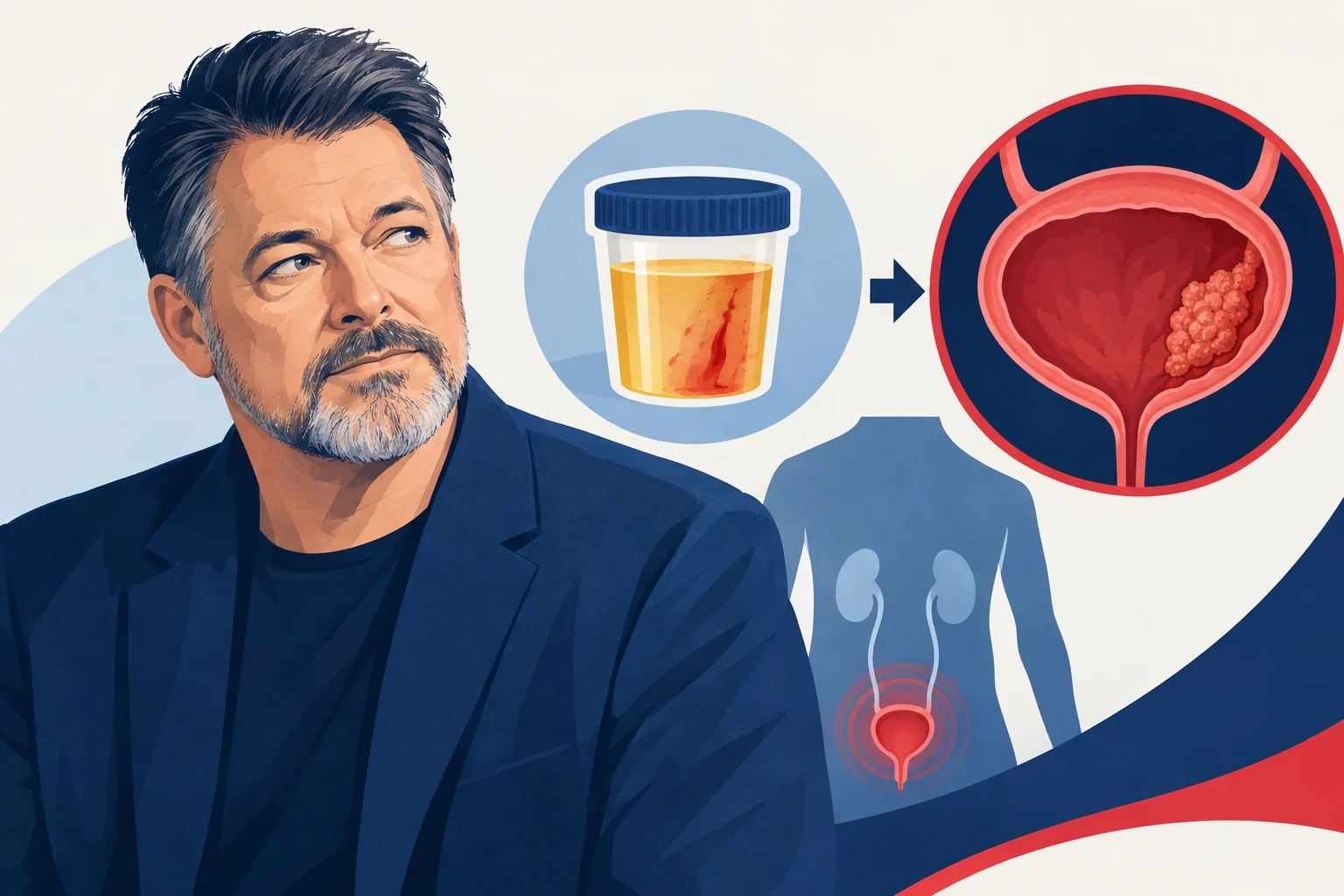
Actor Jonathan Frakes said a pink discoloration in his urine led him to seek medical care and ultimately discover bladder cancer. He recounted the experience on his podcast, “Dropping Names with Brent and Jonny,” in an episode with co-host Brent Spiner and urologic surgeon Dr. Ram Narayanan.
Frakes said he initially wondered whether food might explain the color, but recalled that he had not eaten beets in years. He then contacted his doctor. Narayanan described the symptom as painless gross hematuria, meaning blood visible in the urine without pain, and said on the podcast that it should prompt concern.
The source material notes that visible blood in urine can have causes other than cancer, including urinary tract infections and kidney stones. It also cites the Cleveland Clinic and the National Institutes of Health as advising prompt urological evaluation for painless visible blood. These are general medical statements; a clinician should assess symptoms in an individual case.
After completing a fan convention, Frakes underwent an in-office cystoscopy, a procedure that uses a camera to inspect the bladder. Narayanan saw small growths. Three days later, Frakes underwent a blue-light cystoscopy, which uses an imaging agent to help reveal tumors, and a procedure to remove abnormal tissue. A biopsy found high-grade, non-muscle-invasive bladder cancer.
Narayanan explained the significance of the finding by comparing the bladder wall to a layered cake: the tumor had been removed before it reached the muscle layer. Frakes recalled that the surgeon told him he believed the tumor had been fully removed. The account does not provide a later assessment of whether the cancer returned.
Frakes said he then received six weekly treatments in which medication was placed directly into the bladder. Narayanan used gemcitabine and docetaxel, according to the account, because of a nationwide shortage of immunotherapy. The source describes the drug combination as an alternative during shortages but does not identify the specific evidence or experts supporting that characterization.
The evaluation also uncovered an enlarged prostate. Narayanan told Frakes it was putting additional strain on the bladder muscle, a condition known as trabeculation. After an MRI ruled out prostate cancer, Narayanan performed surgery to remove about 135 grams of obstructing prostate tissue through a small incision. Frakes said afterward that he no longer needed his daily prostate medications and that his urinary symptoms had disappeared.
Frakes said he had kept the cancer diagnosis private from everyone except immediate family before sharing it during Men’s Health Awareness Month. He said he hoped his experience would encourage men to seek care rather than avoid a urologist. Narayanan likewise urged listeners not to delay getting unusual symptoms checked.