


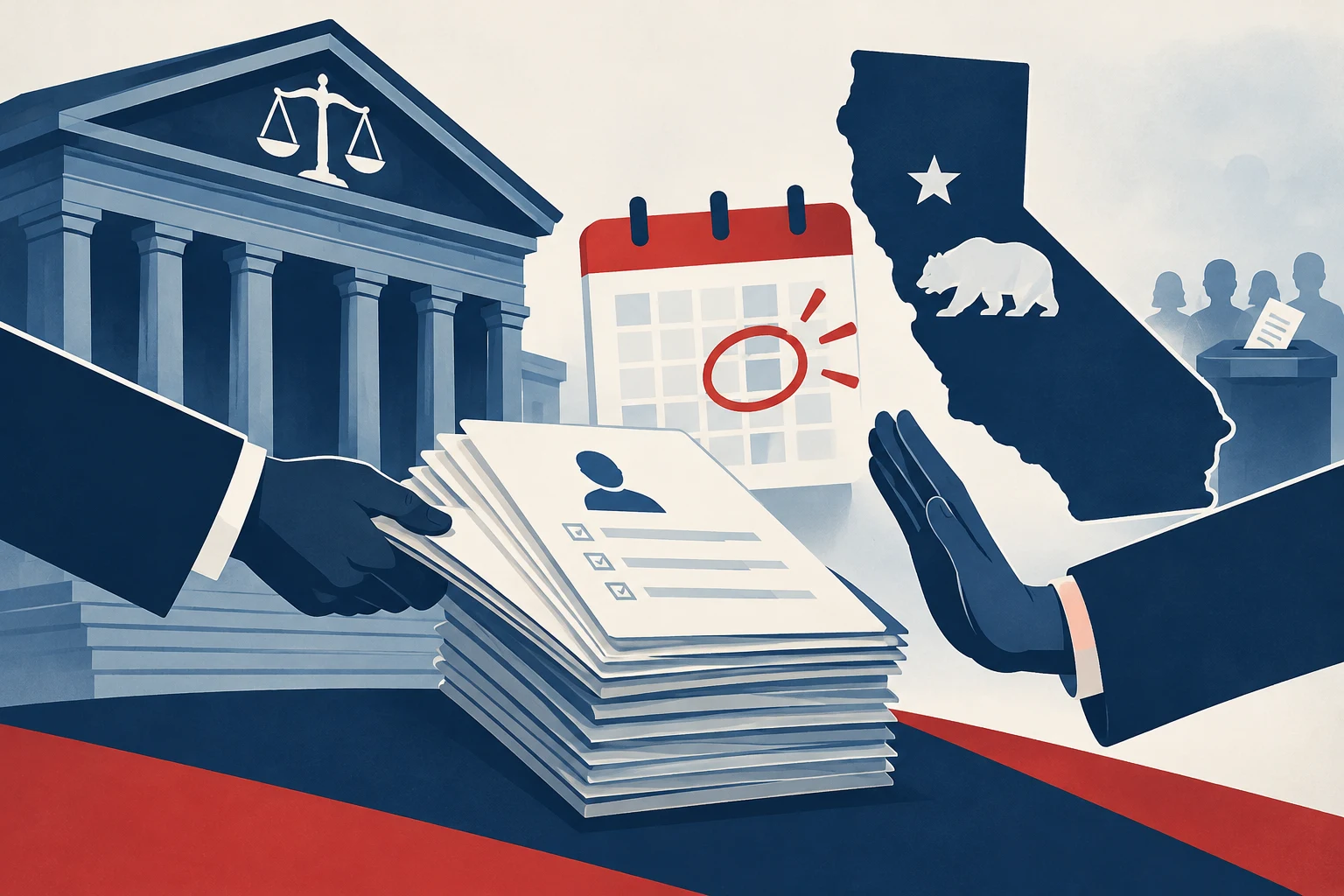
The Justice Department has threatened to seek emergency legal relief against California election officials unless they act on records the department says identify potentially ineligible voters ahead of the Nov. 3 midterm election. The dispute was described in a report published Oct. 14, 2026, and concerns a deadline set for noon Eastern on Oct. 15.
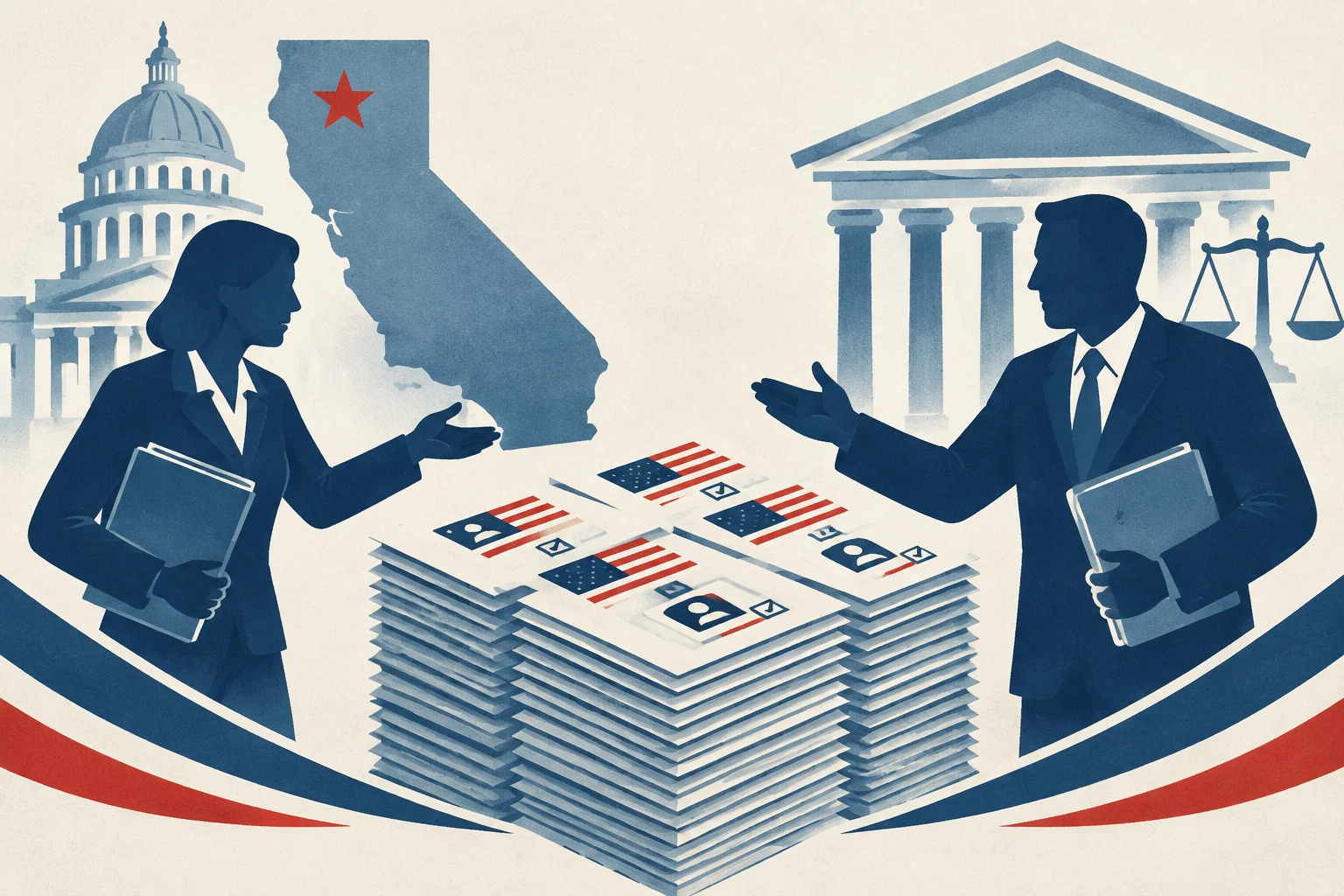
In letters sent Tuesday, Acting Deputy Attorney General R. Trent McCotter asked California Secretary of State Shirley Weber and Los Angeles County Registrar Dean Logan to review a list of people whose eligibility is in question within 48 hours. The department also asked officials to keep ballots separate when a person’s citizenship cannot be verified, and warned that it could seek emergency court action if the requests were not met.
A Justice Department spokesperson told Fox News Digital that the department had identified thousands of potential foreign nationals on California voter rolls statewide. The report did not provide the list, supporting records, or further detail about how the individuals were identified. The department’s claim that they may be ineligible does not establish that any of them cast ballots unlawfully.
The spokesperson said federal law bars noncitizens from voting in federal elections and characterized the department’s request as an effort to ensure that prohibition is enforced. The report also noted that Californians were already voting before Election Day.
California Attorney General Rob Bonta, a Democrat, criticized the federal action at a Wednesday news conference. He accused the Trump administration of seeking to intimidate voters and advancing false claims of broad voter fraud. Bonta said there was no widespread voter-fraud problem and called such claims a conspiracy theory. He said his office was coordinating with Weber’s office and Los Angeles County officials to consider their options.
Logan said the county received a password-protected USB drive that purportedly contained voter records. His office had not opened it, he said, because doing so could conflict with its data privacy and information-security protocols. Logan also said the device was not considered a secure way to receive the information. He added that the accompanying letter did not state how many people were involved or explain what the records contained.
The dispute centers on both the department’s request to examine the records and the way the information was delivered. The available account does not establish whether California officials will meet the deadline, whether the department will file a court action, or whether any person on the list has voted in a federal election. The allegations and the state’s response remain disputed.