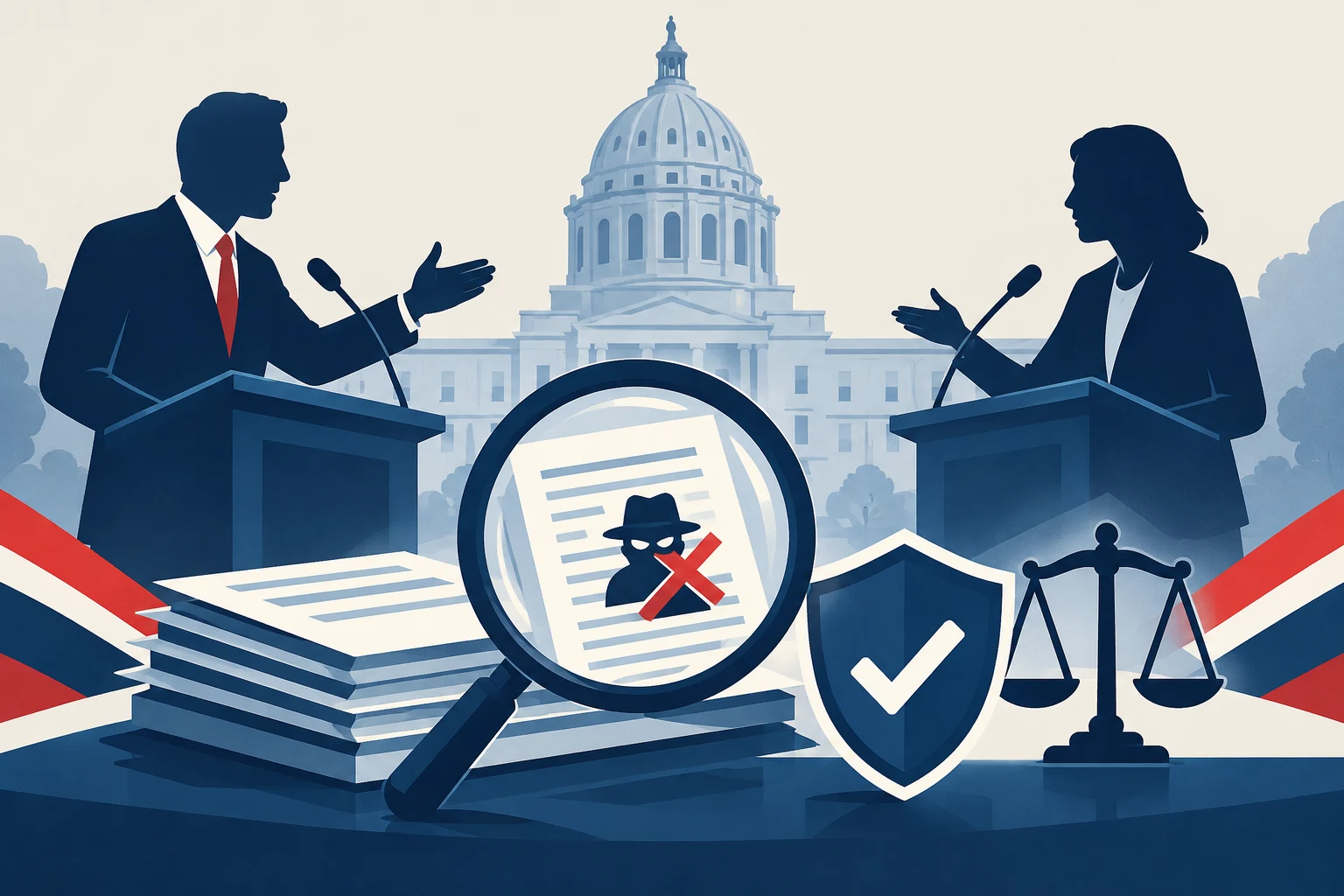
Republican Michele Tafoya and Democratic Lt. Gov. Peggy Flanagan clashed over Minnesota’s fraud cases during a Senate debate Friday, with Tafoya questioning Flanagan’s record in state leadership and Flanagan saying oversight responsibility rested with Gov. Tim Walz.
Tafoya, a former broadcaster and the Republican nominee, said Flanagan had served as lieutenant governor for eight years and argued that her tenure coincided with fraud, declining test scores, rising crime and a shift from a state budget surplus to a deficit. Those were Tafoya’s criticisms of the state’s record during the debate.
The source report says local and federal investigators have uncovered fraud schemes involving daycare centers, food programs, health clinics and other operations. Investigators allege that the schemes involved claims for services that were inflated or never provided. The report describes potential losses of up to $9 billion; that figure is presented as the scale of alleged fraud, not as a final determination of losses.
When the moderator asked whether she accepted any responsibility for the fraud, Flanagan pointed to Walz’s public acknowledgment that oversight was his responsibility. She said he was in charge of oversight, while she had led on paid family and medical leave, a child tax credit, and school breakfast and lunch programs.
Tafoya rejected Flanagan’s effort to separate herself from the oversight issue. She argued that a lieutenant governor serving as the state’s second-in-command should be accountable and criticized Flanagan for directing attention to President Donald Trump. Tafoya said the two Senate candidates, rather than Trump, were on the ballot.
Flanagan responded by criticizing Trump and referring to his endorsement of Tafoya. She said Trump also endorses against members of his own party who challenge him, and argued Tafoya had met his political test.
Tafoya also outlined proposals she said would address fraud. She called for noncitizens who defraud Americans to leave the country without a path to return, mandatory minimum prison terms for Americans who commit fraud, and federal scrutiny of funding to states that cannot manage their finances. These were campaign proposals; the report does not indicate that they have been adopted as policy.
Flanagan has served as lieutenant governor since taking office in 2019. The report says she had announced her Senate campaign before Walz said he would not seek another term as governor amid political scrutiny over the fraud issue. Tafoya and Flanagan won their respective party nominations earlier in the year and were scheduled to face each other in Minnesota’s Nov. 3 general election.
The debate highlighted competing claims about the lieutenant governor’s role in oversight and the responsibility of state leadership for preventing fraud. The source material does not provide a detailed account of investigative findings, a final loss total, or evidence resolving the candidates’ competing arguments about Flanagan’s personal responsibility.