



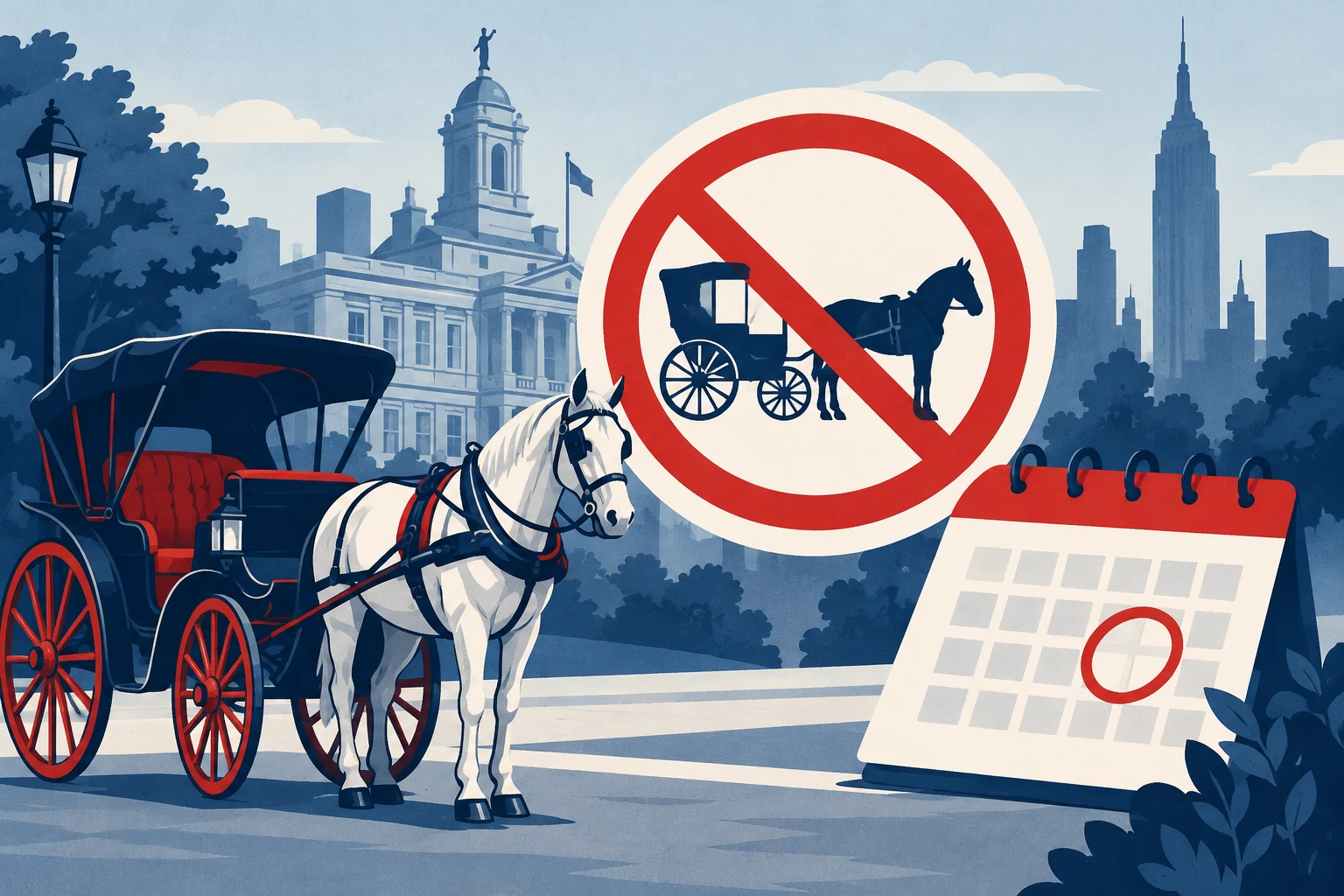
The New York City Council voted 40-7 on Thursday, with two members abstaining, to approve legislation that would end the city’s horse-drawn carriage industry by June 1, 2028. The measure, called Romanch’s Law, is named for 18-year-old Romanch Mahajan, who died in June after being thrown from a runaway carriage in Central Park.
The law sets a phaseout deadline and requires Mayor Zohran Mamdani’s administration to create a transition program for more than 150 active carriage drivers and other industry workers. The proposed assistance includes job training, career counseling and employment referrals. The source material says financial compensation is not assured.
The Transport Workers Union, which represents carriage-industry employees, said it may challenge the measure in federal court and seek a temporary restraining order. Union representatives criticized City Council Speaker Julie Menin, saying drivers whose jobs are affected were not adequately consulted. Opponents also argued that the city had not established a specific financial plan for drivers and carriage owners. A proposal to postpone the phaseout until January 2030 failed before the council’s final vote.
Menin defended the legislation at a news conference, saying council members had worked on it over the summer and strengthened protections for workers. She said the city was confident in the measure and would defend it in court. Menin also said she had discussed the matter with Steve Banks and her team.
President Donald Trump criticized the council’s decision in a post on Truth Social, calling carriage rides a longstanding New York experience and arguing that political considerations would bring the tradition to an end.
Animal-rights organization PETA welcomed the vote and pledged $50,000 to help horses retire as the industry winds down. The Central Park Conservancy also supported the decision, citing safety concerns for park visitors, drivers and horses. It said Mahajan’s death was the ninth carriage-related incident in a little more than a year and noted that Central Park receives roughly 40 million visits annually.
The legislation includes provisions intended to prevent retired carriage horses from being sold for slaughter, while allowing owners to keep their animals. The bill now goes to Mamdani, who has previously supported ending the industry. The supplied material does not say whether he has signed it. If enacted, the measure would conclude a long-running dispute over a prominent New York tourist attraction, while leaving workers’ transition arrangements and the threatened legal challenge as unresolved issues.