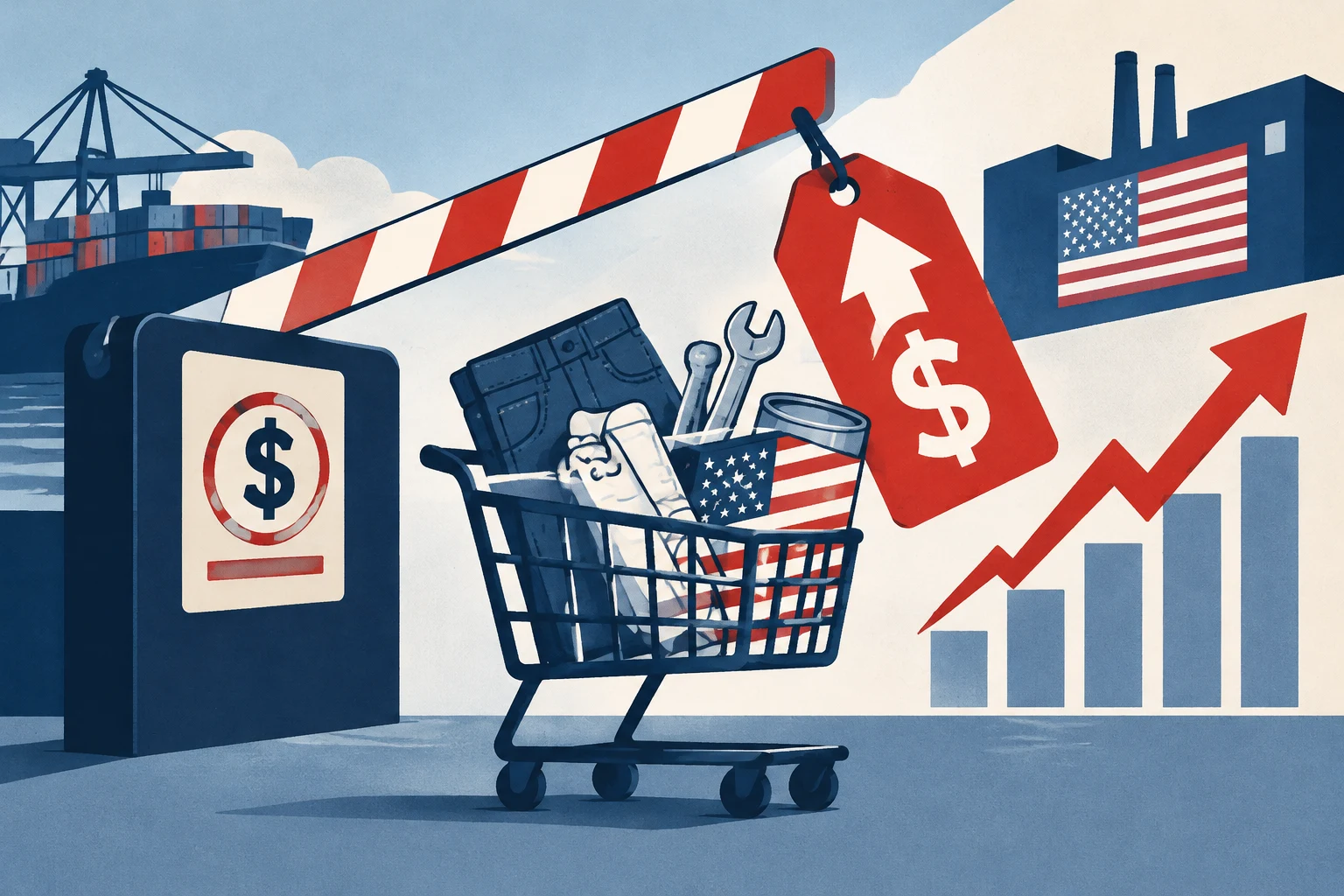
Research from the Federal Reserve Bank of New York found that tariffs were associated with higher prices for a range of consumer goods, including products made in the United States. The study estimated tariffs added about 2.9 percentage points to prices across the goods it examined.
According to the research, roughly two-thirds of the tariff-related increase came from imported goods and about one-third from domestic products. The researchers estimated that prices in the categories studied would have fallen by early 2026 without the tariffs, but instead were higher than they otherwise would have been.
The study also said tariff effects can take as long as a year to reach consumers, in part because U.S. manufacturers may face increased costs for imported materials and components. Researchers estimated that the inflationary effect of existing tariffs had largely peaked, while prices remained above the level they might otherwise have reached.
The White House disputed the implication that consumers ultimately bear the costs. Spokeswoman Taylor Rogers said the administration’s trade policy aims to reduce the trade deficit, support U.S. manufacturing and benefit workers, farmers and producers. She said foreign exporters dependent on access to the American market would ultimately pay the tariffs.
Scott Lincicome, an economist at the Cato Institute, told Fox News Digital that tariffs had raised prices and that the extent of further increases remained uncertain. He said sustained tariffs made price declines less likely.
The research was released ahead of the November midterm elections, as affordability remains a political issue. The source also cited energy costs as a separate pressure on households and businesses.