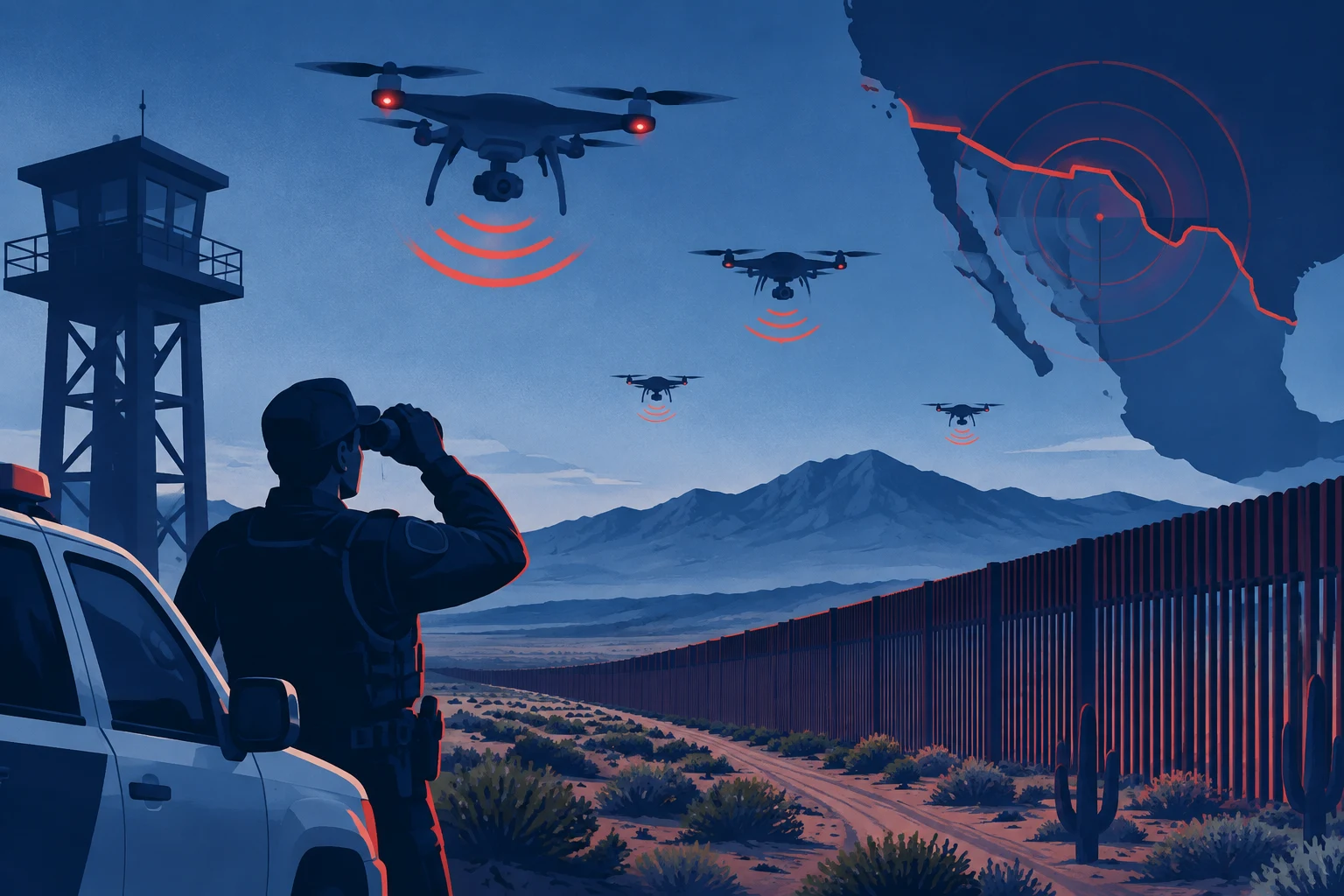
U.S. and Mexican authorities are confronting increased drone activity near the southern border, including flights that officials and a terrorism researcher say can assist surveillance and smuggling. The available figures count detected incursions or near-border flights; they do not establish how many were operated by cartels.
Brig. Gen. Brian Filler of Joint Task Force-Southern Border told reporters that the U.S. military detected 378 drone incursions along the border during the preceding 30 days. He said the trend was rising and that the aircraft were generally commercial drones equipped with cameras, used for surveillance linked to smuggling and human trafficking.
Austin Doctor, who directs strategic initiatives at the National Counterterrorism Innovation, Technology and Education Center and teaches at the University of Nebraska at Omaha, described surveillance and reconnaissance as the most common cartel drone uses at the border. He said the aircraft can help groups observe U.S. security personnel and identify patterns in patrol activity, as well as support smuggling operations.
A Customs and Border Protection spokesperson described unmanned aircraft as a continuing security concern. The agency said it detected more than 42,000 near-border flights in fiscal 2025 and more than 37,000 in fiscal 2026. Those totals cover detected flights near the border, not confirmed cartel flights, and the supplied material does not explain the difference between the two fiscal-year figures.
CBP said drone-related threats can include surveillance, movement of illicit cargo and possible attacks. The agency also said the Department of Homeland Security has authorized counter-drone powers under federal law. With approval from the DHS secretary, Border Patrol operations can detect, identify, monitor, track and mitigate drones across Southwest border sectors and areas extending 100 miles inland.
Doctor said most cartel-associated aircraft remain commercially available models, though larger agricultural drones are also emerging. He said cartel groups have sought to increase payload capacity, make drones more resistant to countermeasures and improve their operating capabilities. At the border, he identified surveillance and logistics as the principal roles. He said weaponized drones have been documented more often inside Mexico, where they have been used in attacks on rival groups, civilians and security forces.
Doctor identified the Jalisco New Generation Cartel as an important contributor to drone adoption and development among Mexican criminal groups, while noting that use has spread to other cartels and states. A 2025 seizure in Reynosa, Tamaulipas, illustrates the equipment authorities have encountered: Mexico’s security cabinet said soldiers and state police detained a man and seized 18 drones, 151 explosive objects, two improvised explosive devices, a drone detector and three counter-drone devices. The government announcement did not name a cartel. Doctor said the location was reported to be connected to the Los Metros faction of the Gulf Cartel.
In October 2025, Baja California’s prosecutor said a drone dropped homemade explosive devices at an anti-kidnapping prosecutor’s office in Tijuana. The incident damaged four vehicles and caused no injuries. Authorities characterized it as criminal retaliation but did not publicly identify a cartel. Doctor said Tijuana was an exception to a broader pattern of drone attacks occurring farther inside Mexico, while warning that border areas remain important logistical hubs and that the possibility of further attacks there is credible.
Mexico has pursued interdictions, counter-drone equipment, military deployments and criminal penalties. During last month’s Águila Alta operation in the Tijuana-San Diego area, Mexico’s defense ministry said forces neutralized five drones, detained one person and seized a firearm, magazines and ammunition. One aircraft was first detected in the United States and later neutralized in Mexico after information-sharing with CBP. Officials said the operation deterred criminal activity and improved coordination, but released no comparative data showing whether drone traffic fell afterward.
Mexico made some drone-related conduct a federal crime in 2024, including dropping explosives and modifying aircraft to carry weapons or drugs, as well as using them to surveil public officials. Earlier this month, Mexico deployed 500 soldiers and National Guard members, helicopters, drones and counter-drone systems in five Tamaulipas municipalities. The Navy separately reported deploying 159 personnel, 11 vehicles and two drones under Operation Sable.
A Department of War spokesperson said U.S. agencies use layered monitoring and detection systems to observe and assess threats and, when necessary, engage them. The supplied information does not establish how many cartel-operated drones are active, which organizations control particular flights, or whether countermeasures have reduced drone activity. Doctor said cartel adaptation is likely to continue.