A Fox News opinion contributor has called on parents to teach children how to respond when they witness bullying, following a deadly shooting at Silver Rail Elementary School in Bend, Oregon, on Oct. 15. The author stressed that no evidence provided in the column connects bullying to the attack.
The column said three children and a teacher died. It also described a 7-year-old student, identified as Saylor, as critically injured. The author expressed sympathy for victims and their families and characterized the attack as a loss felt by the Bend community and the country.
The writer, who identifies as an anti-bullying specialist and expert witness, said they had observed more than 20,000 students publicly apologize for bullying or related conduct. The author argued that bullying should be treated as a community concern, not solely a matter for schools and teachers.
The column cited a U.S. Secret Service report titled “Protecting America’s Schools,” saying it reviewed 41 targeted school attacks. According to the author’s account, researchers examined the backgrounds of 35 attackers, all male; 80% had experienced bullying, and 57% had faced persistent bullying. The writer explicitly cautioned that those findings do not show that bullying played a role in the Bend shooting. The column also said the suspect was 16 and that authorities’ motive was unknown.
The author challenged the assumption that a school shooter must have severe mental illness, arguing that most people with severe mental illness are not violent and that equating diagnosis with danger can stigmatize people seeking care. The column offered no evidence about the suspect’s mental health.
Drawing on more than 25 years of work with people targeted by bullying, the writer said persistent abuse can affect children in different ways, including causing some to turn distress inward and others to express anger or aggression. The author criticized responses such as telling children simply to ignore cruelty, demanding apologies without checking whether mistreatment has stopped, or moving the targeted student while leaving the alleged aggressor’s conduct unaddressed.
The column recommended that students have trusted adults and clear ways to report bullying, including options to report anonymously, and said schools should protect students from retaliation. It also focused on bystanders, arguing that witnesses can either reinforce cruelty through laughter, encouragement or silence, or help the targeted child through safe action.
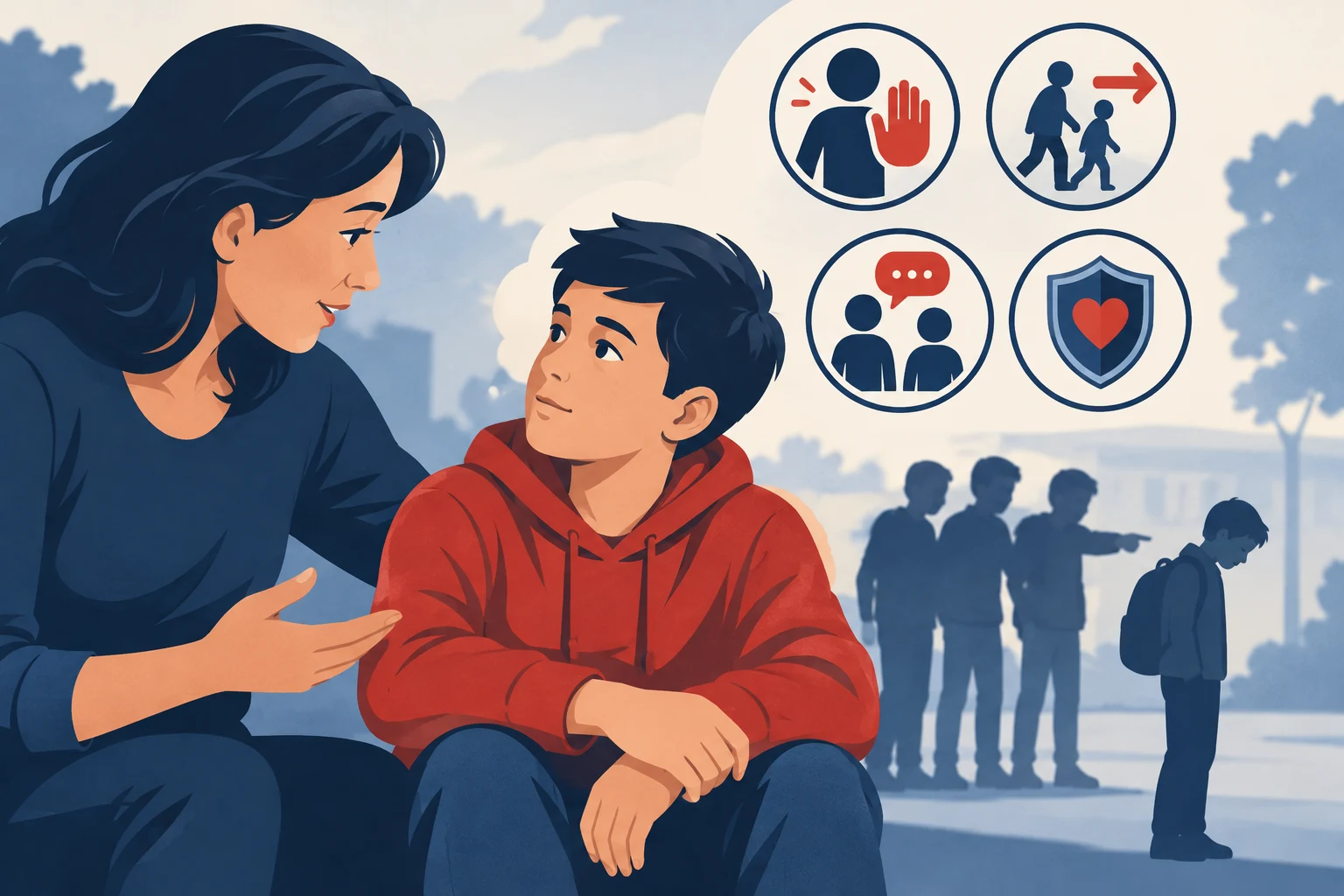
The author proposed a family pledge for children who witness bullying: comfort the targeted student afterward, report what they saw or heard, or use assertive, nonviolent words to intervene directly when it is safe. The writer framed these steps as a way to respond compassionately to bullying, while acknowledging that such action would not prevent every school shooting.
The column is opinion commentary, not a finding about the cause of the Bend attack. Its account says the motive was not known and that no evidence at that point tied bullying to the shooting.