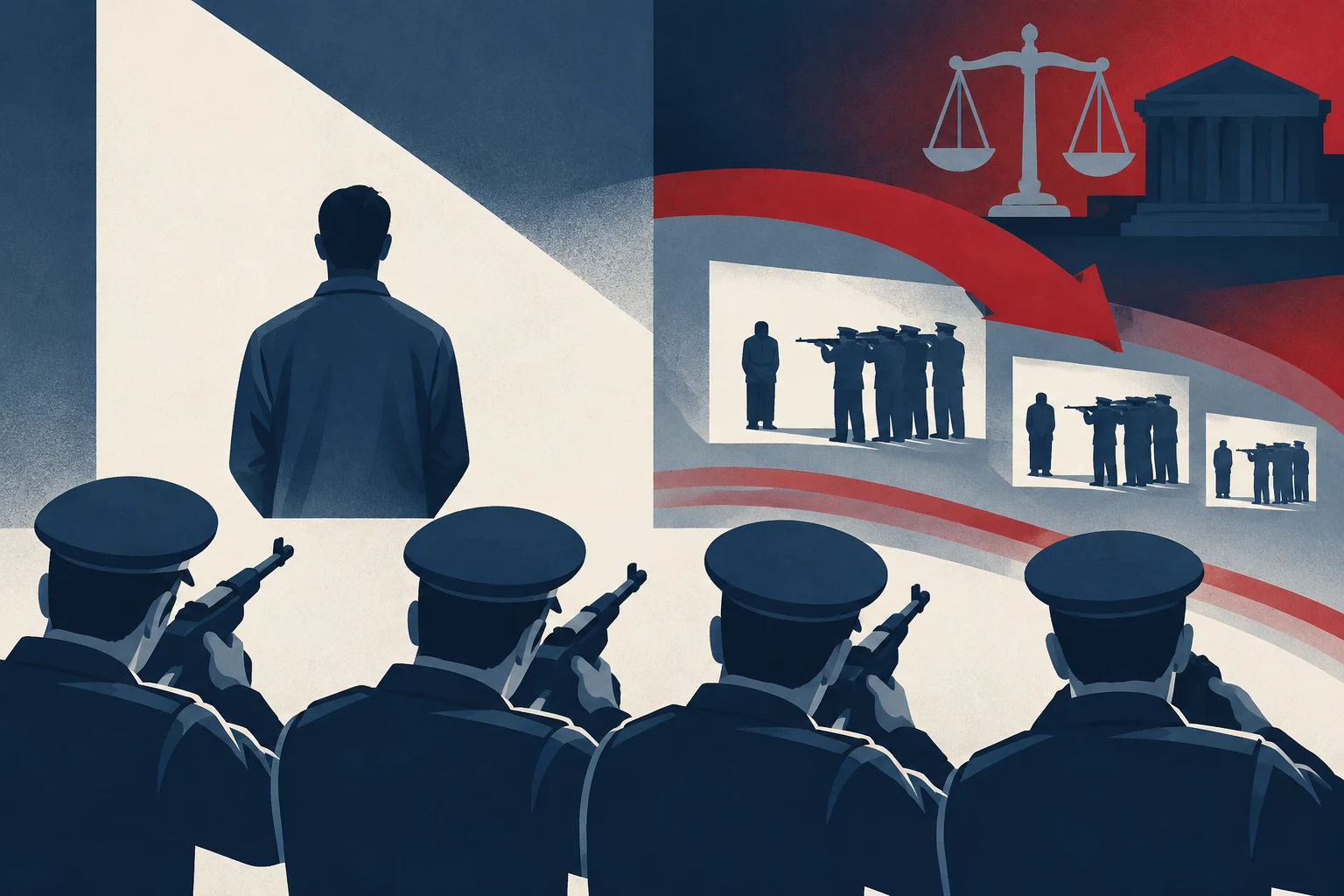
The Trump administration announced that Nidal Malik Hasan, sentenced to death for the 2009 Fort Hood shooting, is scheduled to be executed by firing squad on Dec. 3, 2026. The attack killed 13 people and wounded 32 others. The planned execution is a military case; the Army says its last execution was in 1961.
Deborah Denno, a Fordham Law professor who studies capital punishment, told Fox News that a quick execution could make firing squads more appealing to states that retain the death penalty. She described the method as potentially faster and more reliable than lethal injection, while cautioning that the experience of the person being executed cannot be known with certainty.
Idaho, Utah and South Carolina have adopted firing squads as an available execution method in recent years, amid concerns about access to lethal-injection drugs and their reliability. Denno said firing squads have historically drawn fewer controversies, but cited questions raised after South Carolina executed Mikal Mahdi by that method last year. Mahdi’s lawyers said the bullets did not hit the intended area; a forensic pathologist retained by the defense argued the injuries prolonged the death process. Those assertions are disputed claims attributed to the defense and its expert in the source report.
The report also referenced a recent failed lethal-injection attempt in Tennessee involving death-row inmate Christa Pike, which it said prompted renewed scrutiny of that method. The broader question of whether Hasan’s scheduled execution will influence other states remains uncertain. The execution had not taken place at the time of the report.