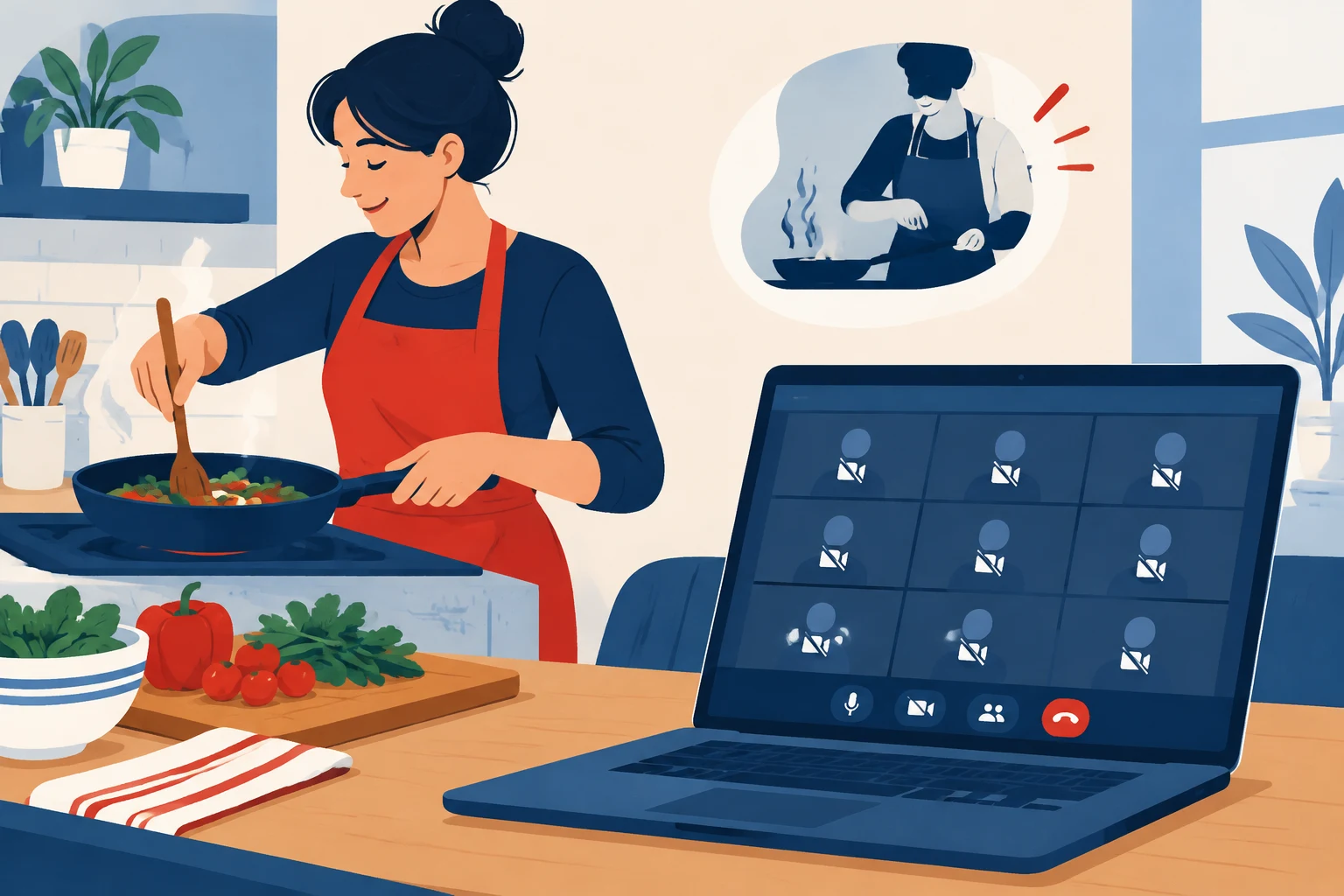
A survey conducted by Savanta for AI meeting assistant company Bluedot found that some Americans use camera-off work meetings to handle personal tasks. Seventeen percent of more than 2,000 U.S. adults surveyed said they had cooked during a work meeting while their camera was off. Among Gen Z respondents, the figure was 26%.
The survey also asked about other activities during camera-off meetings. Twenty-three percent said they had used the bathroom, 14% had shopped online and 13% had exercised. Twelve percent said they had fallen asleep; among Gen Z respondents, that share was 30%.
The results do not, by themselves, establish how often these activities occur or whether they affected participants’ work. The survey’s supplied description does not provide its field dates, sampling method or margin of error.
John Coleman, co-CEO of Atlanta-based Sovereign’s Capital, told Fox News Digital that he has sometimes eaten lunch during meetings scheduled back to back and joined conference calls while exercising, with his camera off. He said he does not cook during calls, citing the risk that someone might have an accident and not be fully engaged.
Coleman also described a colleague who mistakenly left video on while taking a laptop into a restroom. He advised treating video meetings as face-to-face conversations, whether or not the camera is on. If someone needs to step away, he recommended sending a message to let other participants know.
Kristen Hadeed, a Texas-based leadership expert and author of “Human Leadership,” said her company regards making lunch as ordinary personal time employees should be able to manage. She said employees should communicate when time away could affect their availability, responsiveness or the team’s work.
Catherine Fisher, LinkedIn’s vice president of communications and a California-based career expert, said the relevant consideration is whether multitasking prevents someone from contributing. If a participant cannot follow the discussion, answer questions or take part meaningfully, she said, the activity can interfere with participation.
Coleman also pointed to meeting design as a factor. He said organizations can schedule too many meetings or make them too long, and that employees may multitask when they believe they are not needed or when an issue could have been handled by email. He recommended shorter calls, limiting attendance to necessary participants and considering whether a video meeting is needed at all.
Fisher said the larger share of Gen Z respondents reporting cooking during meetings may relate to the pandemic-era conditions in which many began their careers, when work and home boundaries had shifted. She cautioned against interpreting the survey as evidence that younger workers care less about their jobs.