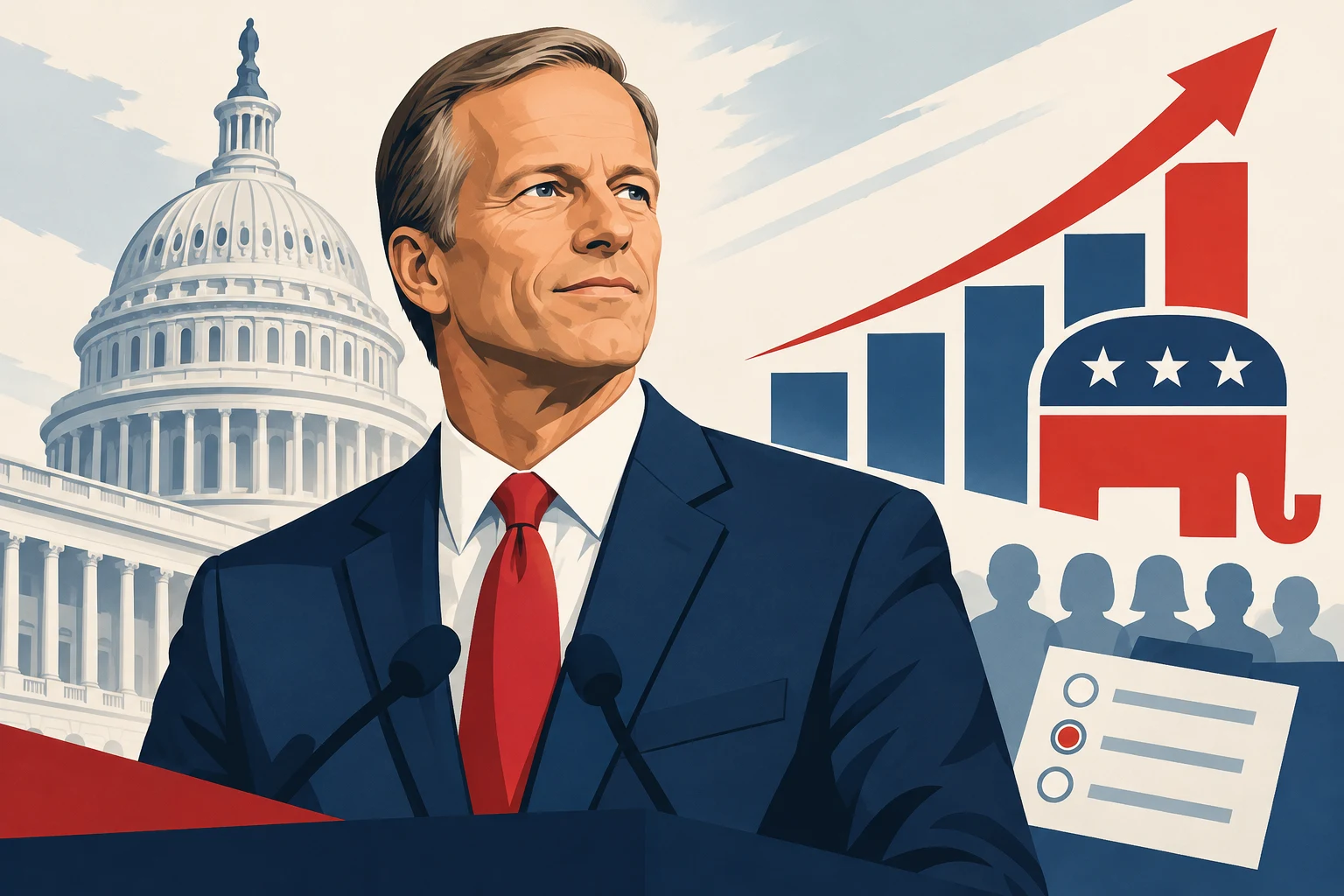
FREMONT, Neb. — Senate Majority Leader John Thune said Republicans could outperform polling and keep their narrow Senate majority in the Nov. 3 election, while acknowledging the party faces political headwinds and several competitive contests.
Thune made the remarks in an interview with Fox News Digital while campaigning for Sen. Pete Ricketts, R-Neb. Republicans hold 53 of the Senate’s 100 seats. Thune described a number of races as close and said Republicans were not abandoning any of them. He argued that polls have undercounted Republican support in past elections and predicted a similar pattern this year.
The campaign landscape has shifted in several states. The source reports that Kansas has become more competitive, while Republican prospects in North Carolina and Georgia appear less favorable. The Cook Political Report identifies six Republican-held seats as toss-ups, according to the account. Mississippi and South Carolina, previously viewed as safer Republican contests, have also moved in a more favorable direction for Democrats.
Campaign spending has followed those changes. The Senate Leadership Fund, a Republican-aligned political action committee closely associated with Thune, shifted money earlier this month from Georgia to Kansas. The group had pledged $44 million to support Republican Rep. Mike Collins in his challenge to Democratic Sen. Jon Ossoff. The article says Ossoff has led Collins in polling and attracted substantial campaign donations.
In North Carolina, Republican Michael Whatley is seeking to hold the seat being vacated by Sen. Thom Tillis. He is running against former Democratic Gov. Roy Cooper. The Senate Leadership Fund has sharply reduced its planned spending in the state, a move the source describes as a sign of diminished confidence in Whatley’s chances. President Donald Trump, who held a rally for Whatley on Tuesday, told reporters he was concerned about the race but hoped Whatley would win.
Thune said Republican success would depend in part on turning out voters who participate less frequently, including Trump supporters, while also winning over voters in the political middle. He said candidates were directing resources toward turnout and suggested that effort could decide close races.
The article describes substantial spending by Republican groups but does not provide a full accounting of the amounts currently committed across the states discussed. It also presents Thune’s forecast as a campaign-season prediction, not an election result. The source gives no final polling figures for the contests, and the races remain unresolved as of its publication date.