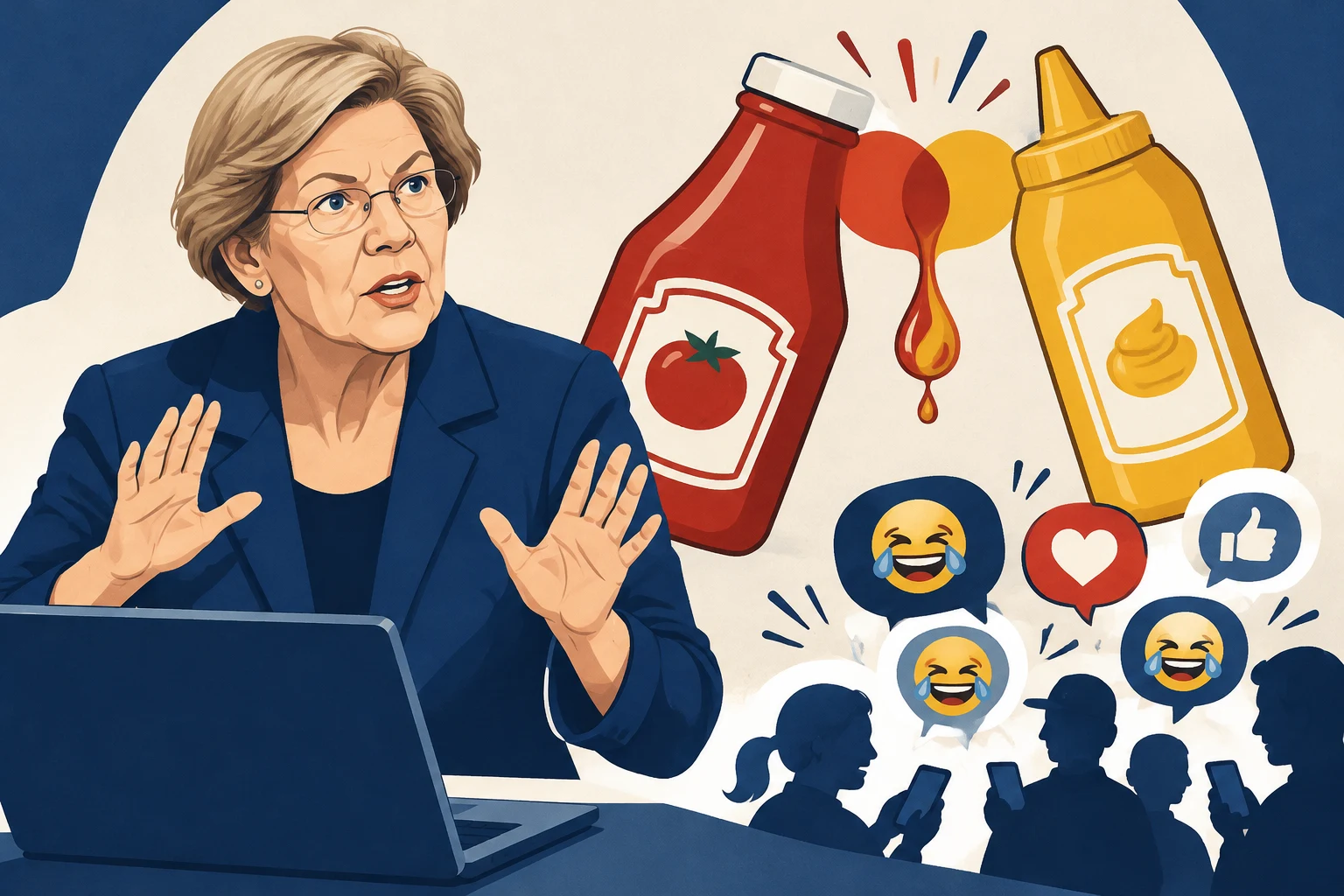
Sen. Elizabeth Warren’s warning about a proposed food-company merger drew jokes online after the Massachusetts Democrat said the deal could limit competition and raise grocery prices. The proposal would bring McCormick together with Unilever’s foods business in a transaction valued at about $45 billion.
The combination would unite McCormick brands Cholula and Frank’s RedHot with Unilever foods products including Hellmann’s and Knorr. The deal was announced in March and is expected to close by mid-2027, pending regulatory and shareholder approvals.
Warren wrote on X that one company could soon control the four familiar products and said she was concerned the merger could increase grocery costs. Some users responded with sarcasm, arguing that the prices of mayonnaise and hot sauce were less pressing than other economic problems. Another post blamed federal deficits and inflation for higher grocery bills. Venture capitalist Hank Medina also mocked the warning, joking that a combination of “big mayo” and “big hot sauce” would leave Americans without alternatives.
The source reports that Warren’s concerns extend beyond the condiment transaction. In an Oct. 6 letter to the Justice Department and Federal Trade Commission, she asked regulators to examine the McCormick-Unilever proposal along with two other proposed mergers in the food industry. She argued the deals could reduce competition for grocery shoppers and retailers’ shelf space among overlapping pantry products, potentially leaving consumers with fewer choices and higher prices.
The debate comes amid continued pressure on household budgets. According to the latest Bureau of Labor Statistics figures cited in the source, consumer prices were 3.7% higher in September than a year earlier, compared with a 3.4% annual increase in August. Overall prices rose 0.6% during September.
Grocery prices, by contrast, were up 1.8% over the year but fell 0.1% in September. Overall food prices increased 2.5% year over year. The figures provide context for Warren’s concern about further price increases, but the source does not establish that the proposed merger has caused, or would necessarily cause, higher prices.
The transaction remains proposed rather than completed. Any eventual combination would depend on approval from regulators and shareholders, and the source gives no outcome for those reviews.