

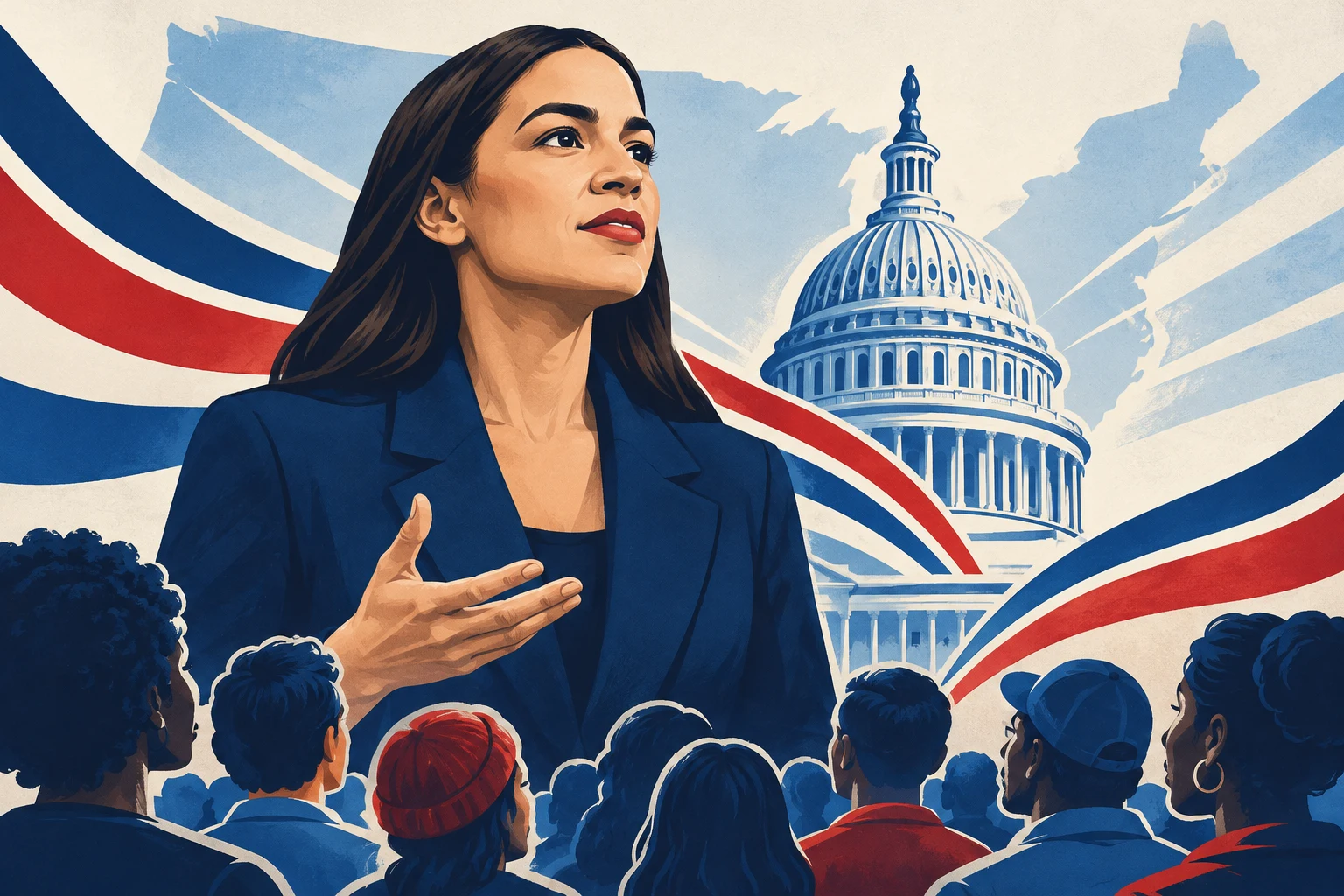
A five-page strategy memo from Rep. Alexandria Ocasio-Cortez’s campaign committee presents the New York Democrat as an influential national voice for the party, particularly on economic issues and outreach to working-class voters. The document was distributed to allies, according to the supplied report, and makes no reference to a possible 2028 presidential or Senate campaign.
The memo argues that Ocasio-Cortez’s political reach extends beyond her own election victories. It describes her as an effective endorser for candidates in competitive and rural districts, as well as in New York. Those claims and the examples cited are the campaign’s assessment of her influence.
The document reports that her fundraising operation received more than 2 million contributions totaling $38 million, with an average contribution of $17.56. It also says more than $3 million went to other Democratic candidates and state parties. The memo characterizes her small-donor operation as unusually strong among House members and compares it with that of Sen. Bernie Sanders, a Vermont independent.
The campaign’s account places a shift in Ocasio-Cortez’s strategy after President Donald Trump won the 2024 election. The memo says she spoke with voters in her New York district who had split their votes between Trump and Ocasio-Cortez. According to the document, those conversations pointed to frustration across party lines with a political establishment seen as favoring wealthy corporate interests over workers.
The memo says Ocasio-Cortez advocated a Democratic approach built around economic populism, challenging concentrated wealth and power, and strengthening American democracy. It describes her subsequent activity as a nationwide effort to promote those themes and build support among working families.
Among the examples offered are endorsements in races in California, Michigan, Pennsylvania and Montana. The memo highlights Abdul El-Sayed’s Michigan Senate campaign and Sam Forstag’s Montana congressional primary. It says Forstag was behind in polling before appearing with Ocasio-Cortez and Sanders at a “Fighting Oligarchy” rally in Missoula. After her endorsement and the rally appearance, the document says, Forstag closed the gap and won the Democratic primary. The supplied material does not provide polling figures or independent analysis of how much the endorsement affected the result.
The memo also identifies two events as turning points: Ocasio-Cortez’s unsuccessful bid to become ranking member of the House Oversight Committee and a March 2025 budget dispute. It says Senate Democratic leaders accepted concessions in negotiations over a federal shutdown, after which Ocasio-Cortez focused more on taking her message directly to voters.
At a rally in Idaho, Ocasio-Cortez described economic insecurity, restrictions on speaking freely, social divisions and concerns about rights as consequences of rule by billionaires. The memo says that over the following two years she held large rallies in politically diverse locations and backed candidates in both swing districts and Democratic primaries, including in New York City.
Overall, the document is an argument from Ocasio-Cortez’s campaign committee about her record and political value to Democrats. Its claims about fundraising, voter conversations and the effects of endorsements are presented in the memo; the source material does not include responses from the candidates mentioned or independent assessments of those claims.