

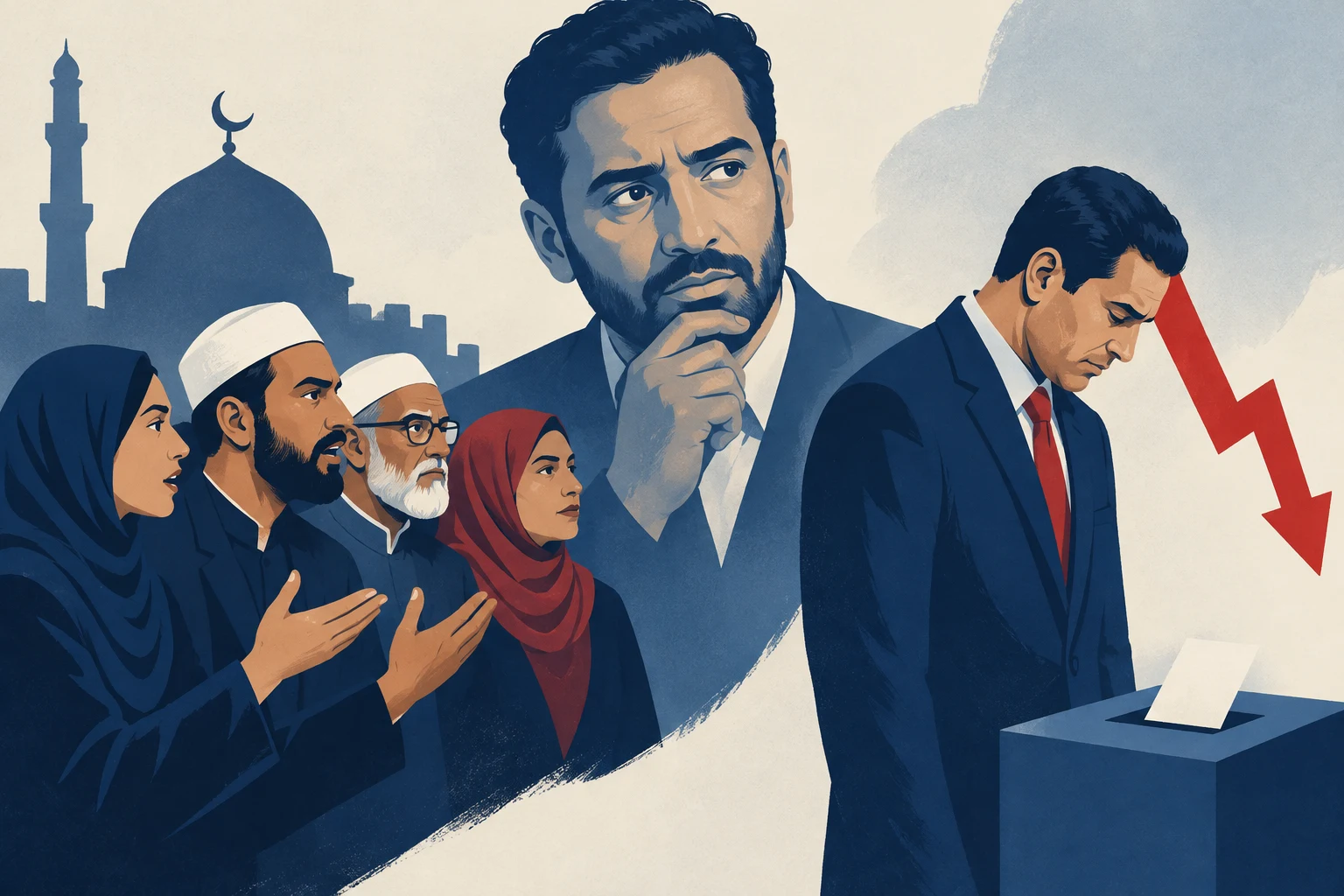
Political commentator Wajahat Ali faced criticism from several Muslim reformers after posting that an election loss by Democratic Senate candidate Abdul El-Sayed could lead to people being “radicalized” and a political “reckoning.” The comments, published on X on Monday, also described the outcome as potentially a watershed moment for Democratic politics.
Ali’s post addressed both possible election outcomes. He wrote that a loss could bring radicalization against what he called corporate, pro-Israel Democrats, and said a reckoning would follow even if El-Sayed won. On Tuesday morning, Ali responded to the backlash by accusing critics of Islamophobia and anti-Arab bigotry. Fox News Digital reported that he did not answer its request for comment.
The criticism came from reform-minded Muslim leaders who said the language could be read as pressure on voters. Dalia Ziada, an Egyptian Muslim reformer and Washington director at the Institute for the Study of Global Antisemitism and Policy, compared the warning to rhetoric she said Islamists have used before elections in Middle Eastern countries, including Egypt. Ziada said such messages can imply that rejecting a candidate will lead to radicalization and violence. She also said trouble might follow, though the article provides no evidence that violence occurred or was planned.
Soraya Deen, a Muslim reform activist, attorney and co-founder of the Los Angeles Women’s Multifaith Alliance, called Ali’s words troubling and said they warranted scrutiny. Deen argued that losing an election does not justify radicalization and urged rejection of intimidation and political extremism.
Dr. Zuhdi Jasser, founder of the American Islamic Forum for Democracy and a Republican congressional candidate in Arizona’s 4th District, characterized Ali’s remarks as reflecting a “Jihad First” approach to political conflict. The article says the reformers’ objections concerned the language and its resemblance, in their view, to tactics that warn of radicalization or violence if a candidate is rejected. It also notes they did not accuse Ali of membership in an Islamist organization.
The dispute unfolded amid a broader debate about El-Sayed’s political support. The article describes backing from Muslim advocacy groups, Palestinian activist organizations, progressive groups, labor organizations and political figures. It says a Fox News Digital review identified 70 Muslim groups and influencers connected to El-Sayed’s political orbit through endorsements, campaign-listed support, voter outreach or public promotion, while cautioning that these groups did not all have the same relationship with his campaign.
Organizations named in the report include CAIR Action, Emgage Action and the U.S. Campaign for Palestinian Rights. El-Sayed’s campaign website listed support from groups including Muslims for Abdul and the Yemeni American Michigan Democratic Caucus. The report also names Democratic Socialists of America chapters and public figures such as Hasan Piker, Linda Sarsour, Rep. Ilhan Omar and Rep. Rashida Tlaib among the wider coalition.
The article describes shared priorities among parts of that coalition, including opposition to U.S. support for Israel, calls for an arms embargo or cease-fire, support for Palestinian activism, criticism of Democratic moderates and efforts to mobilize Muslim and progressive voters. Jasser and other critics used the term “red-green” to describe what they regard as cooperation between left-wing groups and Muslim advocacy organizations. That label is their characterization, not a finding established by the article.
Ziada also criticized El-Sayed’s campaign rhetoric about Israel, comparing it to tactics she said Middle Eastern leaders use. The source reports that President Donald Trump announced Tuesday that he would cut off $4 billion in aid to Israel, and says this was one of the network’s demands. It does not provide further detail about the announcement or establish a direct connection between Ali’s post and U.S. policy.
Ali has written for and appeared on media outlets including The Daily Beast, The New York Times, CNN and The Guardian, and hosted programming for Al Jazeera America, according to the report. He has also been active in political commentary on Israel, Democratic Party strategy and Muslim political activism. The article includes examples of previous controversies but does not present responses from Ali about the reformers’ specific criticism beyond his social-media post accusing critics of prejudice.
The central disagreement is over how to interpret Ali’s conditional warning. Reformers said it could intimidate voters by linking an election loss to radicalization or unrest. The source does not establish that Ali explicitly advocated violence, and his post also said a reckoning would come if El-Sayed won. Deen’s stated position was that electoral defeat should lead to political disagreement rather than warnings of unrest.