


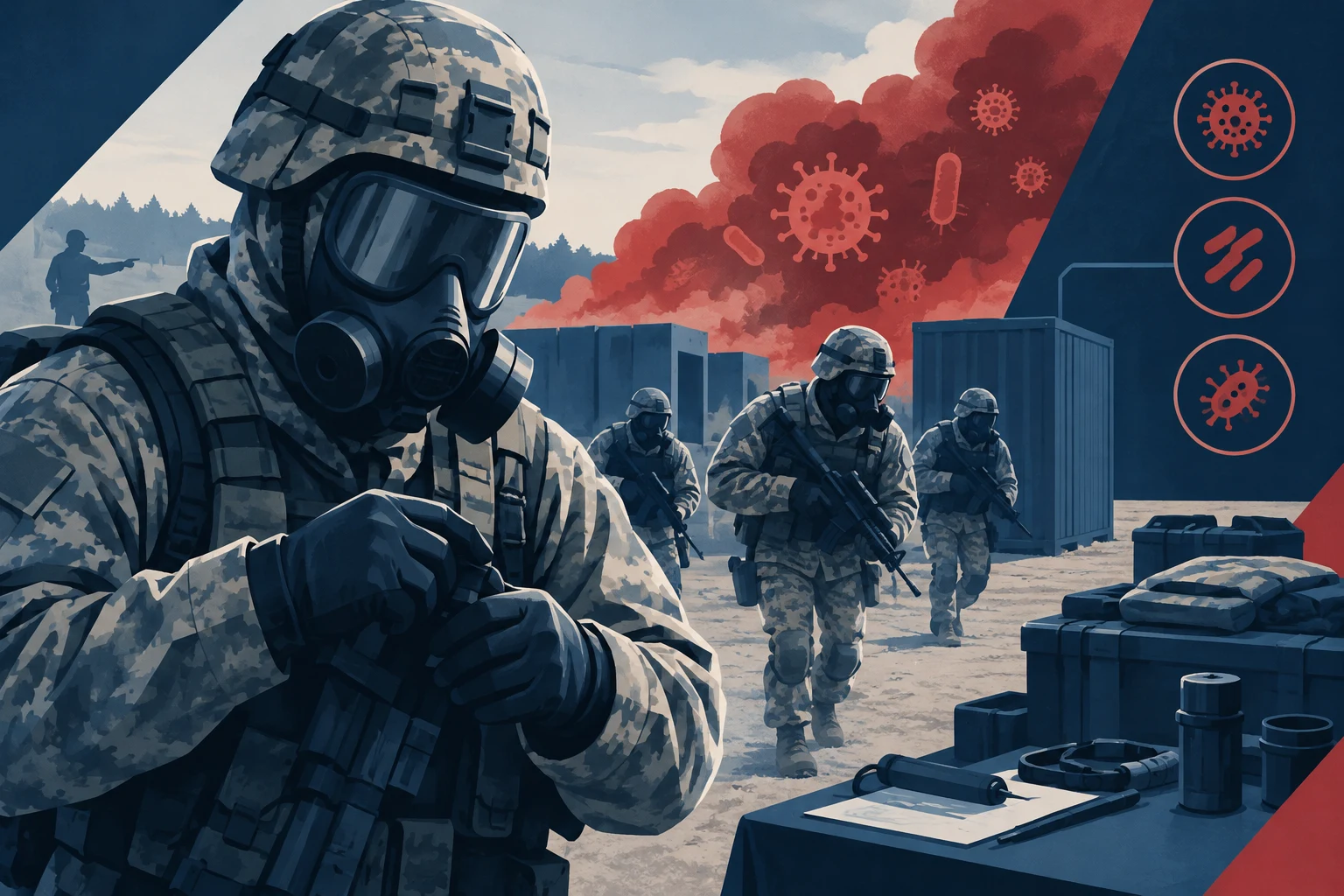
The U.S. Army is shifting its biodefense approach toward preparing units to continue operating during biological incidents, rather than assuming every threat can be stopped, according to Army official Dr. Alison Tamasi.
A plan signed last week implements the Army’s updated biodefense strategy, released in September. Its first two-year phase is intended to establish policies, improve coordination among Army organizations and develop personnel with specialized biological expertise. The strategy sets a goal of preparing soldiers to deploy and fight in biologically contested environments by 2035.
The plan calls for bringing biological scenarios into major combat exercises. In one example described by Tamasi, a simulated norovirus outbreak at a military port would require medical personnel to address the outbreak while logistics officers work to keep supplies moving.
The Army is also seeking to combine information from environmental monitoring, medical facilities and intelligence reporting to identify potential incidents earlier. Tamasi said wastewater surveillance could be among the tools used. The plan also addresses misinformation that could affect decisions about vaccines, protective measures and communications during an incident.
The strategy is framed around biological threats broadly, rather than a single country, Tamasi said. The source reports that U.S. officials have long assessed that Russia maintains an offensive biological weapons program, an allegation Moscow disputes. The article also describes the unresolved death of an employee at a Russian anti-plague research institute: Russian authorities denied a laboratory accident, and the World Health Organization reported no evidence of ongoing transmission while noting that a confirmed diagnosis was lacking.
The Army’s approach is to prioritize responding to a potential threat and maintaining operations; attribution would be handled by the broader U.S. government. Later phases of the plan are expected to address more advanced technologies and acquisition efforts.