



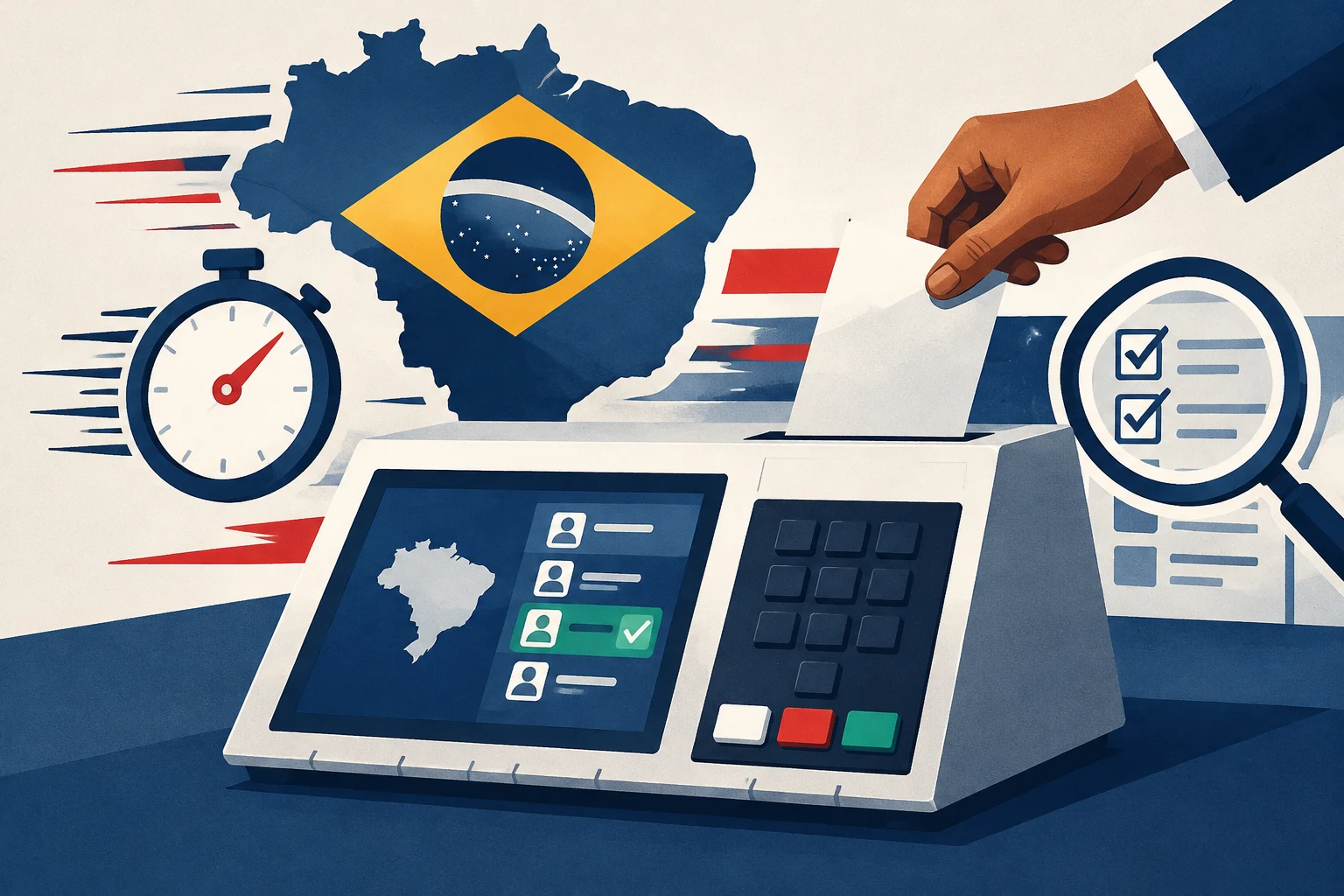
Brazil’s October 4 presidential vote drew attention to a voting system that combines electronic machines with several forms of testing and public checking. About 125 million people voted, and the country identified a runoff between incumbent Luiz Inácio Lula da Silva and challenger Flávio Bolsonaro less than four hours after polls closed, according to the supplied report.
The machines do not print paper ballots for voters and do not connect to the internet. Brazil’s Superior Electoral Court, known as the TSE, designs the equipment and oversees elections. The system has been used since 1996. The TSE told Fox News Digital that it has recorded no proven election fraud since its introduction.
Before this election, the machines’ software was available for inspection by political parties, universities and watchdog groups for 11 months. It was then digitally signed and sealed in public. The report says the government invited 149 outside evaluators last December to attempt to compromise the system; their review found no method that could change results or expose an individual’s vote.
On election day, a random selection of machines receives paper ballots on camera while federal auditors and international observers monitor the process. Separately, each machine prints its polling station’s tally after voting ends. The tally is displayed outside the polling place with a QR code, allowing people to compare the local result with the national count. The TSE said the digital signature on each file verifies that it came from the machine registered to that station.
Biometric identification is another part of the process. Brazil has linked federal, state and municipal databases to digital voter records. The report says nearly nine in 10 voters use a fingerprint to access a machine. Political scientist Karina Stange Calandrin, a professor at IBMEC, described the system as secure, citing its offline equipment and the requirement that centrally transmitted totals match results printed locally. She argued that altering results would require tampering with machines and installing software inconsistent with the TSE’s authorized version.
The system has also been part of Brazil’s political dispute over election integrity. Former President Jair Bolsonaro repeatedly challenged its credibility after losing the 2022 election, according to the report. He is now serving a 27-year sentence related to plotting to overturn that result and is under house arrest. In this year’s election, his son Flávio placed first with 47% of the vote, compared with 45% for Lula. Justice Kassio Nunes Marques, appointed by Bolsonaro, led the TSE.
Experts cited in the article praised Brazil’s model but did not describe it as beyond criticism. Florencia Ferrer, who leads an election-auditing company, called it highly secure and contrasted it with systems used in India, Estonia and the Philippines, which she said have different risks. An unnamed University of São Paulo engineer who audited the machines in 2014 told Fox News Digital that the audit found no evidence of tampering or malicious intent, while acknowledging that no system is infallible.
Other voices emphasize that a record without proven fraud does not by itself establish that a system is adequately verifiable. Security researchers cited in the report favor giving voters a printed record that can be checked independently. The Carter Center has said voters should be able to see a printed version of their ballot deposited in a separate part of the machine. Germany’s top court ruled in 2009 that voters must be able to verify ballots without relying on technical experts, a standard that effectively prevents use of a Brazilian-style system there.
The article also contrasts Brazil’s national election administration with the United States, where elections are managed by thousands of local jurisdictions operating under state rules. It says about 30% of ballots in the 2024 U.S. election were cast by mail, a method that can take longer to process. Brazil uses compulsory voting and does not have mail-in ballots. The report says the Brazilian winner is expected to be known and certified within five hours of the October 25 vote.
Brazil’s approach is presented as a case for weighing speed and consistent administration against the value of a voter-verifiable paper record. The reporting does not establish that one system is universally safer; it presents support for Brazil’s controls alongside concerns that electronic results should have an independent means of confirmation.