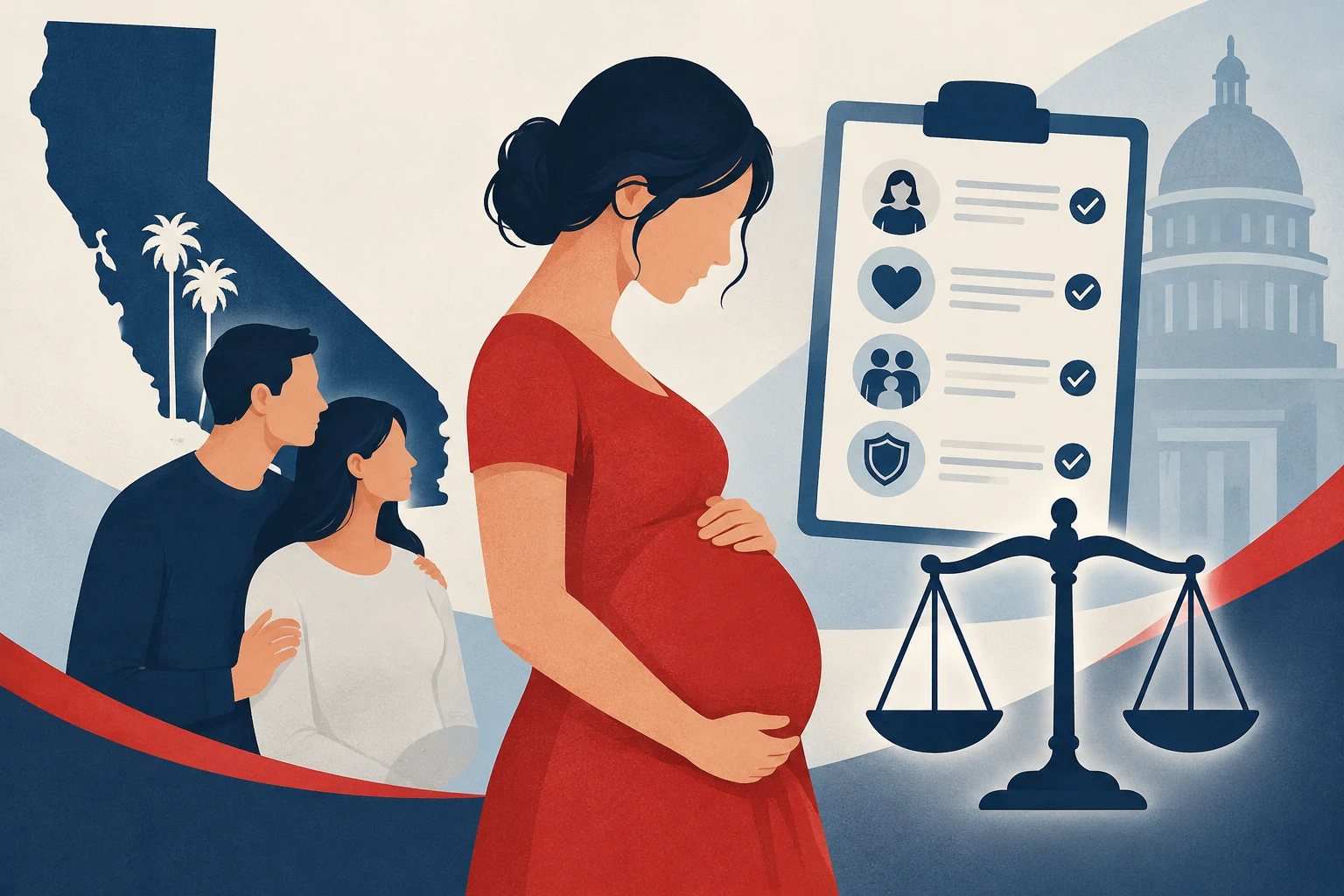
A California couple accused of abusing children born through surrogacy also operated a surrogacy agency from their home, according to the supplied report. The case has renewed criticism from one bioethics advocate of what she describes as limited oversight of the industry in California.
Guojun Xuan, 66, and his wife, Silvia Zhang, 39, were arrested on suspicion of conspiracy to commit child abuse. Authorities allege that more than a dozen children born to surrogates were abused at the couple’s multimillion-dollar residence in Arcadia. The reported ages of the children included infants as young as 2 months old. The allegations have not been established as fact in court.
Los Angeles County District Attorney Nathan Hochman described the alleged treatment as “appalling and revolting.” At the announcement of the charges, he said the home was a place where young children were systematically beaten and punished when they did not comply, rather than being cared for and nurtured.
The couple also operated Future Spring Surrogacy from the residence, recruiting surrogates and paying them tens of thousands of dollars, the report said. Officials said at least eight surrogates reported aggressive recruitment tactics and false statements about the family’s living circumstances. The source does not provide further detail about those reports or say whether the claims have been tested in court.
Kallie Fell, executive director of the Center for Bioethics and Culture, said the case fits broader concerns she has about commercial surrogacy. Fell opposes the practice and characterized the industry as poorly regulated. She argued that access to surrogacy can depend heavily on a client’s ability to pay, while safeguards for children born through the process are inadequate.
Fell contrasted surrogacy with foster-parent approval, saying she and her husband completed courses, home studies and background checks before fostering. She said similar screening does not apply to surrogacy. Her comments represent the perspective of an advocate critical of commercial surrogacy; the report does not include a response from the agency, the couple, or a surrogacy-industry representative.
The article states that California does not require a license to open a surrogacy agency and lacks a comprehensive statewide regulatory framework for the industry. It describes surrogacy as a global market worth billions of dollars and says the practice is used by people who cannot conceive or carry a pregnancy. The supplied material does not detail the specific laws or safeguards that do apply in California.
The report also cites a 2024 Heritage Foundation report concerning the growth of cross-border surrogacy, including use of U.S. surrogates by foreign nationals, many of them from China. It says commercial surrogacy is illegal in China and that some wealthy Chinese individuals and couples seek arrangements abroad, primarily in the United States. The source characterizes U.S. cross-border surrogacy as lacking federal regulation and says the arrangement can result in children obtaining birthright citizenship. These points are presented through the article’s account and its citation of the conservative think tank, not as findings independently established in the supplied material.
Fell called for restricting international surrogacy, objecting to foreign clients using American surrogates. Her position is an advocacy view, rather than a government policy announcement. The article provides no information about a proposed bill or official action arising from the case.
The case combines criminal allegations against the couple with a broader debate over commercial surrogacy and regulation. The available report outlines prosecutors’ accusations, complaints attributed to surrogates, and Fell’s criticism, but does not include the defendants’ response or a court determination of the allegations.