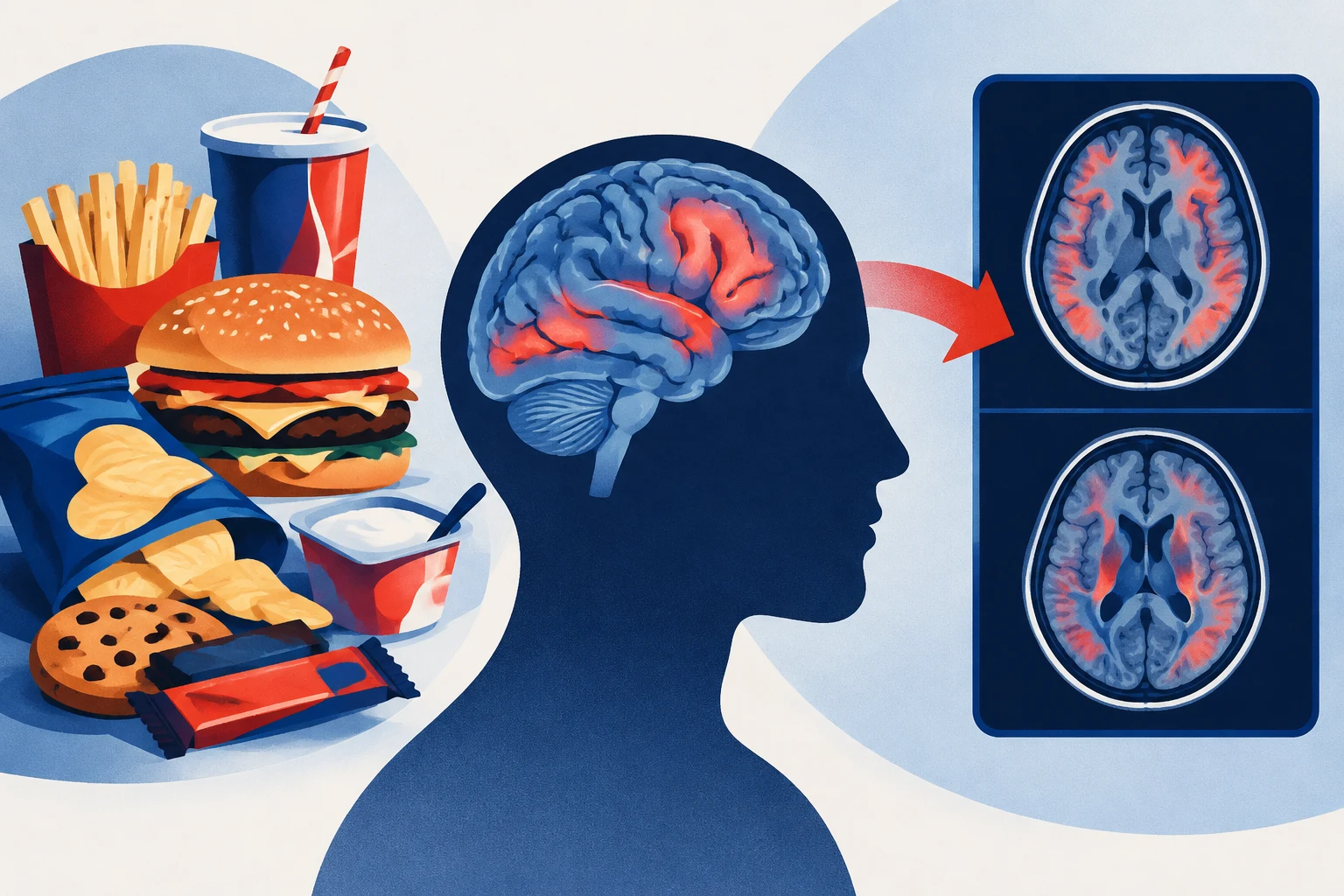
A study of roughly 9,000 Canadian adults found that people who reported eating more ultra-processed foods were more likely to show small areas of damage on brain MRI scans. The researchers said the changes may occur without obvious symptoms and could be indicators associated with later stroke or memory problems, but the study did not establish that diet caused them.
Published in JAMA Network Open, the research included people ages 35 to 69. Investigators used MRI scans to look for brain changes and compared the results with participants’ reported diets. Those in the highest-consumption group were 40% more likely to show the changes than those in the lowest-consumption group, according to the study findings reported by Medical Xpress.
The foods described as ultra-processed included soft drinks, packaged snacks and sugary breakfast cereals. Researchers also found that participants who consumed more of these foods tended to have more body fat, including visceral fat. As ultra-processed food intake rose, consumption of nutrient-dense foods fell.
Among participants with the highest intake, fruits, vegetables and grains accounted for 41% of daily food intake, compared with 68% among those with the lowest intake. Ultra-processed foods made up about one-quarter of participants’ daily food intake on average. The report also cited U.S. Centers for Disease Control and Prevention data indicating that people ages 1 and older consumed an average of 55% of their daily calories from ultra-processed foods between August 2021 and August 2023. That figure relates to the U.S. population, not the Canadian study participants.
The association with MRI changes was stronger among women, the study reported. Women in the highest intake group were nearly twice as likely as those in the lowest group to show signs of brain damage. The researchers described the result as an association, rather than evidence that ultra-processed foods directly produced the changes.
Russel J. de Souza, the study’s first author and an associate scientist at the Population Health Research Institute at McMaster University and Hamilton Health Sciences, told Medical Xpress that the findings were unexpected because the participants were middle-aged and reported no heart problems or other health concerns. Senior author Sonia Anand said the relationship between diet and brain health may be detectable before people notice difficulties with memory or thinking.
The researchers said the study has important limitations: participants were assessed at a single point in time and were not followed with repeat evaluations. As a result, the findings cannot determine whether diet preceded the brain changes or whether changing food intake could prevent or slow them. De Souza said longer-term research with repeated MRI scans is needed and that follow-up research is in progress.
The CDC describes ultra-processed foods as often containing high amounts of sodium, saturated fat and added sugars while providing fewer nutrients such as fiber, vitamins and minerals. The study adds an observed association between consumption patterns and MRI indicators, but it does not demonstrate that any particular food causes brain damage or provide evidence that dietary changes will prevent stroke or memory loss.