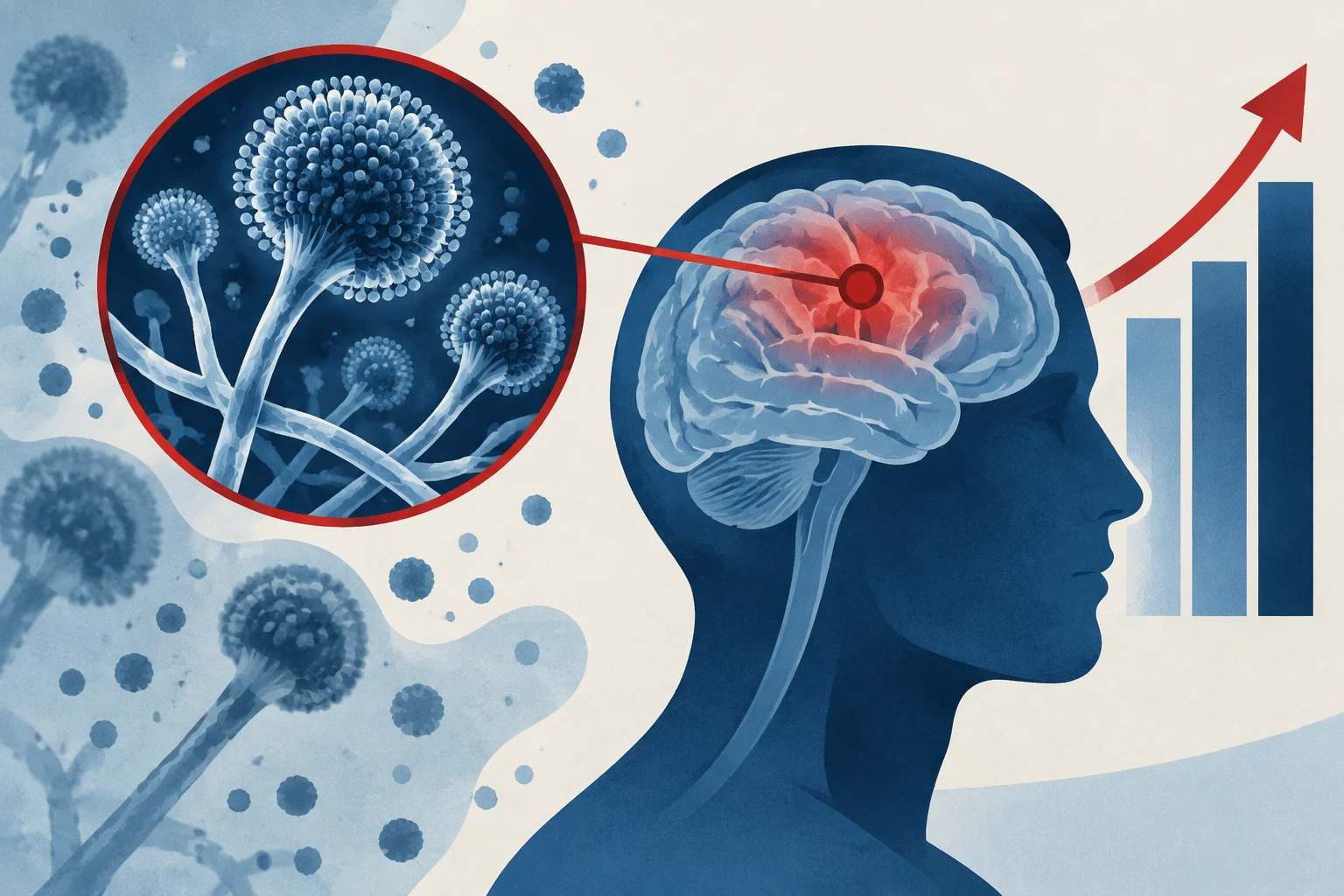
A rare mold that can cause a serious brain infection was detected more often in recent years, according to a report from the Centers for Disease Control and Prevention. The CDC report says the reason for the apparent increase is unknown and calls for systematic national reporting to track the pathogen.
The fungus, Cladophialophora bantiana, is a dark, yeast-like mold. Researchers identified 48 confirmed cases and one probable case in tissue samples collected from 21 states and the District of Columbia between January 2009 and July 2026. The median age among patients was 68.
The case data came from a microbiology laboratory at the University of Washington. That laboratory found one to five cases annually from 2009 through 2023, then recorded eight in 2024 and 14 in 2025. The source report also says detections nearly quadrupled between 2023 and 2025.
To assess whether the increase might reflect more testing rather than more infections, researchers compared detections with the total number of fungal tests on brain tissue samples. The rate rose from 8.4 cases per 1,000 specimens during 2017–2023 to 26 per 1,000 in 2025, according to the report.
Cases were identified across a broad area. California had six, Florida and Texas had five each, and Pennsylvania had four. The supplied report does not provide a national estimate of how many people may be infected beyond the cases identified through the laboratory data.
Unlike many fungal infections, C. bantiana can affect people who do not have weakened immune systems. The source says about half of infections occur in otherwise healthy people. Researchers believe the mold may enter through inhalation or a skin wound and reach the brain through the bloodstream. In the reported cases, 88% were identified in brain tissue and 12% in lung tissue; the CDC report says those findings support inhalation as a possible major route.
The infection can form a brain abscess without obvious external signs, making early diagnosis difficult. In one fatal case at University of Washington Medical Center, spinal-fluid PCR tests were negative both a month before and at the time of a brain biopsy. The source does not identify the patient.
A systematic review published in Medical Mycology puts the infection’s fatality rate at 60% to 70%, even with aggressive treatment. Treatment typically involves surgery to remove infected tissue and multiple antifungal medications. Public health experts cited in the report advise clinicians to consider the fungus when assessing patients with signs of a brain abscess.
The findings highlight both the seriousness of the infection and limits in understanding its spread. The CDC report calls for national reporting mechanisms, while stating that the reason for the higher detections remains unknown.