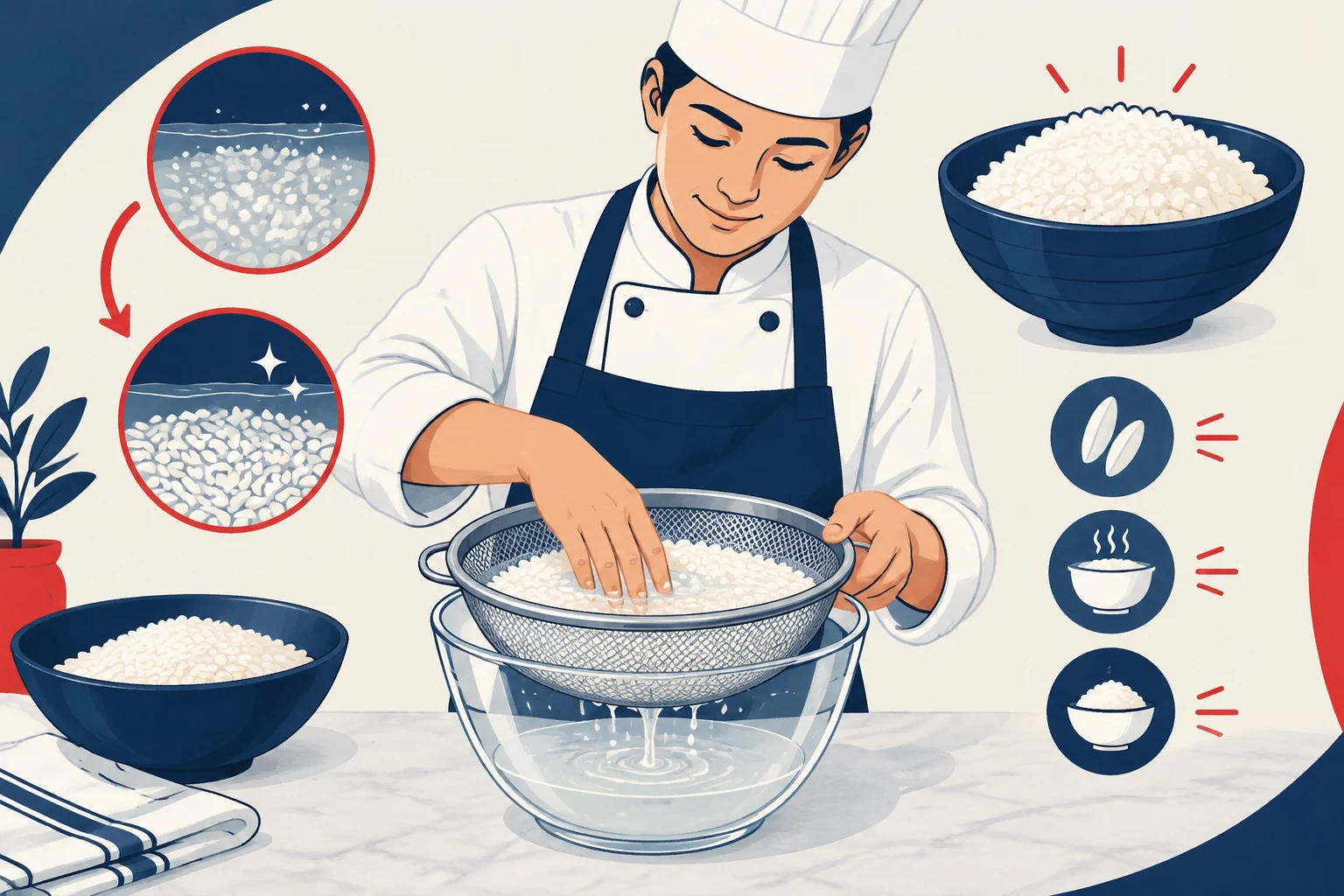
Rice preparation varies by grain and recipe, according to chefs quoted in a Fox News Digital report published Oct. 16, 2026. Dennis Littley, a New Jersey-based chef and founder of Ask Chef Dennis, recommends rinsing long-grain white rice, basmati and jasmine rice when aiming for a lighter texture. He says to rinse until the water is mostly clear, then drain the rice well.
Littley said rinsing removes some loose starch from the grain surfaces, which can contribute to gummy or clumped rice. He does not recommend applying that step to every variety or dish. Christine Pittman, a Florida-based cooking-site founder, said she generally rinses short-grain rice and rice that will be cooked in a pressure cooker. Both chefs advise against rinsing rice for risotto, where starch helps create the dish’s creamy consistency.
A Food & Wine comparison cited in the report found that basmati and jasmine rice that had been both rinsed and soaked came out lighter and fluffier than unwashed rice. The test combined the two steps, so it did not isolate the effect of rinsing alone. Littley said he likes to soak basmati for about 20 to 30 minutes, which he said can help the grains hydrate evenly.
Water quantities also depend on the variety. Pittman offered slightly less than two cups of water for each cup of long-grain white rice as a starting point. For Japanese-style short-grain white rice, she suggested roughly 1 1/4 to 1 1/2 cups of water per cup of rice. Littley recommends consulting the package or recipe instructions for the particular rice being prepared.
Brown rice can be rinsed, but its bran layer means it requires more liquid and a longer cooking time, the report said. The chefs’ approximate ratio for brown rice is about two cups of water per cup of rice.
Littley also suggested briefly toasting rinsed and drained rice in a small amount of oil or butter before adding liquid. He said the step can add a nutty flavor and help keep the grains distinct. Once the cooking liquid boils, he recommends lowering the heat to a gentle simmer, covering the pot and leaving the rice undisturbed rather than lifting the lid or stirring during cooking.
After cooking, Littley advises removing the pot from the heat and leaving it covered for five to 10 minutes before fluffing. The rest gives moisture time to redistribute, according to the report. Pittman recommends using a dinner fork and lifting rice gently from the bottom of the pot, rather than stirring vigorously.
For rice that remains undercooked, Pittman said a cook can add a small amount of hot water, cover the pot and return it to low heat. The report presents these suggestions as guidance from the two chefs; preferred methods and liquid amounts differ across rice types and recipes.