Rubedo Life Sciences says four weeks of treatment with its experimental cream, RLS-1496, was associated with changes in molecular markers tied to skin aging and inflammation. The company’s preliminary results come from early-stage studies and do not establish that the treatment makes skin look younger or work better.
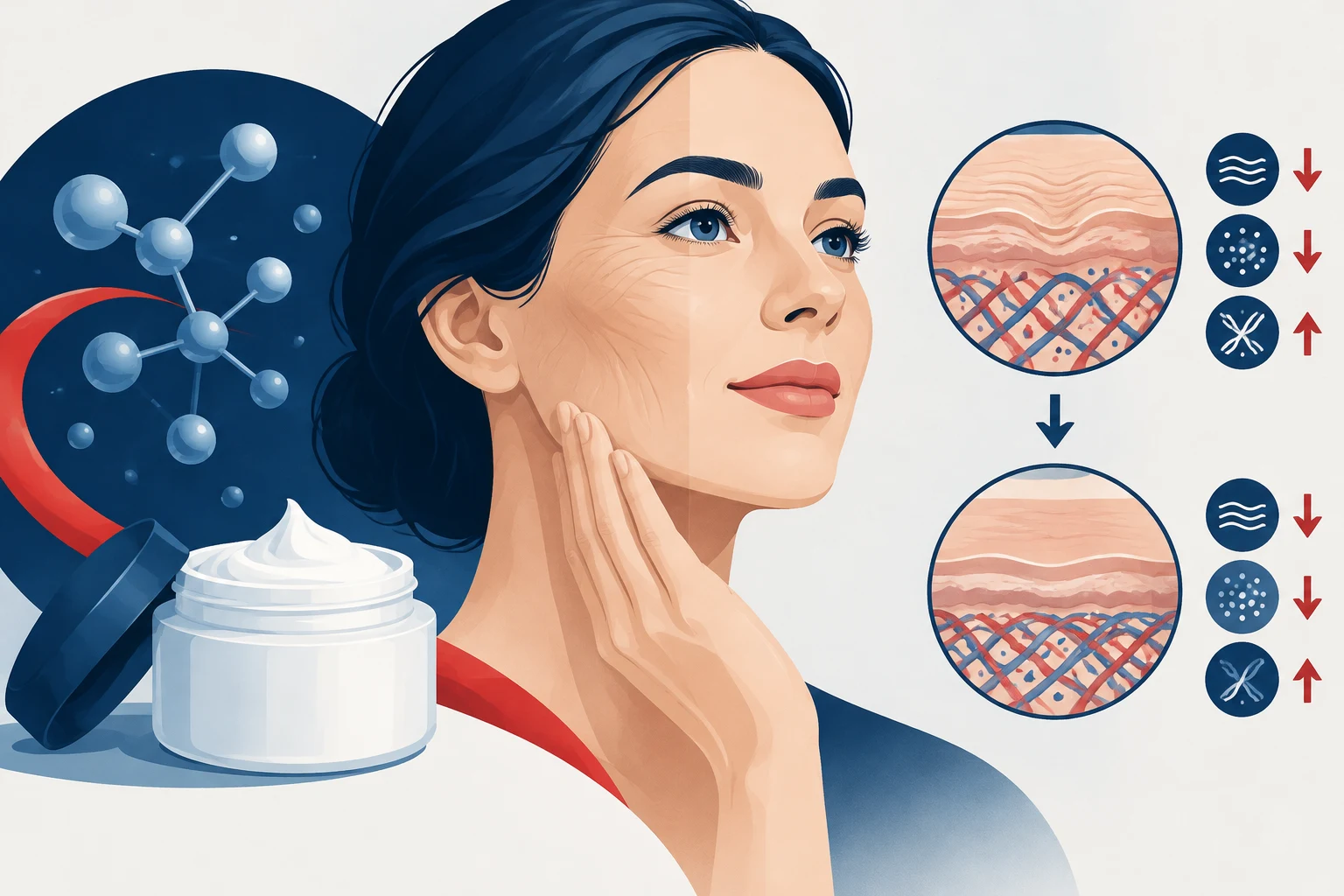
In an analysis of 11 paired skin samples from patients with atopic dermatitis, the company reported an average 2.1-year decrease in epigenetic skin age after treatment. Epigenetic age is an estimate based on age-related changes in DNA; it is not the same as a person’s chronological age. The skin-aging results were presented at a scientific conference but have not appeared in a full peer-reviewed study.
Rubedo CEO Dr. Frederick Beddingfield said the results merit additional research. He told Fox News Digital that he expects longer treatment might lead to clinical improvements, but the reported analysis does not demonstrate that outcome. The study lasted four weeks, leaving unanswered whether the molecular changes persist.
The company also reported a 10% increase in a type of collagen that supports skin. Blood tests showed declines in several inflammation-related markers, though the significance of those changes for patients’ health is unclear.
RLS-1496 is intended to act on senescent cells. These are aging or damaged cells that have stopped dividing but may release substances that contribute to inflammation. The treatment targets GPX4, a protein involved in cellular responses to stress. Researchers are investigating whether blocking the protein can remove damaged cells while allowing healthier cells to survive. These are the treatment’s proposed mechanisms, not established clinical benefits.
The skin-aging analysis was small, and the company sponsored the studies. Those limitations make the results preliminary. The analysis measured biological markers in skin rather than visible appearance or skin function. Beddingfield said the company’s next trial would involve treatment over several months, but the supplied report does not provide further details about its design or timing.
Rubedo is also studying the cream for actinic keratosis, rough skin patches associated with sun exposure. In a separate early-stage study involving 22 patients, the company reported an average 49% reduction in lesions after 28 days. The open-label study compared treated forearms with untreated forearms, rather than using a placebo cream, so the result should be viewed in that context.
The company said skin irritation was minimal and that the drug was detected in the blood of very few participants. Beddingfield characterized topical use as having little risk, while also saying irritation can occur, generally mildly. The reported information does not provide a detailed accounting of side effects beyond those comments.
Rubedo is beginning an early-stage trial of RLS-1496 for androgenetic alopecia, also known as pattern hair loss. Beddingfield estimated that a possible FDA approval is three to four years away, contingent on larger clinical trials. That estimate is not an approval timetable or assurance that the treatment will reach the market.