Researchers in Finland found that several medical conditions appeared more often in the years before people received an early-onset Alzheimer’s diagnosis, with the differences most pronounced in the five-year period immediately preceding diagnosis. The findings may offer leads for future research, but the study does not establish that the conditions can reliably predict Alzheimer’s disease.
The study examined medical records for 407 people diagnosed with early-onset Alzheimer’s and 4,035 people of similar age and sex who did not have the diagnosis. Researchers reviewed the 15 years before diagnosis. The average age at diagnosis among the Alzheimer’s group was 60; early-onset Alzheimer’s refers to cases diagnosed before age 65.
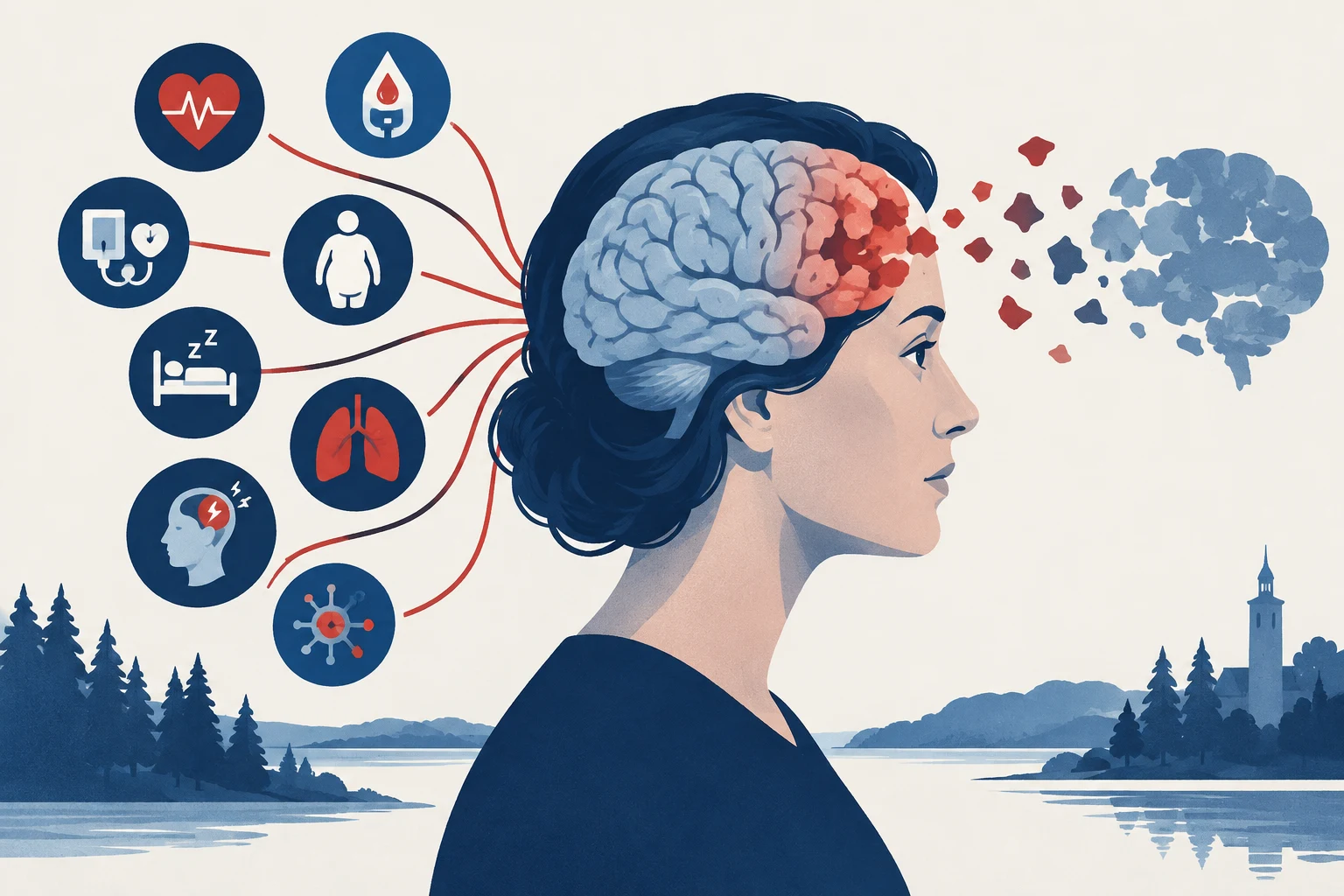
Depression, vertigo and headaches were among the conditions reported as significantly more prevalent in the group later diagnosed with Alzheimer’s. The source material does not provide the full list of conditions or their individual rates, so it is not possible to compare how frequently each appeared.
The researchers also observed a substantial increase in health care visits among people with early-onset Alzheimer’s shortly before and during the time of diagnosis. The study authors said this pattern may reflect symptoms emerging as the disease progresses, rather than being an independent warning sign.
The research was published in the journal Alzheimer’s & Dementia. Study co-author Suvi-Johanna Krüger, a clinical lecturer at the University of Oulu, said the biological changes associated with Alzheimer’s can begin many years before noticeable cognitive symptoms. She also noted that comparatively little research has focused on early-onset disease, as opposed to Alzheimer’s diagnosed later in life.
The study was observational, meaning it identified patterns in existing records rather than testing whether a particular condition causes Alzheimer’s or predicts who will develop it. Krüger said the researchers could not determine whether the conditions were risk factors or consequences of the disease process. Some could instead be related to early or prodromal changes.
The authors identified limitations that constrain what can be concluded. Researchers could not independently verify every recorded diagnosis or evaluate the severity of participants’ conditions. The results may also not apply to populations outside Finland. Genetics, lifestyle and socioeconomic circumstances could have influenced outcomes, according to the source material.
The researchers said larger studies incorporating biomarkers, genetic information and clinical assessments could help clarify the relationship between the conditions and Alzheimer’s, and assess whether medical-record patterns might contribute to earlier detection. The findings do not establish that any of the listed conditions alone indicate Alzheimer’s.
Krüger said people experiencing persistent symptoms, including problems with memory or cognition, should consult a health care provider. She described early diagnosis as a way to access available treatment and support options sooner and give individuals and families more time to plan.