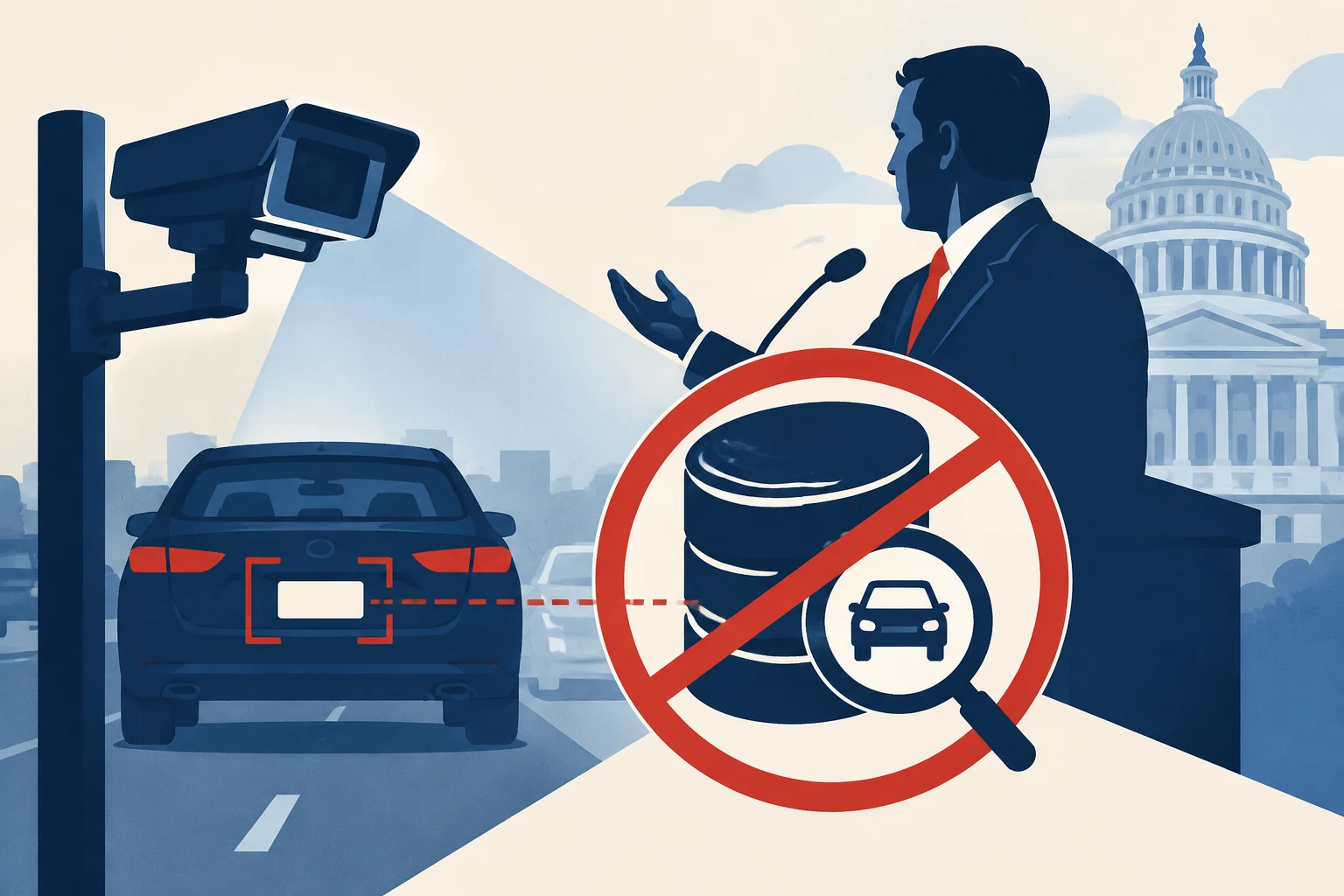
Rep. Pat Harrigan, R-N.C., introduced legislation Thursday to establish new limits on automated license plate readers, including cameras made by Flock Safety. The proposal would restrict how law enforcement searches vehicle-location data and how long agencies and vendors may retain or use it.
Harrigan told Fox News Digital that license plate readers can reveal where people work, where their children attend school and whether they visit a church. He argued that the information may concern people who have not committed crimes, while maintaining that the technology can still serve as an investigative tool.
Automated license plate readers photograph vehicles and make license plate and related vehicle information searchable. Law enforcement agencies use the systems during investigations, including to search for vehicles in particular areas or identify cars matching a suspect description. The technology has prompted debate between critics concerned about privacy and supporters who say it helps prevent and investigate crime.
The bill would bar government agencies from categorizing vehicles based on expressive features such as political or religious bumper stickers, flags or decals. It would also prohibit searches aimed at political or religious activity. Other proposed restrictions would cover searches related to civil immigration violations, parking or non-moving traffic violations, debts and other civil penalties.
Harrigan said messages such as “Back the Blue,” “Jesus Saves” and “Black Lives Matter” should not become searchable data. Flock Safety says its systems can detect bumper stickers but cannot identify their type, including whether a sticker relates to a political party or house of worship. The company also says safeguards are intended to prevent searches based on political or religious stickers and symbols. Its AI-powered FreeForm search lets users look for vehicle characteristics in ordinary language, a capability cited in the report as raising questions about how markings might be used to find vehicles.
Under the proposal, law enforcement would generally need a probable-cause warrant to conduct a search. Exceptions would apply to immediate threats to a person’s life or safety. Most records would have to be deleted within 24 hours, subject to exceptions involving warrants, emergencies and court orders.
The legislation would also require agencies to record their searches, issue annual public reports and undergo audits. States lacking qualifying protections could lose 10% of certain federal criminal justice funding. Vendors would be barred from selling license plate reader data or using it to train artificial intelligence models.
The bill proposes legal remedies for people whose data is searched unlawfully. They could sue for at least $1,000 per violation, and evidence obtained through an illegal search could be excluded from court.
The source report cited an August Washington Post review that found at least 50 officers had been accused or charged with misusing license plate readers. Some reportedly used the systems to monitor romantic partners, former partners or other women; Flock’s system was involved in 46 of the cited cases.
Harrigan said his legislation is intended to preserve the technology’s investigative use while setting boundaries on government access. President Donald Trump expressed qualified support for Flock cameras in remarks to reporters on Sept. 13, saying he “sort of” liked them because law enforcement uses them, despite concerns that they infringe on privacy.
The report said Fox News Digital sought comment from Flock Safety but had not received a response before publication. The source material describes a bill’s introduction and proposed provisions; it does not report that the legislation has passed.