

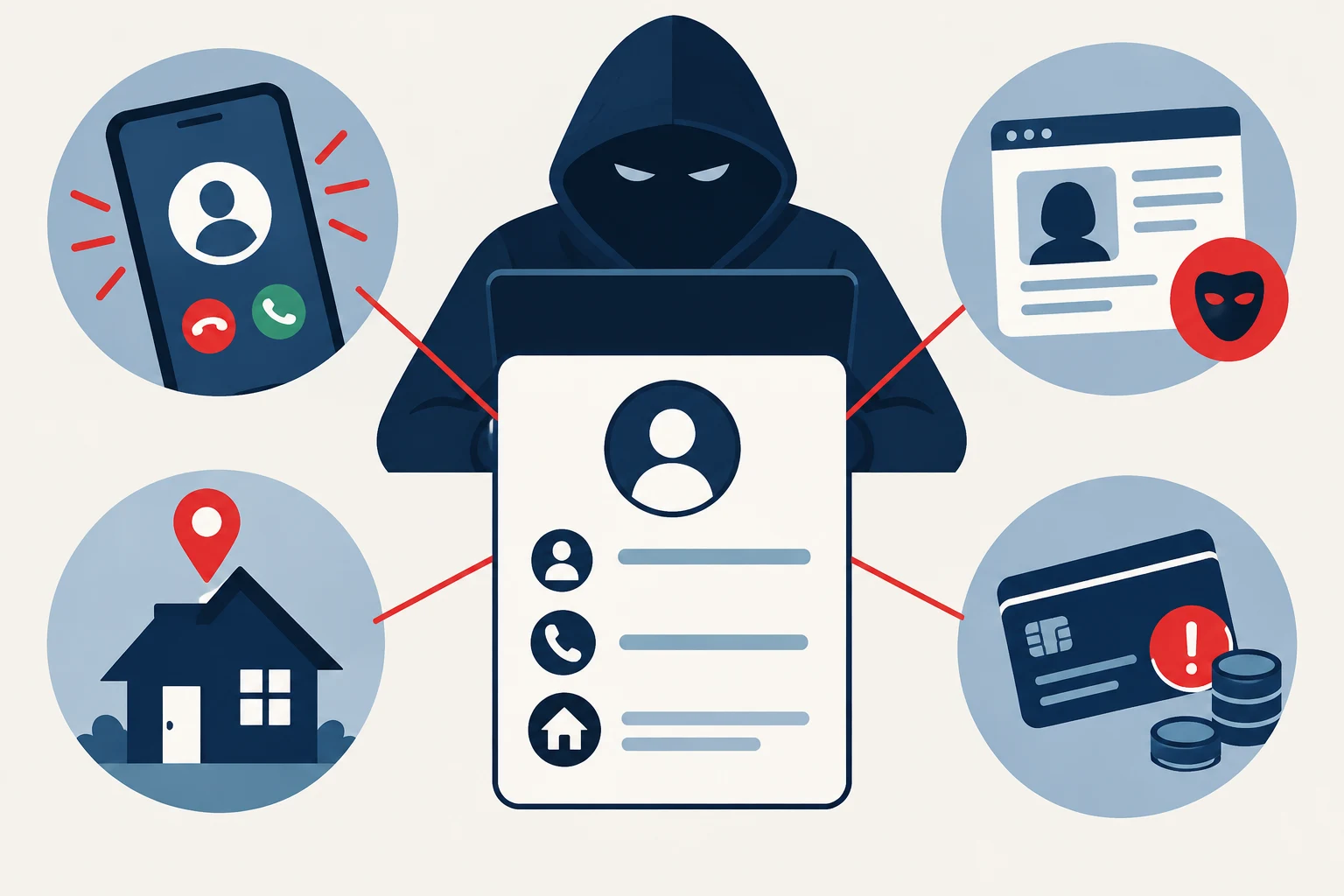
A person’s name, phone number and home address may be publicly available or exposed through data brokers and breaches. On their own, those details generally are not enough to take over a bank account or open major credit accounts, according to Fox News. But they can help a criminal make a fraudulent call, text or piece of mail seem credible—and may be combined with other stolen information.
The Fox report describes possible uses including impersonating a bank, utility or government agency; attempting to persuade someone to share a password or verification code; and supporting account-recovery or SIM-swap attempts. It also says personal details can make family-emergency impersonation scams more persuasive. These scenarios may require additional information or successful deception; merely knowing someone’s address does not establish that an account has been compromised.
The report recommends treating familiarity as no proof of identity. For unexpected calls, it suggests ending the conversation and contacting the organization through a phone number or app already known to be legitimate. It also advises against confirming or correcting personal information during unsolicited contact.
Other measures cited include setting a strong wireless-carrier account PIN and enabling number-transfer protections where available. For important accounts, the article recommends two-factor authentication, favoring an authenticator app, passkey or physical security key over text messages for sensitive accounts when possible. It also suggests reviewing bank and credit-card activity, checking credit reports for unfamiliar accounts or inquiries, and considering a credit freeze if identity theft is a concern.
The article notes that data-broker removal and identity-monitoring services may offer additional tools, but says such services cannot prevent scams or guarantee that information will stay private. It was published Oct. 10, 2026.