

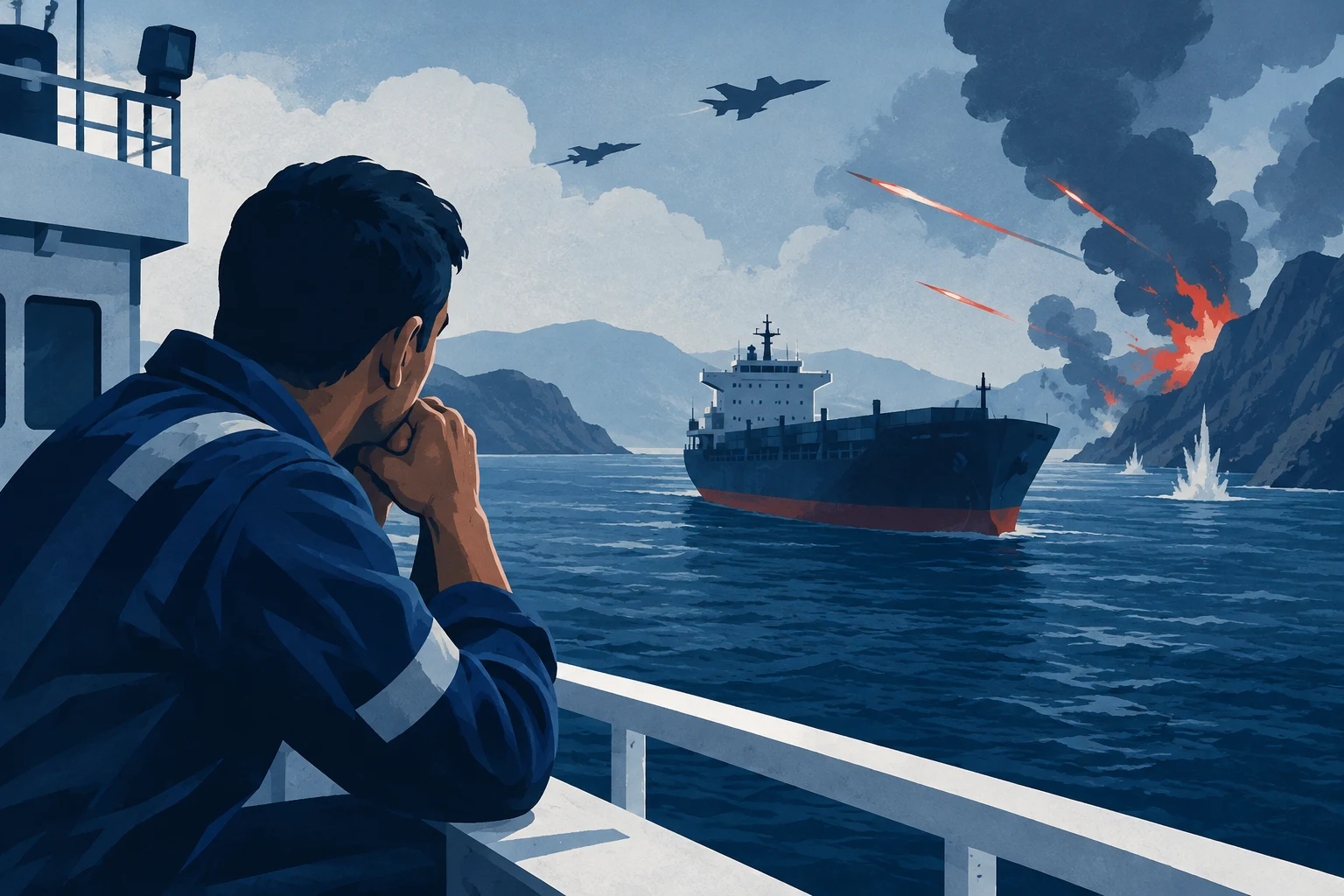
International Maritime Organization Secretary-General Arsenio Dominguez said Sunday that about 6,000 seafarers remained trapped near the Strait of Hormuz and warned crews against transiting the waterway until they had safety guarantees. He described conditions for international shipping as severe and said seafarers had died in attacks during the conflict.
The warning came amid reports that 24 ships had been attacked in the strait over roughly two weeks, according to the Financial Times. Separately, the IMO had recorded 100 confirmed maritime incidents across the region as of Oct. 9 and reported 24 seafarer deaths since the conflict began Feb. 28.
Iran’s government raised a separate complaint about communications at sea. In a letter submitted to the IMO on Oct. 9, Iran alleged that U.S. military forces had repeatedly occupied VHF Channel 16, an internationally designated maritime distress and safety channel, for extended periods in the Persian Gulf. The letter said Iranian sailors had received threatening messages in Persian and, in some cases, were told to abandon their vessels.
The complaint, submitted by Iran’s ambassador to the IMO, Seyed Ali Mousavi, was circulated to member states. Iran asked the organization to bring the allegations to the attention of member countries and relevant international bodies. The letter cited commercial vessels and maritime operators but did not include recordings, transcripts or specific details of the alleged exchanges. The report said the claims could not be independently verified.
U.S. Central Command defended its enforcement of a naval blockade of Iranian ports. CENTCOM said the blockade had been in place for months and was communicated professionally to international mariners. It said vessels that did not comply received multiple warnings and time to comply, and described U.S. forces as vigilant and professional.
Dominguez said crews on commercial ships are not trained for combat and that Channel 16 should not carry communications that could be understood as threats or fall outside the channel’s intended purpose. He said the IMO could examine whether its rules or procedures need clarification or stronger safeguards, including measures to improve understanding of how the channel should be used. He did not announce a formal investigation.
The IMO chief said countries have equal rights to raise concerns with the organization, and that it circulates letters and notes submitted by member states. The IMO would discuss the information through its meetings, he said, and consider whether rules should be improved if communications problems are demonstrated.
Dominguez also identified fraudulent vessel registrations and false flags as concerns. He said some ships using false registrations were acting as shuttle tankers to move goods in and out of the region, contributing to increased risk. He criticized shipowners who, in his view, were accepting dangerous conditions to continue moving cargo.
Despite the conflict, Dominguez said diplomatic communications with Iran remained open through official channels. He said he had no direct contact with Iran’s Islamic Revolutionary Guard Corps. He described information exchange with Iran as ongoing but said reaching final decisions was difficult amid the conflict. Fox News Digital said it had requested comment from the Iranian embassy.