


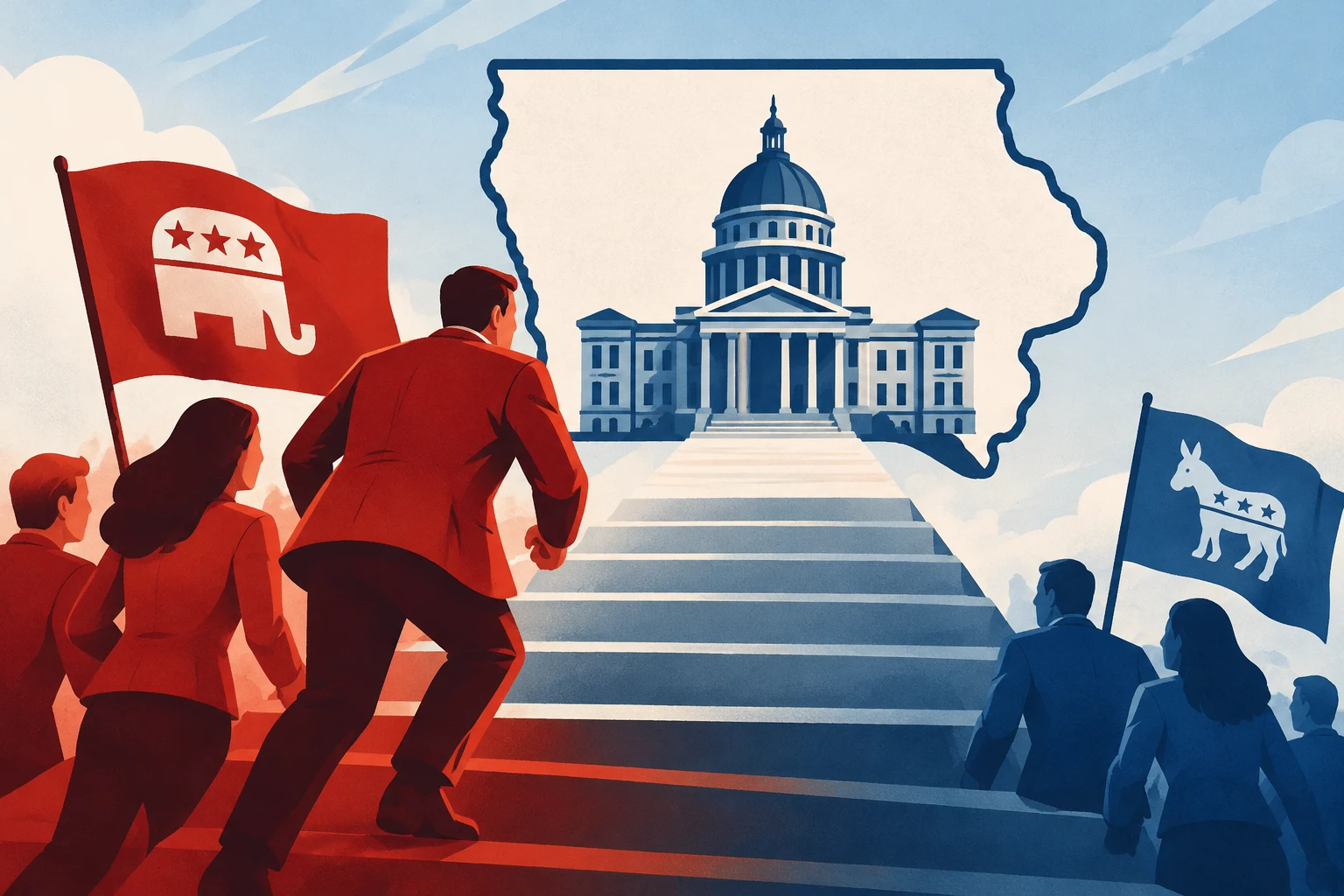
Iowa is emerging as a major battleground in the fight for control of the House, with Republicans defending three of the state’s four congressional districts ahead of the Nov. 3, 2026, midterm elections. President Donald Trump carried Iowa by about 13 percentage points in November 2024, but the state’s recent Republican lean has not prevented its congressional races from becoming competitive.
Fox News Power Rankings cited in the report place the districts represented by Reps. Zach Nunn and Mariannette Miller-Meeks in the “lean Democrat” category. The open seat in Iowa’s 2nd Congressional District, where Republican Joe Mitchell is running after Rep. Ashley Hinson’s retirement, is rated a toss-up. The fourth district is described as the state’s only safe Republican seat.
House Majority Whip Tom Emmer, a Minnesota Republican, argued during campaign appearances in Dubuque and Des Moines that Republican turnout would determine the outcome. He said the result was uncertain and urged supporters to vote, warning that low participation could leave Republicans struggling to retain seats. Emmer also questioned the reliability of surveys, saying many Republicans are reluctant to respond or distrust the organizations collecting the information.
The campaign events took place during a two-district swing with Emmer. He attended an event for Mitchell in the 2nd District, then joined a fundraiser for Nunn in Des Moines. Both candidates expressed confidence in their campaigns while acknowledging the state’s importance to the national House contest.
Mitchell said his campaign had spent 13 months visiting all 22 counties in his district and asking voters for support. He framed the contest as a choice between “common sense” and what he called “crazy.” Nunn described his Des Moines-area district as among the country’s most competitive and said Iowa’s three contested seats put the state on the front line of the House battle.
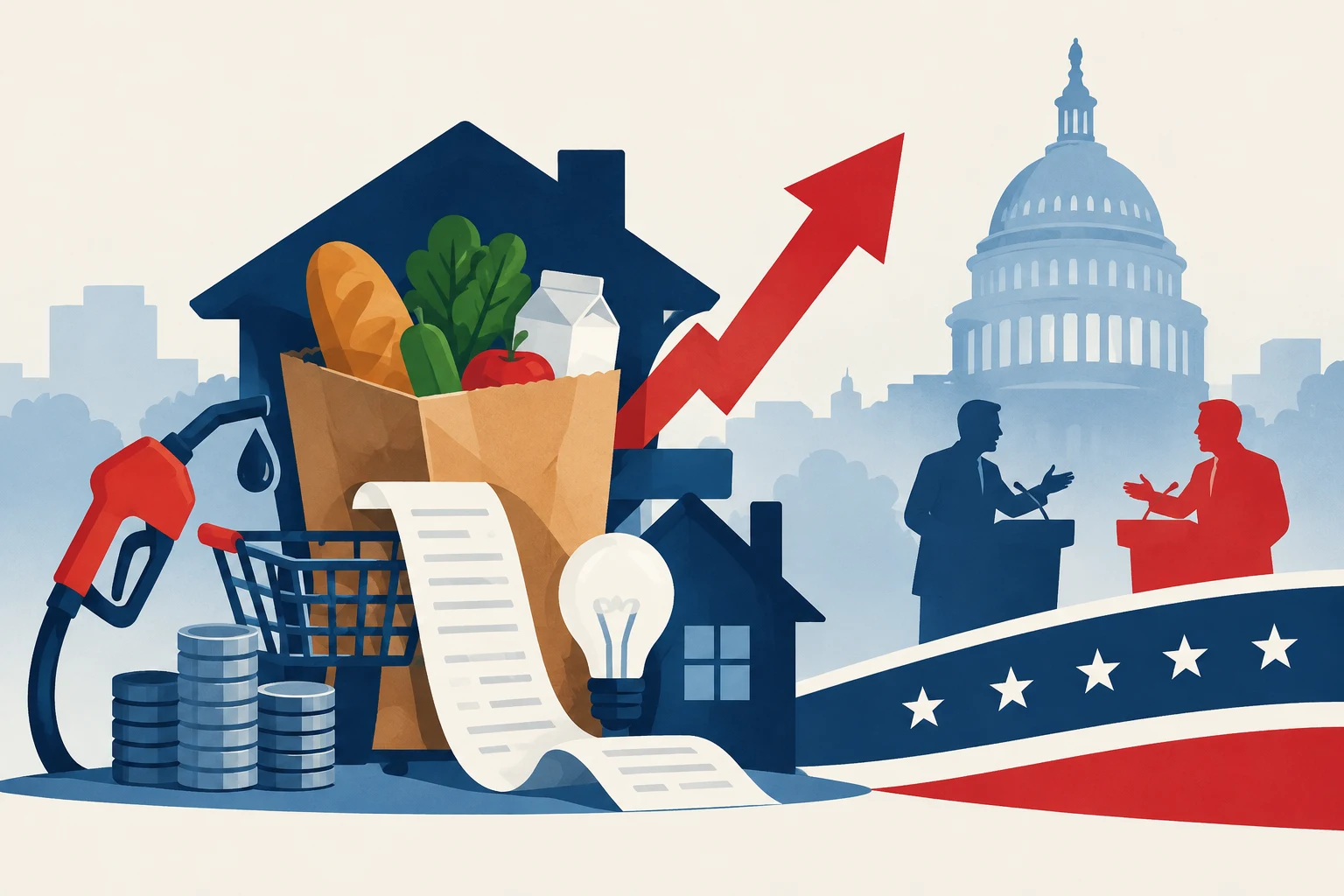
The report also describes potential headwinds for Republicans. Some Republicans are concerned that Trump’s approval ratings and unpopular policies could affect the party’s candidates, alongside voters’ concerns about the cost of living and gasoline. In agriculture-dependent Iowa, the source identifies Trump’s tariffs and his decision to import foreign beef as particular issues. It says tariffs have raised costs for farm equipment and other materials, while China’s retaliation in the trade dispute has hurt American farmers.
Trump has sought to address some concerns about steel tariffs, according to the report, and announced plans the previous month for a $15 billion steel plant in Lee County, Iowa. Nunn, meanwhile, recently led a bipartisan bill intended to curb imports of foreign beef. The source does not provide details on the bill’s provisions or its prospects.
Trump was expected to visit Iowa later in the week for a rally in Sioux City, located in the state’s safe Republican district. Nunn said the president had spoken with him by phone before his Des Moines event and was committed to remaining involved in Iowa. The report presents the visit as an effort to energize Republican voters.
Emmer said he expects the House contest to hinge on roughly 10 seats nationally, rather than the 20 or more seats sometimes discussed. He argued that Iowa Republicans could retain their seats if they turn out. A GOP operative familiar with Iowa campaigns offered a more pessimistic assessment, telling Fox News Digital that the three competitive Republican candidates might win narrowly or face a sweeping defeat, with turnout separating the outcomes.
The article’s account reflects campaign-season arguments from Republican leaders, candidates and an unnamed GOP operative, alongside the cited race ratings. It does not establish how voters will ultimately respond or determine the effect of the cited economic and policy issues on the election results.