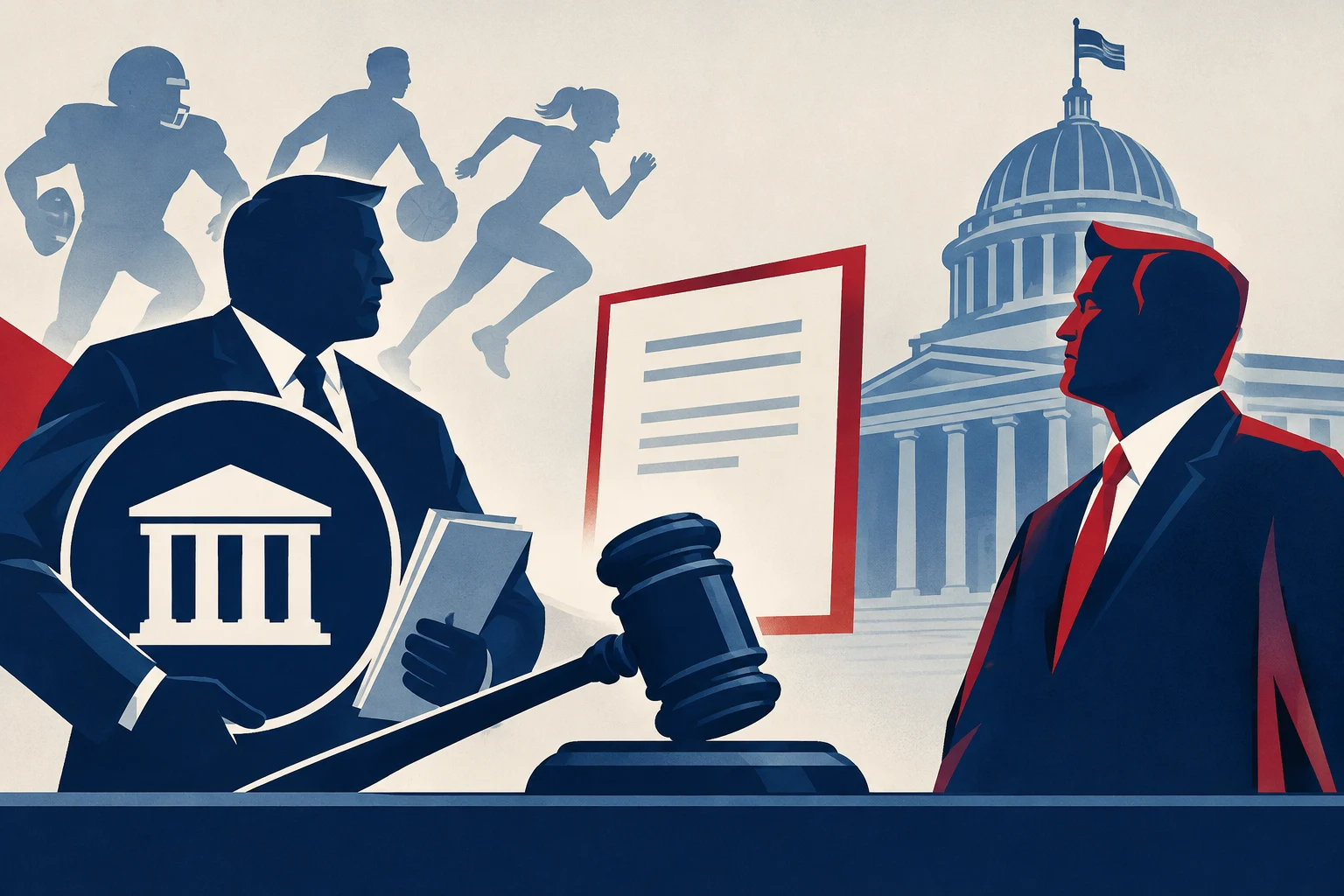
The NCAA filed suit in federal court in Ohio on Friday, challenging Gov. Mike DeWine’s executive order that gives Ohio universities the option to let certain college athletes compete for a fifth season. The order, signed three days before the lawsuit, applies to athletes who graduated from high school in 2022 and conflicts with an NCAA eligibility rule adopted in June.
That rule excludes athletes who have already competed for four seasons. The NCAA argues that allowing Ohio schools to disregard the restriction would give them an unfair advantage over programs elsewhere. In its court filing, the association accused DeWine of trying to exempt Ohio institutions from rules that other schools must follow.
NCAA President Charlie Baker called the lawsuit an “extraordinary step,” saying the association sought to prevent an uneven competitive landscape. DeWine’s office declined to comment on the case. The governor is a two-term Republican, according to the supplied report.
The executive order has not drawn public comment from Ohio’s eight Division I programs, the report said. Ohio’s Division I schools include Ohio State, Cincinnati and six universities in the Mid-American Conference. Lt. Gov. Jim Tressel, a former coach at Ohio State and Youngstown State, has supported the order. Tennessee athletic director Danny White criticized the dispute in a social media post, calling the situation “comical.”
The NCAA’s federal case is one part of a wider set of legal challenges over eligibility for athletes in the 2022 high school graduating class. The Ohio Supreme Court has said it will decide whether DeWine’s order is legal. It also paused an appeals court ruling that had found the athletes ineligible and directed the parties in a separate case to submit briefs by the following Monday.
That state case names basketball player Filip Borovićanin as the lead plaintiff. NCAA officials said they did not interpret the state Supreme Court’s order as immediately making the affected athletes eligible. Borovićanin played in an exhibition against Tennessee on Thursday night after DeWine’s order placed him back on the eligible list, according to the report.
The uncertainty affects athletes in football as well as basketball, with the upcoming season approaching. The report identified Gonzaga transfer Javon Bennett and Cincinnati’s MJ Collins among players whose status was in question, alongside Borovićanin.
The dispute follows years of NCAA efforts to obtain federal legislation addressing lawsuits over association rules. The Senate has sent the Protect College Sports Act to the House, but the bill’s prospects remain uncertain, the report said.
The NCAA has previously sued a governor, though such cases are unusual. In the early 1990s, it won a case against Nevada Gov. Bob Miller concerning a state law that would have required stronger due-process protections in NCAA enforcement proceedings. The current Ohio lawsuit raises a separate dispute over the authority of a state executive order and the application of NCAA eligibility rules.