A review of 44 studies published in Frontiers in Psychology linked excessive consumption of negative online content with higher anxiety and psychological distress. The research found an association, not proof that doomscrolling causes those outcomes.
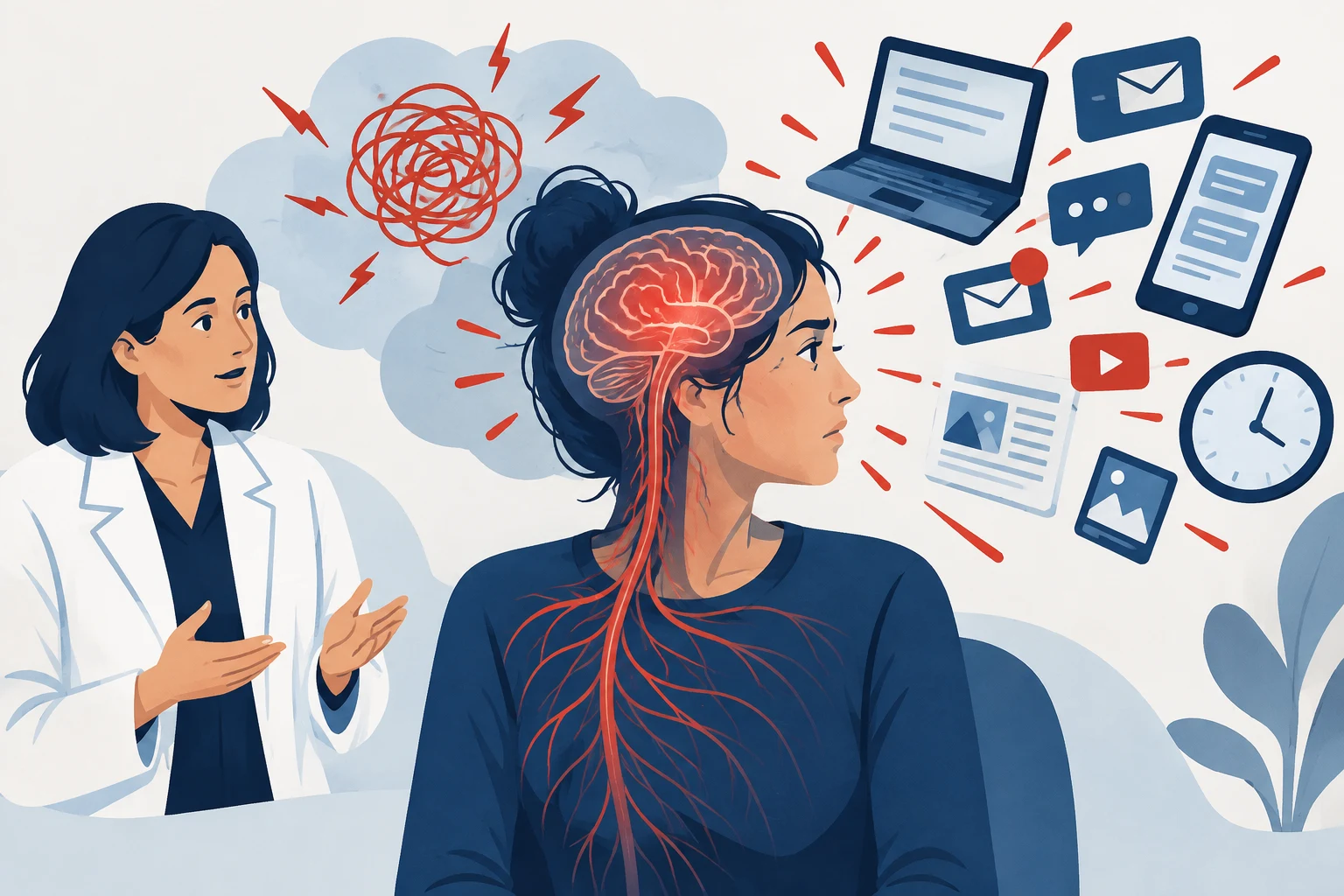
Neurologist Steven Resnick, chief of neurology and medical director of the Comprehensive Stroke Center at Mount Sinai Medical Center in Miami Beach, uses the phrase “helicopter brain” for a nervous system that remains on alert. He told Fox News Digital that information overload, uncertainty and other stressors may contribute to that state.
Resnick said some patients report symptoms including headaches, digestive problems, fatigue, sleep difficulties, tingling and dizziness. He described listening to patients and identifying recurring thoughts, behaviors and triggers as steps toward understanding their experiences.
His suggestions include noticing cues that precede unwanted habits, choosing a healthier replacement behavior and using a small, immediate reward to reinforce it. For anxiety in situations that can be safely faced, he advised allowing the anxious feelings rather than automatically avoiding the situation. These are Resnick’s recommendations, not findings established by the 44-study review.
The article emphasizes that persistent or unexplained physical symptoms warrant medical evaluation to rule out underlying health conditions. The study’s reported association should not be taken as a diagnosis or evidence that online content explains an individual’s symptoms.