A clinical neuropsychologist argues that parents and schools should distinguish ordinary developmental challenges from conditions that warrant diagnosis and formal support. The author’s central point is not that disorders are unreal or that children should be denied help, but that treating every struggle as a medical problem may sometimes create costs of its own.
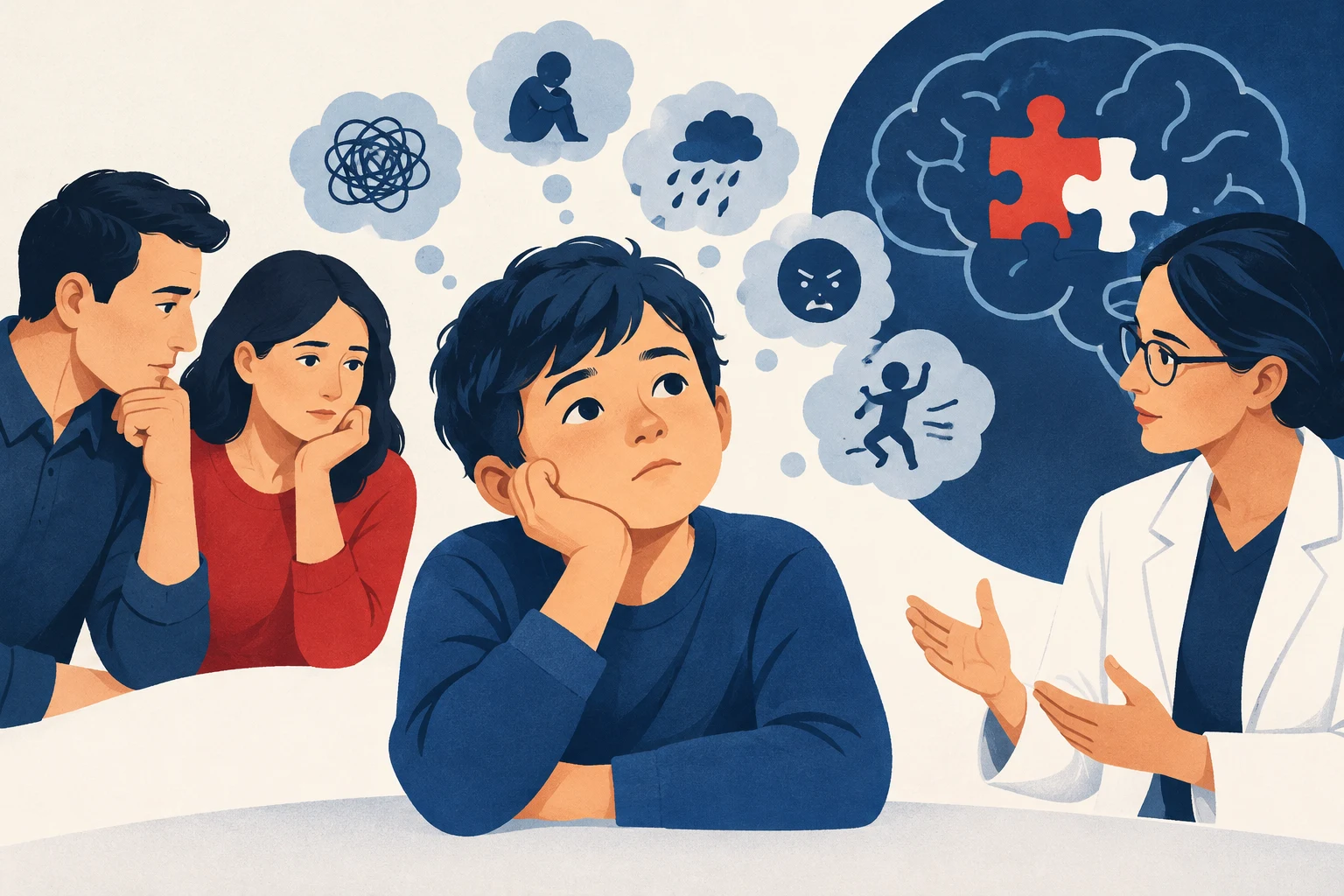
To illustrate the concern, the author describes “Zach,” a high-achieving 10th grader who plays varsity basketball, takes accelerated classes, competes in Math Olympiad and plays French horn. The student seeks accommodations for the ACT despite scoring 34 on practice tests; the author notes that the test’s maximum score is 36. Zach hopes to attend the University of Pennsylvania and believes his score is insufficient. The article says the character is a composite and/or fictionalized, so the account should not be read as the history of a single identified patient.
The author presents the example as part of a broader argument about competition and measurement. Children are routinely compared with peers through percentiles, the piece says, and parents can attach too much significance to those rankings. A score at the 37th percentile, the author tells readers, is within the average range. Measures such as test results are estimates taken at a particular time, not definitive assessments of a child’s future abilities, the article argues. It also points to qualities such as persistence, creativity and interpersonal skills as important strengths that are difficult to capture with scores.
The piece says that striving for ever-higher performance can make both struggling and successful children seem like problems to be fixed. A child who falls short may be viewed as needing a diagnosis or accommodation, while a high performer may prompt concern about anxiety or perfectionism. The author argues that this leaves little room for the uneven, ordinary process of growing up.
The neuropsychologist also emphasizes the tradeoffs involved in interventions. Time and money devoted to services, the article says, cannot be spent on other activities, including sports, camps, time with friends or homework. Those alternatives may offer enjoyment and opportunities to develop skills, the author writes. The article does not claim that therapy or accommodations are inherently harmful; rather, it argues that families should consider what a particular intervention replaces and whether it addresses a genuine need.
The author raises a further concern about how some support strategies may affect children’s sense of control and ability to manage discomfort. The piece says that assigning a label can make difficulties seem outside a child’s influence, while placing heavy emphasis on rankings and paid accommodations may leave effort feeling less meaningful. It also argues that, when anxiety is maintained by avoiding a feared situation, removing the challenge can bring short-term relief but reduce the chance to learn coping skills. These are the author’s clinical arguments, not a case-specific assessment of every child or accommodation.
The article acknowledges the pressures on parents, including guilt, conflicting advice and online influencers who may benefit from making families feel inadequate. It says a diagnosis can offer an understandable explanation and a practical next step, but urges parents to weigh whether a problem is substantial before pursuing formal interventions.
As an alternative, the author recommends treating average performance as acceptable, broadening how families define success, recognizing children’s effort and giving them meaningful control. The piece also advises supporting children through difficult experiences rather than automatically removing obstacles, while distinguishing appropriate support from enabling avoidance.
The author’s conclusion is to seek professional help when a child has a real problem, but not to medicalize every temporary difficulty. In Zach’s fictionalized example, the author suggests that a score of 33, 34 or 35 is unlikely to determine whether he can attend a good college or lead a successful life. The article’s overall position is that children can be resilient and that parents should leave room for ordinary struggle alongside necessary care.