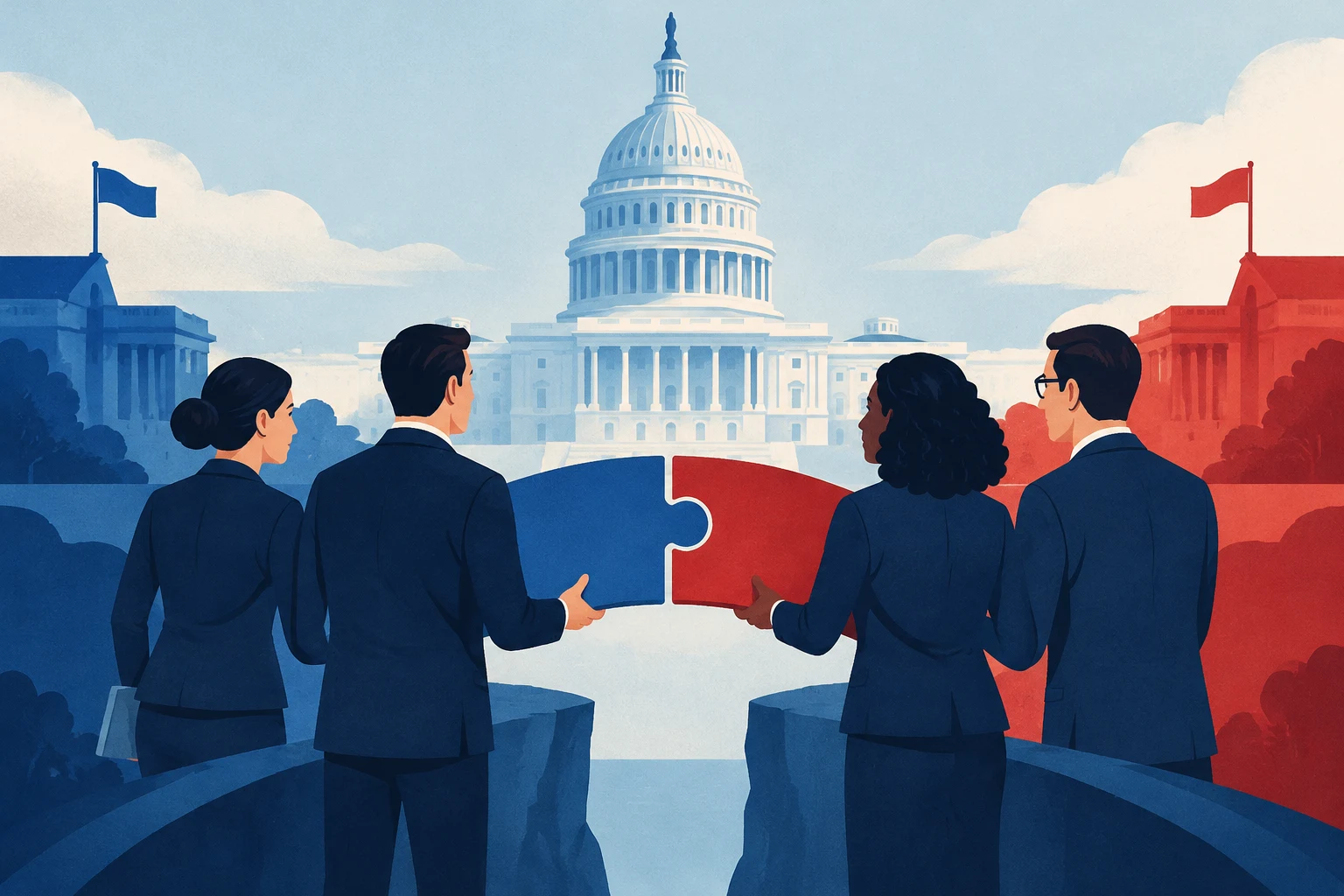
A Fox News opinion article published Oct. 15, 2026, argues that companies should prepare for the midterm elections by coordinating their government affairs and communications teams rather than treating election results as a complete measure of public opinion.
The author, Dustin Siggins, says a Democratic win in Congress would not remove President Donald Trump’s influence over federal agencies and executive policy. He notes that, in past periods of divided government, presidents continued to use executive authority after their party lost congressional control. The article cites George W. Bush’s actions after the 2006 midterms, Barack Obama’s actions after Republicans took Congress in 2014, and the Biden administration’s Federal Trade Commission activity near the end of his term. It also points to Trump’s response to the 2018 House loss, including a prolonged government shutdown and a national emergency declaration related to border-wall funding.
These examples support the article’s central argument: companies should not assume a new congressional majority will dictate every policy decision or that an outgoing president will stop acting. The piece contends that government affairs teams understand regulators, agencies and lawmakers, while communications teams are better positioned to assess the concerns of customers, employees and local communities. It recommends that both groups jointly assess company risks, relationships and messaging.
The article uses data center development as a case study. It says companies in the sector won permits and support from public officials but did not adequately account for nearby residents. Citing an October report by Proven Media Solutions, the piece says community opposition helped slow 40% of data centers that had been scheduled to open in 2026. The author presents that figure as an illustration of how local resistance can affect projects even when companies have secured government approvals.
The article also discusses diversity, equity and inclusion policies. It says some companies had already scaled back controversial DEI practices before Trump’s early-2025 executive orders brought the issue back into public focus. According to the piece, changes made by government contractors—including removing references to equity from websites—could satisfy contractual concerns while worsening relations with employees who saw the changes as a retreat from diversity commitments. The author argues that companies facing possible congressional scrutiny should build trust with employees, investors and minority business partners in advance.
Immigration-related hotel disputes provide another example. The article reports that the General Services Administration removed a Minneapolis-area hotel from federal lodging programs in January after a local franchise declined to host immigration agents. It also says protesters later occupied a Manhattan Hilton lobby over the opposite complaint: the presence of immigration agents in hotel accommodations. The author says these disputes illustrate the competing pressures on hotel companies from government, franchise operators, customers and employees.
The opinion piece concludes that companies should plan for the possibility that today’s political allies could become future critics. It argues that communications should account for multiple audiences, because statements aimed at government officials may also be judged by employees, customers and communities. The article’s recommendation is a shared post-election plan that recognizes both federal political realities and local stakeholder concerns.