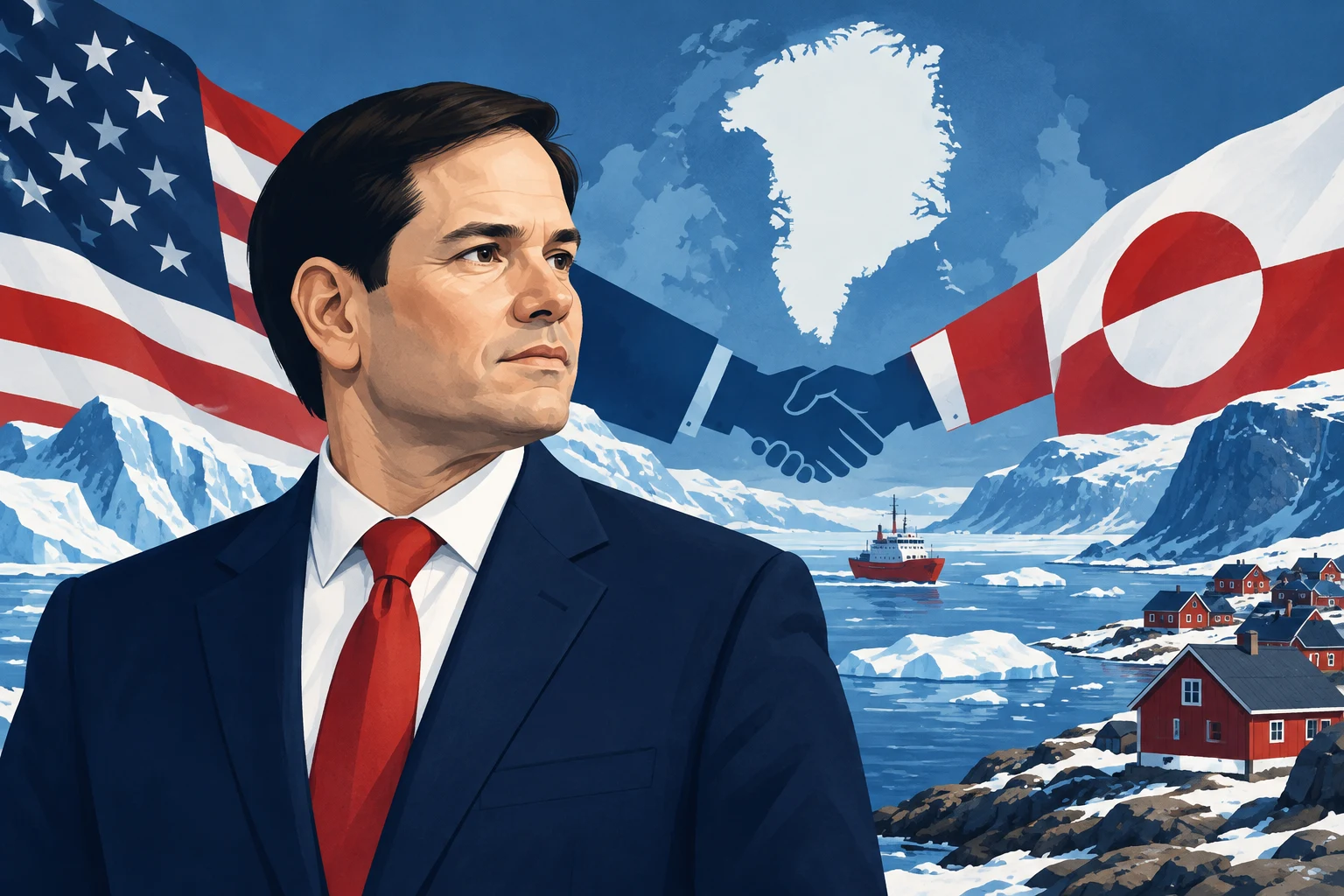
A Fox News opinion article published Oct. 15, 2026, presents Secretary of State Marco Rubio’s diplomacy in Panama, Greenland and Iceland as part of a broader effort to limit Chinese influence and protect U.S. strategic interests. The piece argues that Arctic shipping routes and maritime access are increasingly important as melting ice makes some passages more navigable. Its central case is that diplomatic agreements, rather than threats toward allies, produced the gains it describes.
The article says Rubio visited Reykjavik, Iceland, about four decades after Ronald Reagan and Soviet leader Mikhail Gorbachev met there during the Cold War. It recounts Rubio describing Iceland as an important location for monitoring covert activity and deterring adversaries. Asked whether the United States might expand its military presence there, Rubio did not announce plans, according to the piece, and said any such steps would require Iceland’s consent. The article says discussions would continue but does not provide details of a proposed expansion or a timeline.
The column links the Iceland visit to a recently reached agreement between Washington and Denmark concerning Greenland. It argues the deal could prevent non-NATO commercial and military actors from establishing a presence there, and says the arrangement also provides for a U.S. role in reviewing foreign investment in certain critical sectors, as well as access related to overflights, missile defense and undersea activity. The text describes the arrangement as respecting Greenland’s sovereignty and remaining in effect even if Greenland were to become independent. It offers no treaty text or independent explanation of the agreement’s legal provisions, so those descriptions are the author’s account.
The piece responds to critics who reportedly dismissed the agreement as unnecessary because China does not currently have a presence in Greenland. The author argues that the strategic significance lies in future Arctic routes and access, rather than a claim that China already controls the island. The column also says the agreement clarifies matters not addressed in a 1951 treaty, but does not quote the earlier treaty or provide a detailed comparison.
On Panama, the article says a Panamanian court ruled that a contract held by an operator of container terminals at the canal’s Pacific and Atlantic entrances violated the country’s constitution, ending that contract. It presents the ruling as following Rubio’s discussions with Panamanian officials. The piece also repeats claims that Chinese personnel had been stationed to operate the canal and that a Chinese-owned company charged for passage in a way that disadvantaged the United States. Those are consequential allegations stated in the opinion article; the supplied text does not include responses from China, Panama, the company or independent documentation establishing them.
The author challenges the idea that President Donald Trump’s maximalist negotiating style brought about the Greenland agreement. The column says Trump’s threats to take Greenland by force alarmed NATO members and distracted from efforts to strengthen the alliance. It says progress began after the threats stopped, and cites a sharp decline in financial markets ahead of the Jan. 21 Davos World Economic Forum as well as polling that it reports found 91% of U.S. voters opposed to acquiring Greenland by military force. The material does not identify the poll or provide its methodology.
The article concludes that Rubio’s diplomacy—not threats toward Denmark—secured strategic benefits for the United States and its allies. That conclusion is the columnist’s assessment. The supplied material provides no response from Danish or Greenlandic officials to the agreement’s provisions, and no independent assessment of its effects on NATO, trade or Chinese activity.