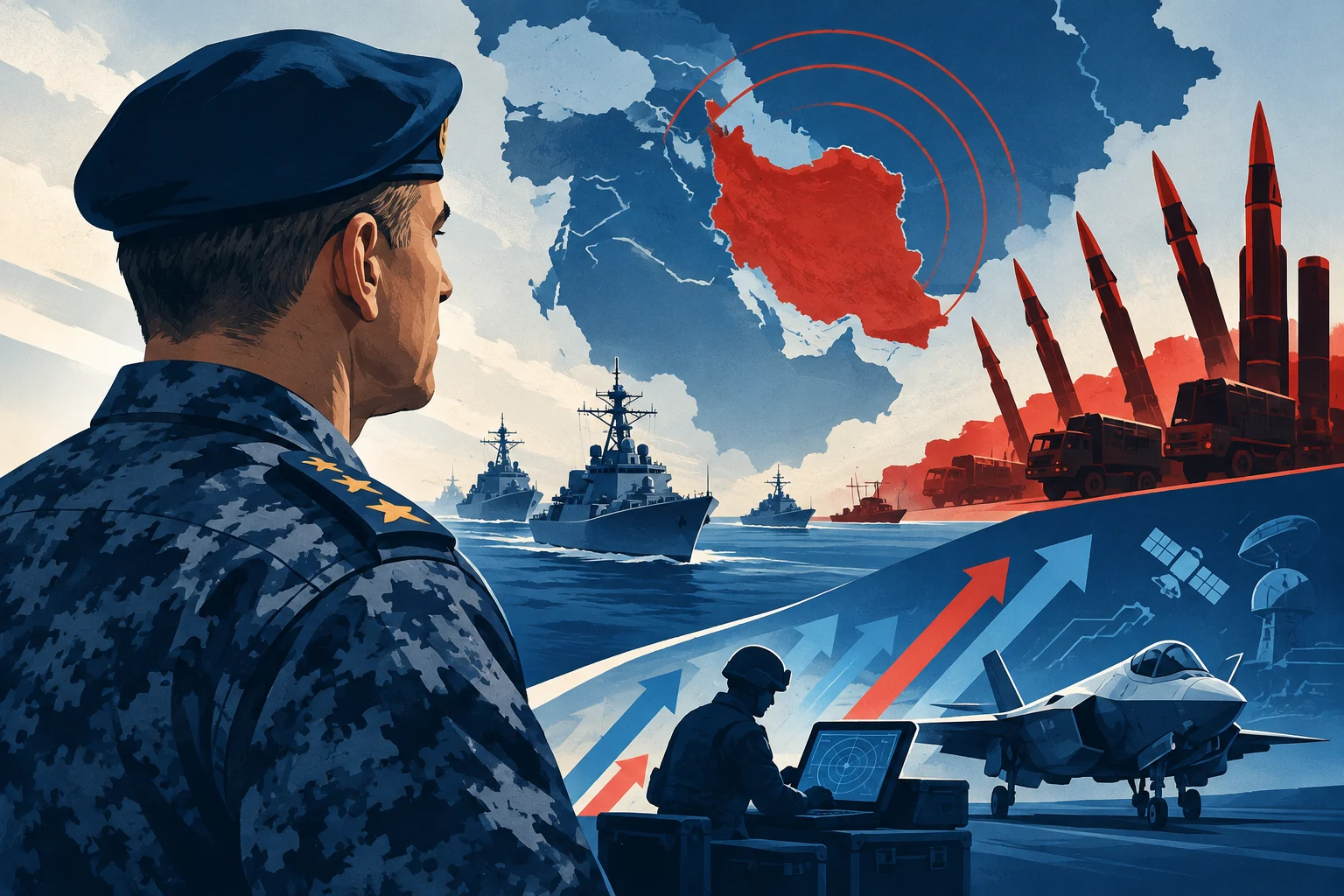
Gen. Ronald Clark, commander of U.S. Army Pacific, said moving some U.S. air-defense systems from the Indo-Pacific to the Middle East has not, in his assessment, made the region less secure. Speaking to Fox News Digital at an Army conference in Washington, he said the shift has allowed forces to modernize equipment and gives Patriot crews experience responding to attacks.
The source reports that Patriot systems and some South Korea-based THAAD interceptors have been sent to support operations in the Middle East. It also cites estimates from an October Congressional Research Service report of about 1,700 Patriot and 200 THAAD interceptors used during the conflict, along with a Congressional Budget Office estimate that between half and two-thirds of certain interceptor inventories had been expended. The source says the Pentagon inspector general has identified inventory gaps and production constraints.
Clark said upgrades mean a Patriot battery can provide coverage that previously required a battalion, but did not clarify what kind of coverage he meant. His comments do not resolve questions about the scale of remaining stocks or how quickly they could be replenished.
On China, Clark said he believes the People’s Liberation Army continues to prepare militarily. He did not say that Beijing’s preparations had accelerated or that diplomatic engagement had changed its intentions. He described readiness and preventing war as parallel responsibilities for U.S. forces.
Clark also discussed a possible revival of disaster-response exchanges between U.S. Army and Chinese military personnel. He said the exchanges had been discussed by senior U.S. and Chinese military officials, but gave no timetable and did not say Beijing had formally agreed. If resumed, the Army’s Pacific command would coordinate the effort.
The commander also said the Army has committed more resources to the Indo-Pacific than at any point in his career, including additional formations and capabilities to support operations at sea. These remarks reflect Clark’s assessment; the supplied material does not independently detail the readiness impact of the Middle East deployments.