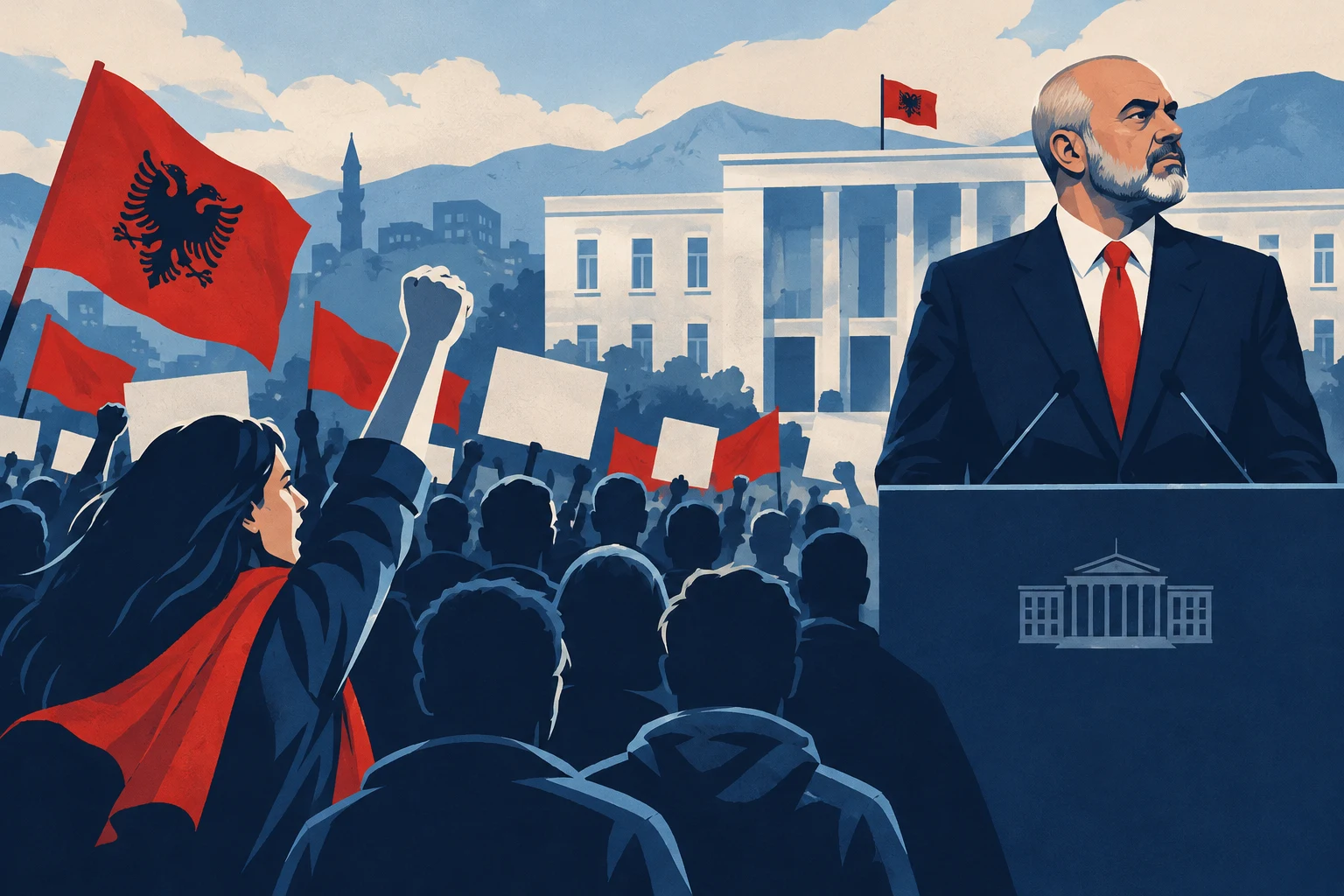
Anti-government protests in Tirana continued for a third straight day on Thursday, with demonstrators throwing rocks at a police line outside the Education Ministry. Police responded with tear gas and water cannons, according to The Associated Press. Prime Minister Edi Rama said he would not step down.
The latest clashes followed violence on Wednesday, when protesters attacked government buildings, banks and businesses. The source report said 89 people were injured, including 61 police officers.
Rama addressed calls for his resignation in comments to Reuters, saying that governments change through democratic elections. He pointed to Albania’s election last year and rejected the idea that the protests amounted to a revolution. Rama won a fourth term as prime minister in that vote, running on a pledge to advance Albania’s bid to join the European Union.
The demonstrations bring together groups with differing stated concerns. Student organizers told Reuters they were protesting education costs, limited financial assistance, university conditions and the employment prospects of graduates. Rama said he was willing to discuss the cost of education, while arguing that attacks on institutions and damage to public property were not part of legitimate student demands.
Other protesters are part of a wider opposition movement calling for Rama’s departure and alleging widespread corruption. The movement has been dubbed the “flamingo” movement because some participants use signs depicting the pink bird. The protests also include opposition to a major development project associated in the source report with Jared Kushner, President Donald Trump’s son-in-law.
Rama said his responsibility was to hear concerns and address those he considered legitimate, while continuing Albania’s progress toward EU membership. He described the country’s European ambitions as a reason to maintain stability and said corruption must be confronted. Reuters reported that Albania hopes to join the EU as early as 2028.
Agim Nesho, a former Albanian ambassador to the United States, told Fox News Digital that public anger reflected allegations of corruption, misuse of public funds and political favoritism. Nesho also cited poverty, unemployment, inadequate public services and young people leaving Albania for opportunities elsewhere in Europe. Those comments are attributed criticism, not independently established findings in the supplied reporting.
An EU delegation in Albania called on authorities late Wednesday to respond proportionately and expressed concern about the escalation of violence in Tirana. The supplied report does not provide further details about the delegation’s statement or any investigation into the development project.
The immediate dispute therefore combines student demands over education with broader political opposition, while the government maintains that elections—not street pressure—are the proper route to changing leadership. Protests and clashes were still under way Thursday, according to the cited reporting.