
Family Farmstead Dairy recalled a batch of its raw mild cheddar cheese after testing in Maryland found samples containing two strains of E. coli, according to a U.S. Food and Drug Administration notice posted Oct. 15. The company is based in Worcester, New York.
The recalled product is Family Farmstead Dairy Raw Mild Cheddar Cheese bearing lot code and best-by date 7/22/27. The FDA notice identifies the cheese as sold in 8-ounce packages. The testing involved Family Farmstead A2 Raw Cheddar samples.
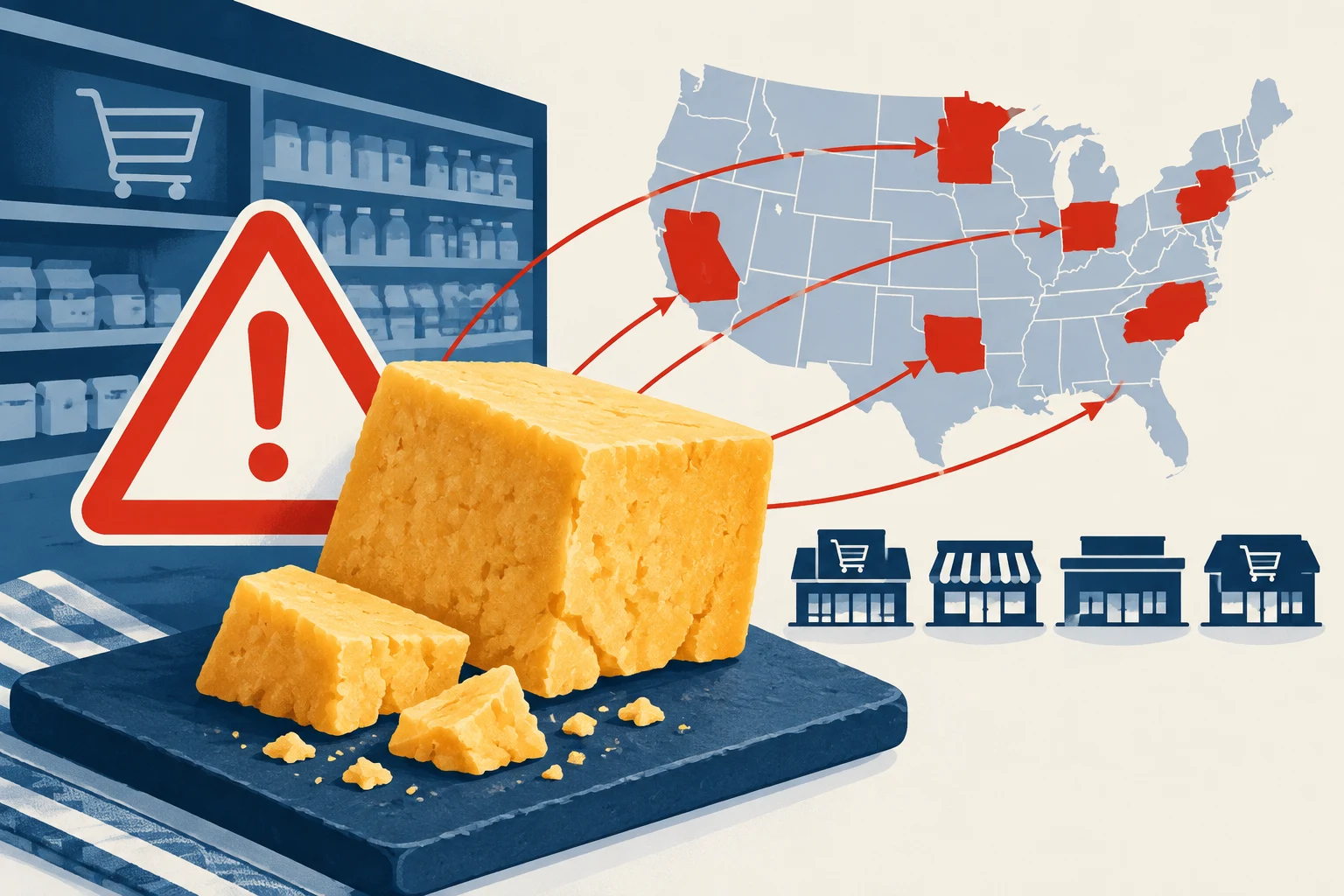
The company reported that the cheese went to retailers in New York, Pennsylvania, New Jersey, Connecticut, Maryland, Virginia and Massachusetts. The product may also have been distributed to additional states through downstream distributors, the notice said.
The identified strains are E. coli O26:H11 and O45:H2. The FDA notice says they can cause diarrhea, including bloody stools. It also warns that some people, particularly young children and older adults, may develop hemolytic uremic syndrome, a form of kidney failure that can cause serious kidney damage or death. The notice says many healthy adults recover within about a week, though that outcome is not guaranteed.
As of the announcement, no illnesses or allergic reactions had been reported in connection with the recalled cheese. The recall notice does not report any other Family Farmstead Dairy products being included.
Consumers who bought the identified cheese are advised not to eat it. They can discard it or return it to the place of purchase for a full refund, according to the notice.
Family Farmstead Dairy apologized to customers and retail partners, saying it would work to identify the cause and take corrective action. The company described product quality as a priority. Fox Business reported that it could not immediately reach the dairy for additional comment.
The notice provides no further details about how many packages were involved or whether the recall’s distribution had been confirmed beyond the seven named states. Consumers checking their refrigerators should compare the product name and the lot and date information with the recall details, rather than assuming that other products from the dairy are affected.