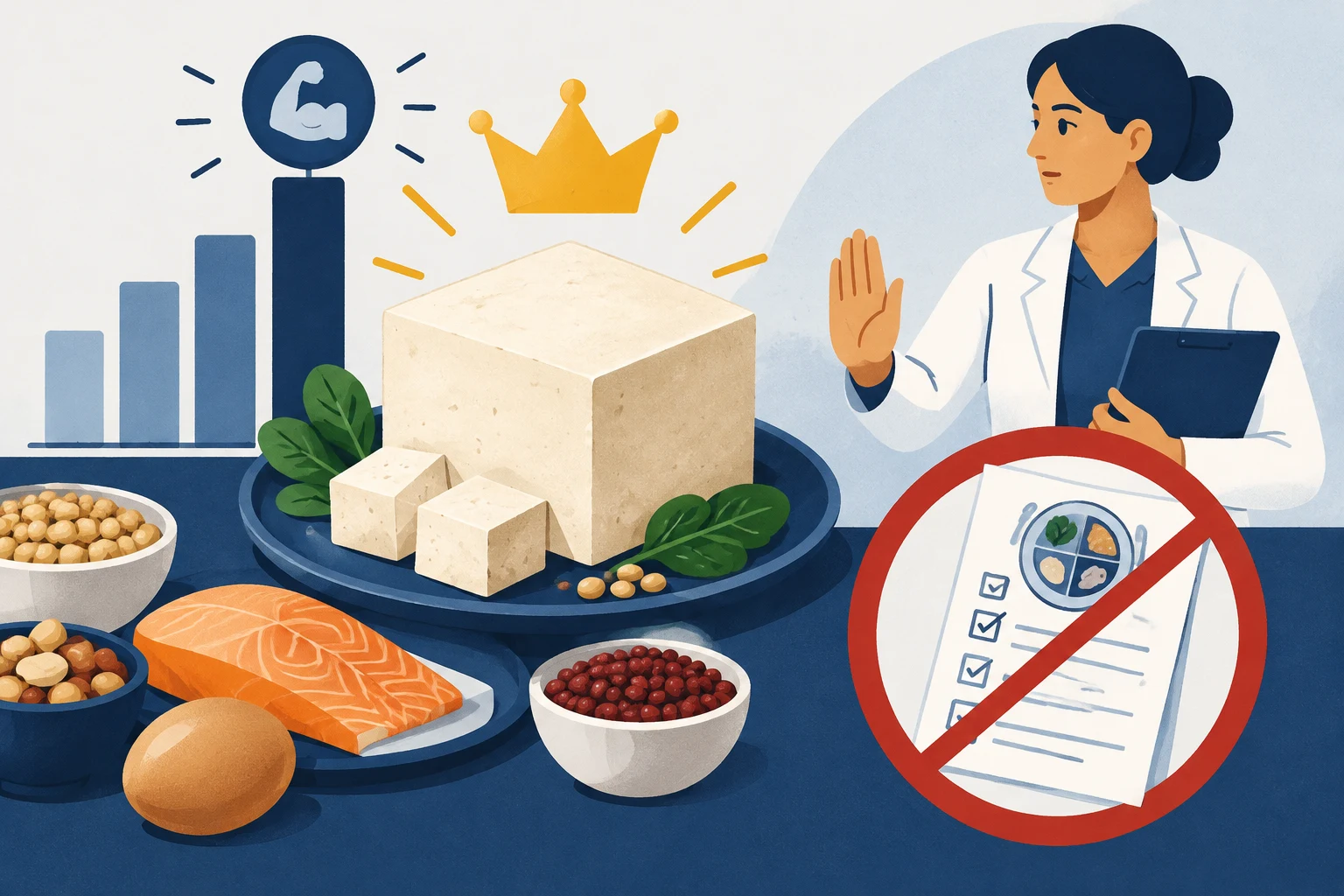
A protein-ranking system introduced in a July paper in Frontiers in Sustainable Food Systems placed tofu ahead of beef, salmon and eggs, while also warning that the score is an initial framework rather than a dietary guideline.
The BPI Score evaluates 20 protein sources on a 40-point scale. Developed by University of Cambridge researcher Chris Macdonald and the Better Protein Institute, it combines measures of nutrition, affordability and availability with environmental impacts. Tofu received 36 points. Beans, chia seeds and quinoa followed among the highest-ranked options, while mozzarella, lamb, beef and cheddar were among the lowest.
The system has two components. Its “People Score” considers sodium, saturated fat, cholesterol, whether a food provides all nine essential amino acids, affordability and availability. Its “Planet Score” assesses greenhouse gas emissions, water pollution, land use and freshwater use. Tofu ranked highest in both categories.
The paper estimated that producing 100 grams of protein from tofu was linked to 0.61 kilograms of greenhouse gas emissions, compared with 64.19 kilograms for beef. It also estimated land use of about two square meters for tofu’s 100 grams of protein, versus about 211 square meters for beef.
Those figures compare the quantities of foods needed to supply the same amount of protein, not equal-sized servings. The source material also says the analysis relies on U.K. grocery data and represents a first iteration of the scoring system. Macdonald wrote that, despite the score’s limitations, it offers a basis for a more detailed discussion.
Nutrition experts cited in the report urged consumers to consider practical serving sizes and individual needs rather than relying on a ranking alone. Corry Matthews, a California-based fitness and nutrition expert and founder of Strength & Grace Fitness, said three ounces of cooked chicken breast provides roughly 26 grams of protein. A half cup of firm tofu may provide about 10 to 15 grams, depending on the product, while two tablespoons of chia seeds provide about four to five grams.
Matthews said that does not make chia seeds a poor food, but she would not use them as a primary protein source for someone aiming to get 25 to 30 grams of protein at a meal. She noted that eggs, dairy, fish and lean meats generally offer complete protein and can provide concentrated amounts of essential amino acids. Tofu is also a complete protein, she said, while people relying on plant-based foods may need to pay closer attention to serving sizes and total intake.
Ashley Koff, an Oregon-based registered dietitian and founder of The Better Nutrition Program, said protein needs vary and that some people do not digest tofu well. She advised choosing sources people enjoy and can access. Matthews similarly encouraged readers to understand what the ranking measures and select foods that fit their goals, rather than letting a score determine their nutrition choices.