A research team at Australia’s Murdoch Children’s Research Institute reported that a revised approach to diagnosing obesity identifies a smaller share of children and adolescents as clinically obese than standard body mass index (BMI) calculations do.
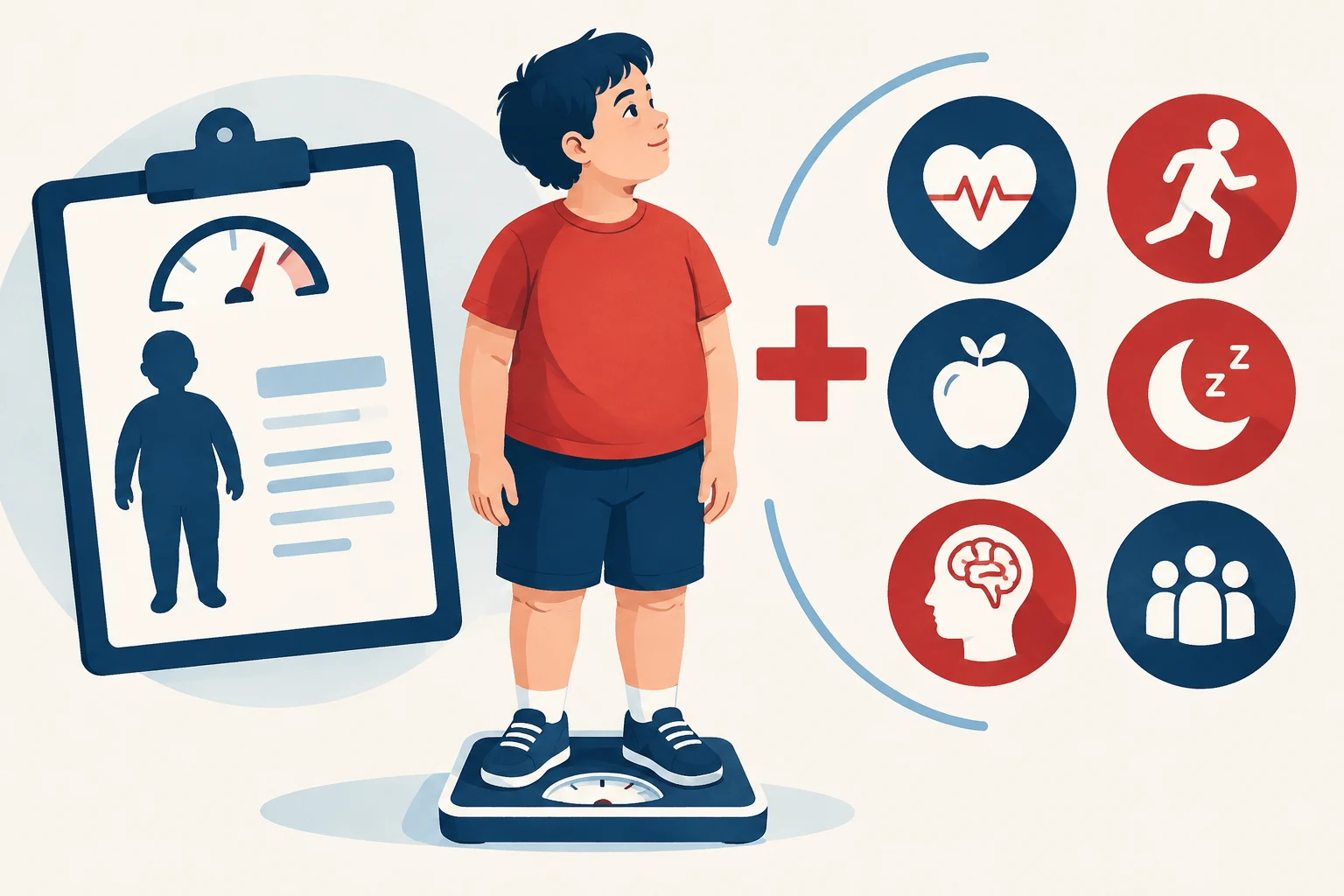
The revised definition, developed by an international panel convened by the medical journal The Lancet, requires evidence of excess body fat as well as health problems or limitations in daily activities. Examples cited in the report include high blood pressure, abnormal blood sugar, reduced mobility and poor sleep.
Under the new standard, an estimated 2.1% to 4.9% of children and adolescents met the criteria for clinical obesity, compared with 7% to 10.8% under BMI-based measures, according to the research described by Fox News. BMI compares a person’s weight with their height, but does not directly establish whether excess weight is affecting health.
Pediatrician Danielle Longmore of the Melbourne-based institute said the revised criteria more explicitly account for health impacts. She also noted that some children classified as obese by BMI may be active and functioning well in daily life.
The study analyzed nearly 800,000 people across their lifespans. It found that clinical obesity rates increased with age, reaching 52% among adults ages 65 to 74, according to the report.
The findings do not establish how the revised definition will change clinical practice or outcomes. Longmore said the underlying data predated widespread use of GLP-1 weight-loss medications, leaving their longer-term effect outside the study’s scope. She said further research is needed to understand the new diagnostic approach, while maintaining attention to early interventions and prevention for children at risk.