


Chicago Bears quarterback Caleb Williams was listed as questionable ahead of the team’s scheduled Sunday game against the Atlanta Falcons as he continued recovering from a hamstring injury. Williams had not confirmed whether he would play, and he declined to disclose the injury’s medical grade when speaking with reporters Thursday.
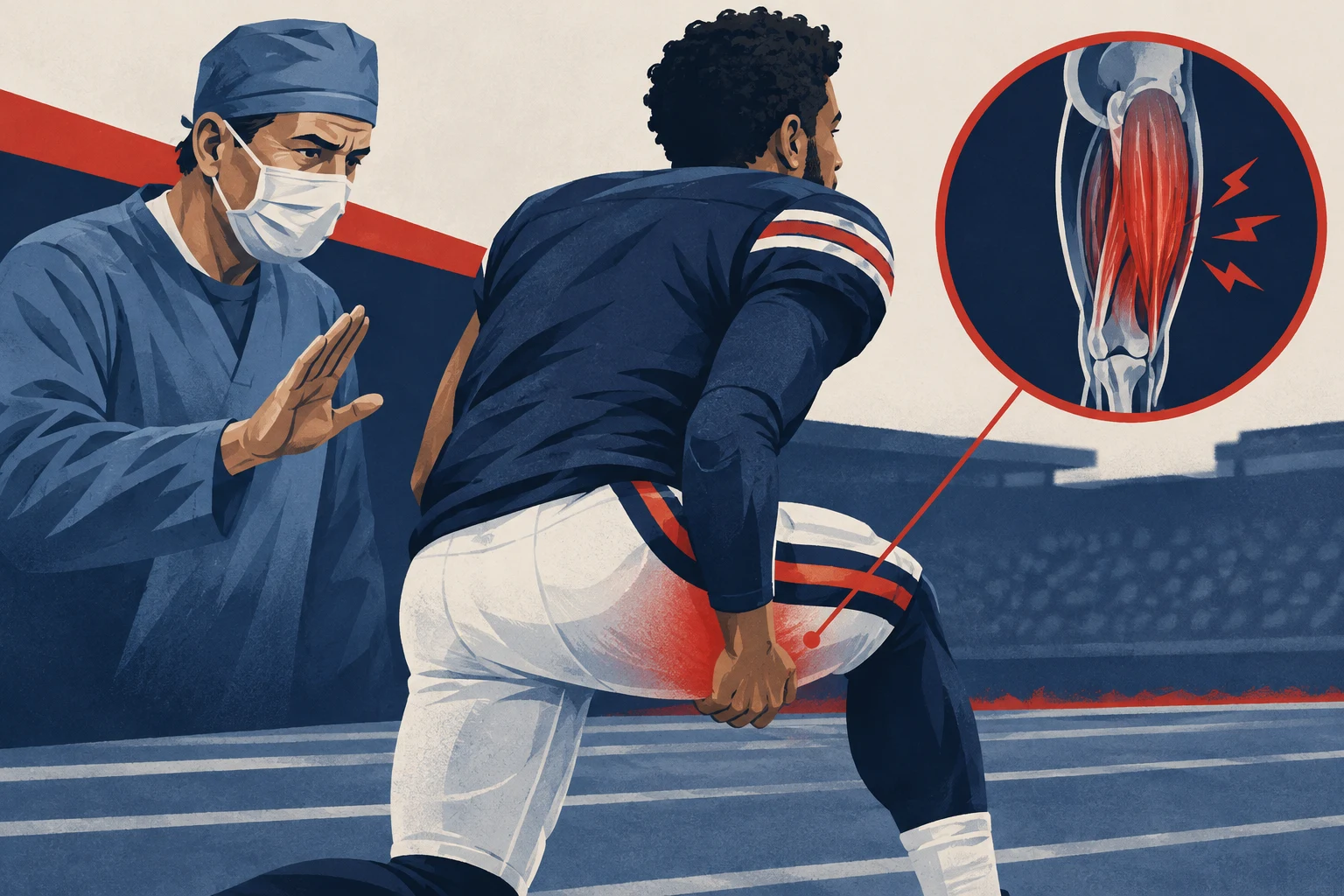
Williams described the injury as “pretty serious” and said he felt a pop when it happened. He recalled looking behind him because the sensation made him think someone had struck or grabbed him, though no one was there.
Dr. Drew Burdi, a foot-and-ankle surgeon and former college quarterback who said he experienced a hamstring injury while playing at Western Michigan, cautioned that Williams could aggravate the injury by returning too soon. Burdi told OutKick that his own injury had felt similar, describing a sudden sensation in the back of his leg while running.
Burdi said a hamstring injury involves a partial tear and that an insufficient recovery period may leave the area more vulnerable to another tear. He also said an athlete who is not moving normally could put added stress on other parts of the body. His comments were an assessment based on his experience and medical background; the supplied report did not include an examination of Williams or a separate medical evaluation of the quarterback.
Burdi advised that Williams consider sitting out another week if he still had doubts about being fully recovered. He said the decision could depend on the team’s circumstances, but argued that risking a more serious setback for the sake of one game could lead to a longer absence. Williams himself had said he was unsure about playing against Atlanta.
The Bears had gone 2-1 in games without Williams, according to the report. They defeated the Philadelphia Eagles with Case Keenum at quarterback and beat the New York Jets with Tyson Bagent. Chicago then lost to the Green Bay Packers; Bagent started that game and Keenum took over late in the loss.
The report said that if Chicago sat Williams for the Falcons game and lost, the team would still have a .500 record over the period in which he was out. It did not provide an independent update on Williams’ practice participation, treatment plan, or the team’s final decision about his availability.
The central issue was whether Williams felt ready to return, not a confirmed diagnosis or prognosis. Burdi’s warning was that playing before feeling fully recovered could risk another injury and potentially extend the quarterback’s time away. The source material did not establish that Williams would reinjure the hamstring if he played.