A report published by Fox News on Oct. 17, 2026, used recent beach photos of actor Leonardo DiCaprio to revisit the popular “dad bod” label and discuss potential health concerns associated with excess abdominal fat. The report did not present a medical assessment of DiCaprio, and trainer Marfred Suazo said he had not trained the actor.
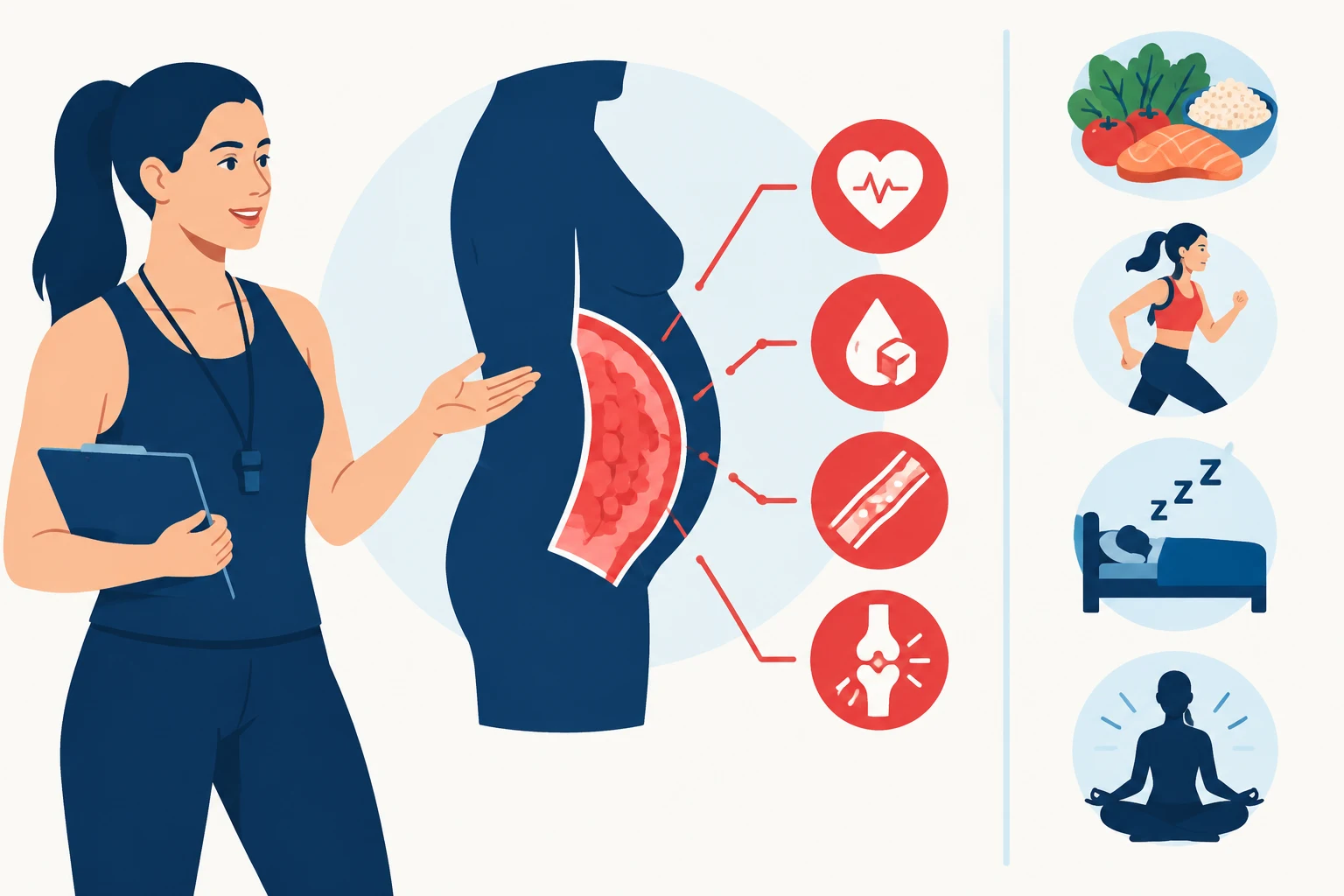
The article distinguished appearance from health: a person’s physique alone does not establish whether that person is healthy. However, it said excess abdominal fat, especially visceral fat located around internal organs, has been linked to elevated risks of heart disease, diabetes and other conditions. The report attributed that information to Cleveland Clinic.
Suazo, a New York City-based personal trainer known as Fonz the Trainer, described a “dad bod” as involving reduced muscular definition, a larger waist and less muscle mass. He suggested that changes in daily eating habits and reduced movement can contribute. In his account, weight gain can occur when someone consumes more food and drink than their activity uses.
Waist size can be one indicator of possible health risk. The report cited the National Institute of Diabetes and Digestive and Kidney Diseases, which says men whose waist circumference exceeds 40 inches face a greater risk of health problems, including type 2 diabetes and heart disease. It also cited Cleveland Clinic on the association between visceral fat and cardiovascular disease. These are population-level risk indicators, not a diagnosis of an individual’s health.
For people seeking to reduce abdominal fat, Suazo recommended beginning with nutrition. He said that means paying attention to daily calorie intake and maintaining an appropriate balance of protein, carbohydrates and fats. The article did not provide a specific calorie target or individualized diet plan.
Suazo also recommended full-body strength training two or three times per week. Examples he gave included squats, stiff-leg deadlifts, back rows, push-ups and chest presses. He also named pull-ups as an exercise that works several muscle groups. The report said that building strength in larger muscle groups can contribute to overall strength.
Cardiovascular activity was another part of the routine Suazo advocated. The article cited federal physical activity guidelines calling for adults to complete at least 150 minutes of moderate-intensity aerobic activity or 75 minutes of vigorous activity weekly, alongside muscle-strengthening exercise on at least two days per week.
Suazo cautioned that exercises focused on the abdominal muscles do not, by themselves, eliminate fat from the stomach. While people can train particular muscles with isolated movements, he said, revealing those muscles requires reducing body fat across the body. The report did not claim that fat loss can be directed to a single area.
Suazo said people who make dietary changes may notice results within several weeks, but he acknowledged that outcomes vary with factors such as diet, activity and starting body composition. He also said improved nutrition may support energy, confidence, sleep and recovery, potentially helping people maintain exercise habits. Those comments were attributed to the trainer; the article did not offer a clinical evaluation or promise that everyone would see a particular result within a set time.