A Fox News analysis published Oct. 20, 2026, examines whether a Democratic congressional majority would be able to advance the progressive policies promoted by some candidates in the midterm campaign. The piece argues that winning control of a chamber would not necessarily give the party enough votes to enact proposals such as Medicare for All or the Green New Deal.
The article cites Minnesota Lt. Gov. Peggy Flanagan, the Democratic Senate nominee, as a supporter of Medicare for All. It also describes progressive candidates’ support for proposals including abolishing Immigration and Customs Enforcement, an arms embargo for Israel and a $25-an-hour minimum wage. The source presents these as campaign positions; it does not report that any of the proposals have been enacted or that Democrats have secured control of Congress.
Flanagan is challenging Republican nominee Michelle Tafoya for the seat held by retiring Democratic Sen. Tina Smith. The article says the race favors Flanagan but is not certain. It also names several Democratic candidates the source describes as Democratic Socialists, including Donavan McKinney in Michigan, Chris Rabb in Pennsylvania, Melat Kiros in Colorado, and Claire Valdez and Darializa Avila Chevalier in New York.
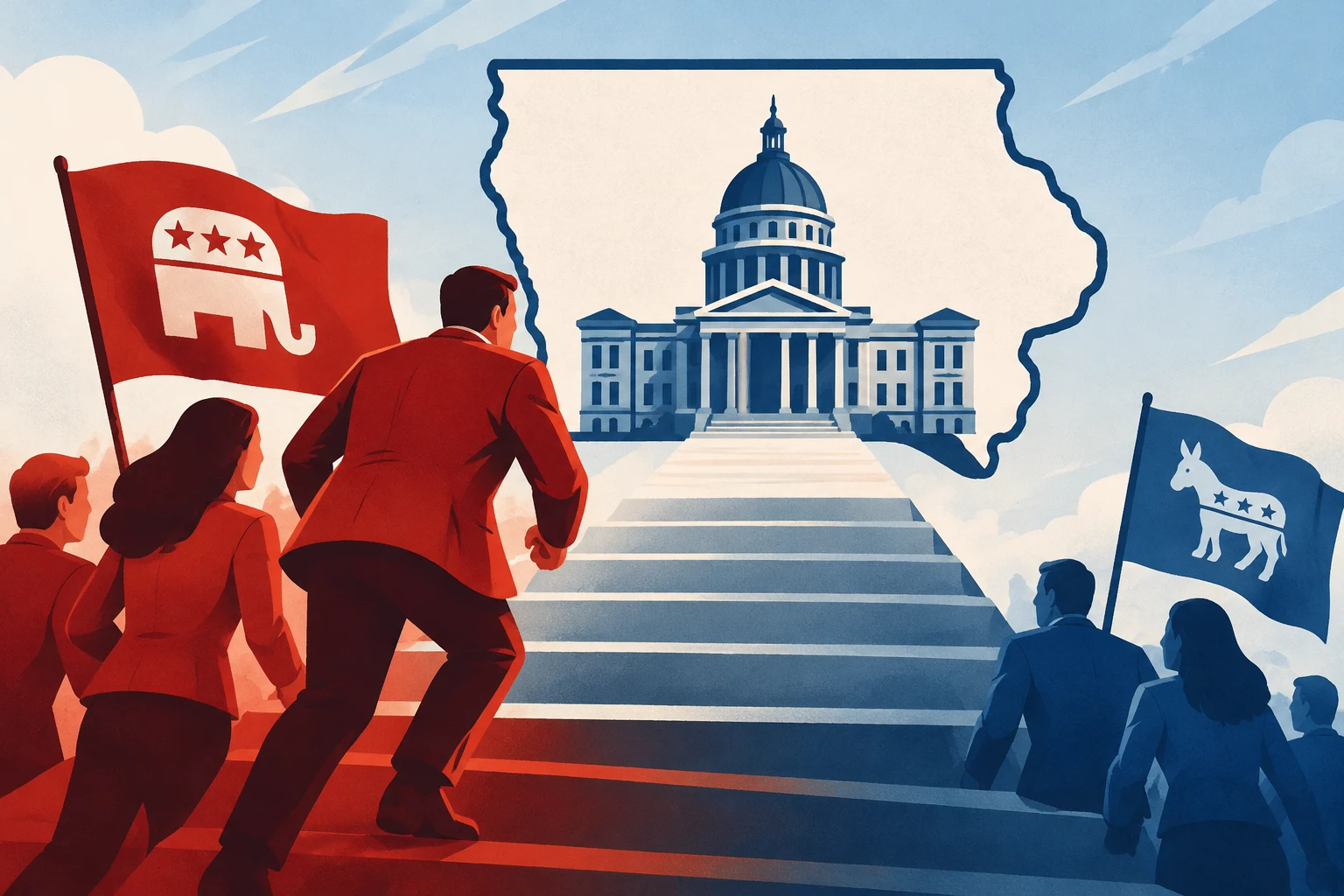
The analysis distinguishes candidates in reliably Democratic districts from Democrats who might help the party win a majority in competitive districts. It points to races involving Cait Conley in New York, Brian Poindexter in Ohio and Christina Bohannan in Iowa as examples where Democrats could defeat Republican incumbents or nominees. Its central argument is that members elected in battleground districts may be reluctant to support policies that could be unpopular with their constituents.
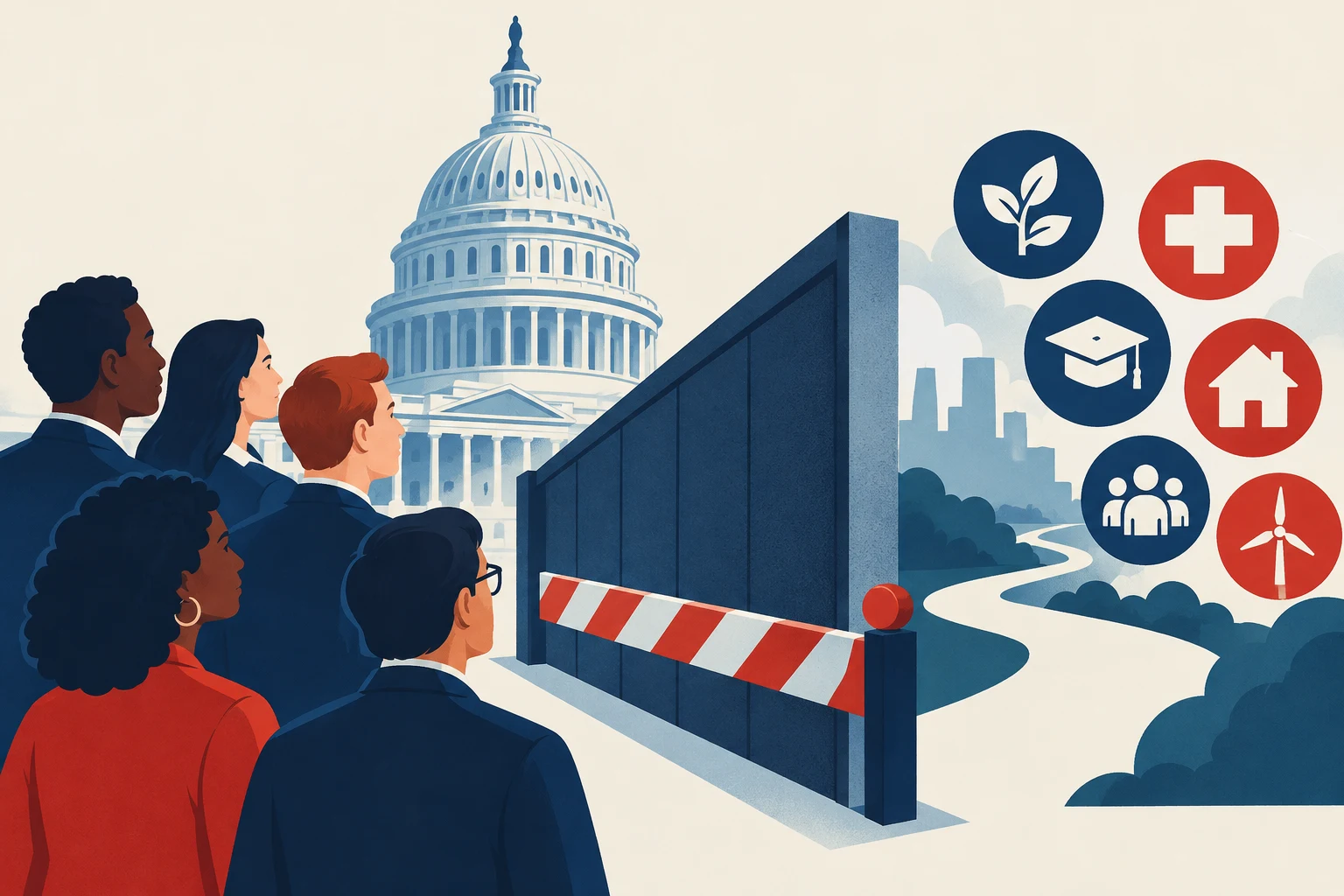
The piece also notes institutional hurdles. In the Senate, it says, most legislation would need 60 votes to overcome a filibuster, even if Democrats held a narrow majority. It further observes that President Donald Trump could veto legislation passed by a Democratic Congress. These constraints, the analysis argues, make the enactment of ambitious proposals uncertain.
To illustrate the gap between campaign commitments and legislative outcomes, the article reviews past elections. It says Republicans’ 1994 “Contract With America” produced only some of its promised measures, with other proposals blocked by President Bill Clinton. Democrats won the House in 2006 after campaigning on reducing the U.S. role in Iraq, but the article says an immediate withdrawal did not follow. Republicans’ 2010 House victory included promises to reduce spending and repeal and replace the Affordable Care Act; the source says those goals were not achieved.
The article also discusses House Democratic Leader Hakeem Jeffries and a potential speaker’s race if Democrats win the chamber. It reports that Jeffries is in discussions with candidates backed by the Democratic Socialists of America about legislative commitments. The source characterizes it as unlikely that Democrats would refuse to support Jeffries, while warning that tensions between the party’s moderate and progressive members could complicate governing.
One hypothetical in the analysis concerns a Medicare-for-All bill. Before a bill could reach debate, the House would need to adopt a procedural rule. The article asks whether Rep. Marie Gluesenkamp Perez, a Democrat representing Washington, would support such a rule if she wins reelection, given that she represents a battleground district. It notes that she previously supported some Republican procedural measures, prompting criticism within her party, and argues that backing a rule for a divisive progressive proposal could carry political risks.
Jeffries has said he did not co-sponsor Medicare-for-All legislation introduced in recent years. In remarks quoted by the source, he said the health care system needs repair and that policymakers should build something better afterward. The analysis presents that position as an example of a party leader balancing progressive demands with the concerns of more moderate members.
As a possible shared focus, the article points to investigations of the Trump administration. It says Jeffries has pledged oversight and has criticized administration officials, including Defense Secretary Pete Hegseth, Attorney General Todd Blanche and Vice President JD Vance. The source argues that investigations could appeal to both progressive voters and some moderates, while emphasizing that such activity would not amount to passing the major policy proposals cited in the article.
The piece’s broader conclusion is that a Democratic majority, if achieved, would face practical and political limits on its legislative agenda. That is the author’s analysis of potential election and governing scenarios, not a report of a result: the article does not establish who will win the cited races or whether Democrats will control either chamber.