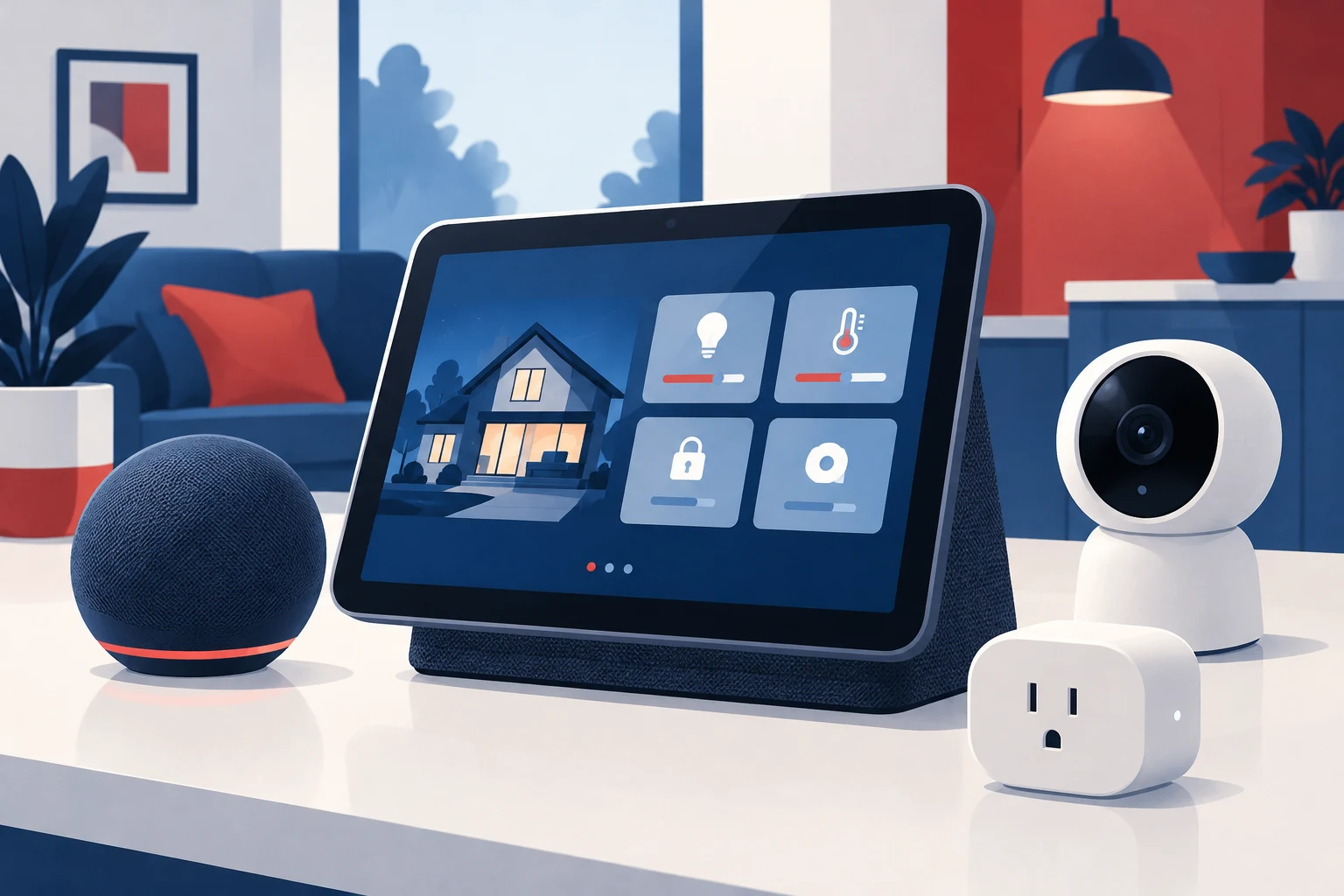
At its Oct. 13 “Welcome Home” event, Apple introduced HomeView, a $299, 7-inch smart display designed to serve as a hub for household information and connected devices. The company also announced updated HomePod mini and Apple TV 4K products, plus smart-home accessories developed with LG Electronics and Schneider Electric.
HomeView can identify up to six household members and show a personalized screen with items such as calendars and reminders. Apple says setup for multiple users requires a compatible iPhone or iPad running current software. For sensitive information, the recognized person’s paired device must also be nearby and recently unlocked.
The display supports FaceTime calls with Center Stage, can show recipes and use Find My to help locate an iPhone. It can also control compatible smart-home equipment and show as many as nine live security-camera feeds at once. HomeView is available in a countertop model and a wall-mounted version; the latter requires a separate mounting accessory starting at $59.95. Preorders opened Oct. 13, with products scheduled to become available Nov. 13.
Apple’s planned Siri AI features are intended to handle more natural exchanges, understand what is shown on a screen and respond to broader questions using web information. Some personalized requests require a compatible Apple Intelligence-enabled iPhone or iPad with current software and Siri AI enabled. Apple says general Siri AI conversations on HomeView do not require that device. Siri AI is launching in beta, and some features relying on server-based models will have daily limits. Apple said it plans to offer expanded access for a fee later.
The second-generation HomePod mini, priced at $149, has an S10 chip and a lighting feature called Sound Glow that changes with the music. Apple says the speaker will eventually support Siri AI and recognize household members by voice, but the AI features will not be available when the product first ships. They are planned for a future software update. Preorders are open, with sales beginning Oct. 30.
Apple’s new Apple TV 4K costs $299 and is set to arrive Nov. 13. It includes three microphones for receiving Siri requests from across a room and runs on an A19 chip. Apple says the chip provides up to 50% faster CPU performance than the prior generation. The system supports a four-speaker surround arrangement using compatible HomePod speakers. Its updated remote can emit a locating sound and use Precision Finding with certain iPhones. Siri AI beta is also planned for second-generation Apple TV 4K models and later, subject to compatible Apple devices and software.
The announced Apple Home Collection includes cameras, locks and thermostats that connect through Apple’s Home app. The LG Smart Deadbolt Lock, starting at $349.95, can use Ultra Wideband to detect a compatible iPhone or Apple Watch carrying a home key and unlock automatically; a PIN and backup key are also options. An LG video doorbell with separate visitor and package cameras starts at $249.95. An indoor camera starts at $199.95 and can tilt down to stop monitoring when a household member returns. Thermostats from LG and Schneider Electric start at $199.95. Apple said the collection is expected to begin arriving in December, with some products following in early 2027.
Apple described several privacy protections for the new system. The company says HomeView uses Secure Exclaves to isolate camera and microphone data, and that Siri requests can be handled on-device or through Private Cloud Compute. Apple says data processed through that service is not stored or accessible to the company. Compatible cameras can use end-to-end encrypted HomeKit Secure Video storage. Some AI video summaries and recording features require an eligible iCloud+ subscription.
The announcements could offer added convenience, particularly for households already using Apple products, but the costs may accumulate: HomeView and the new Apple TV each cost $299, while accessories add hundreds more. Compatibility requirements also mean some capabilities depend on other Apple devices, and certain functions will not be available immediately. Consumers considering an upgrade may want to compare those requirements and costs with the devices and services they already use.