

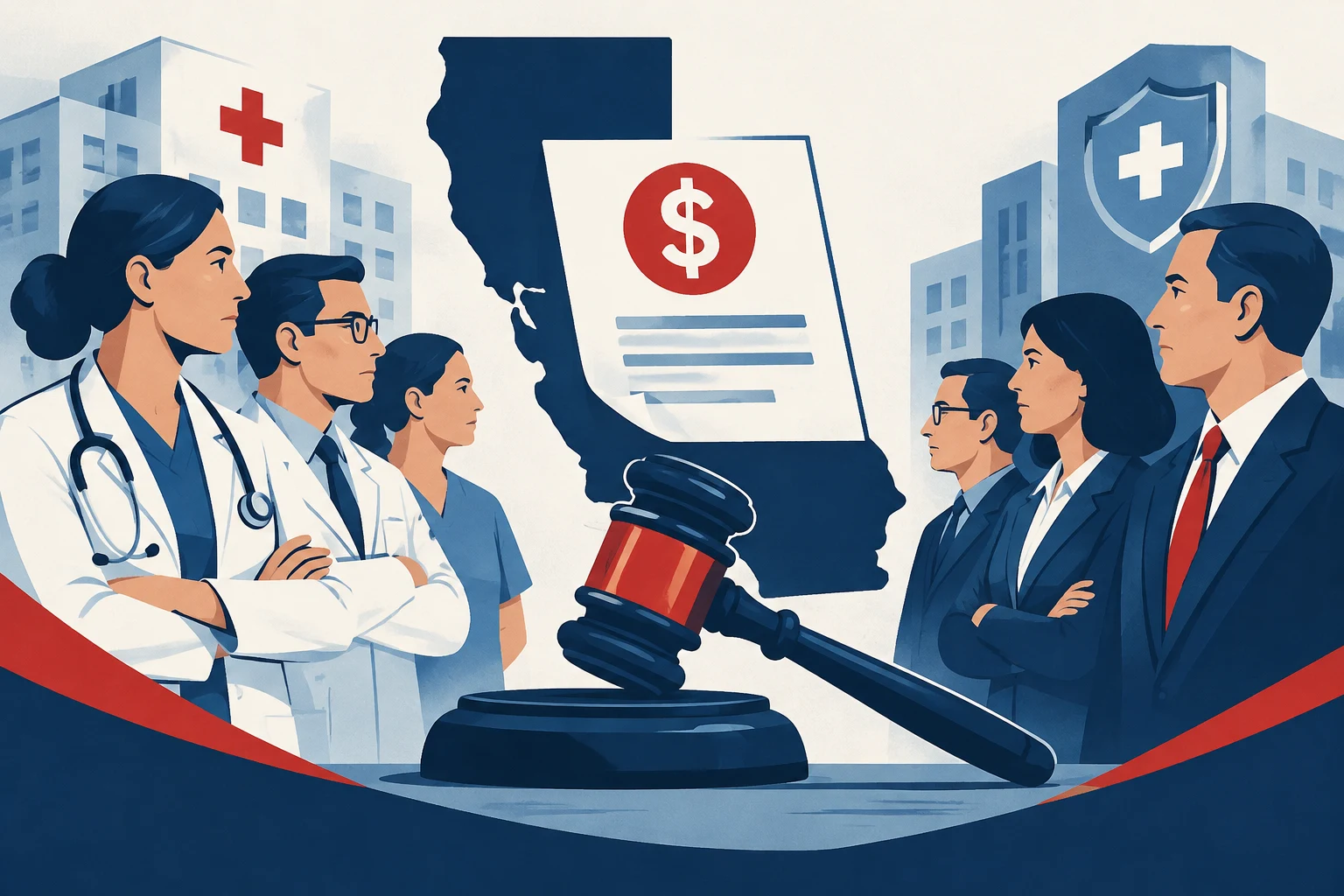
California is proposing a revised tax on health plans after federal changes threaten the state’s existing method of raising money for Medi-Cal. The redesign could shift more of the tax burden to private insurance plans beginning in 2027, if federal officials approve it, according to the source report.
The California Medical Association and California Association of Health Plans have sued to block the measure. Their challenge centers on whether the tax complies with Proposition 35, a voter-approved measure limiting taxes on commercial health-plan enrollment and restricting use of the revenue. The groups’ lawsuit does not challenge the tax on the grounds that it supports coverage for immigrants without legal status.
Insurers say the proposed levy could be reflected in customer premiums. The report cites an estimate of about $100 more per person annually, or roughly $400 for a family of four. Those figures are estimates, not confirmed premium increases.
Newsom spokeswoman Tara Gallegos said the state disputes the plaintiffs’ legal claims and expects the courts to agree. A state finance official said California submitted two possible approaches to federal authorities: one resembling the current tax structure and another designed to meet the new federal requirements by placing more of the burden on private plans. He said Proposition 35 could sunset under existing law if the federal government rejects the first approach.
The report also cites an Associated Press estimate that California spent $12.4 billion on health care for immigrants without legal status in 2025. The proposed tax change is part of a broader effort to maintain Medi-Cal financing amid federal restrictions; the lawsuit’s outcome and the federal decision on the state’s proposal remain unresolved.