

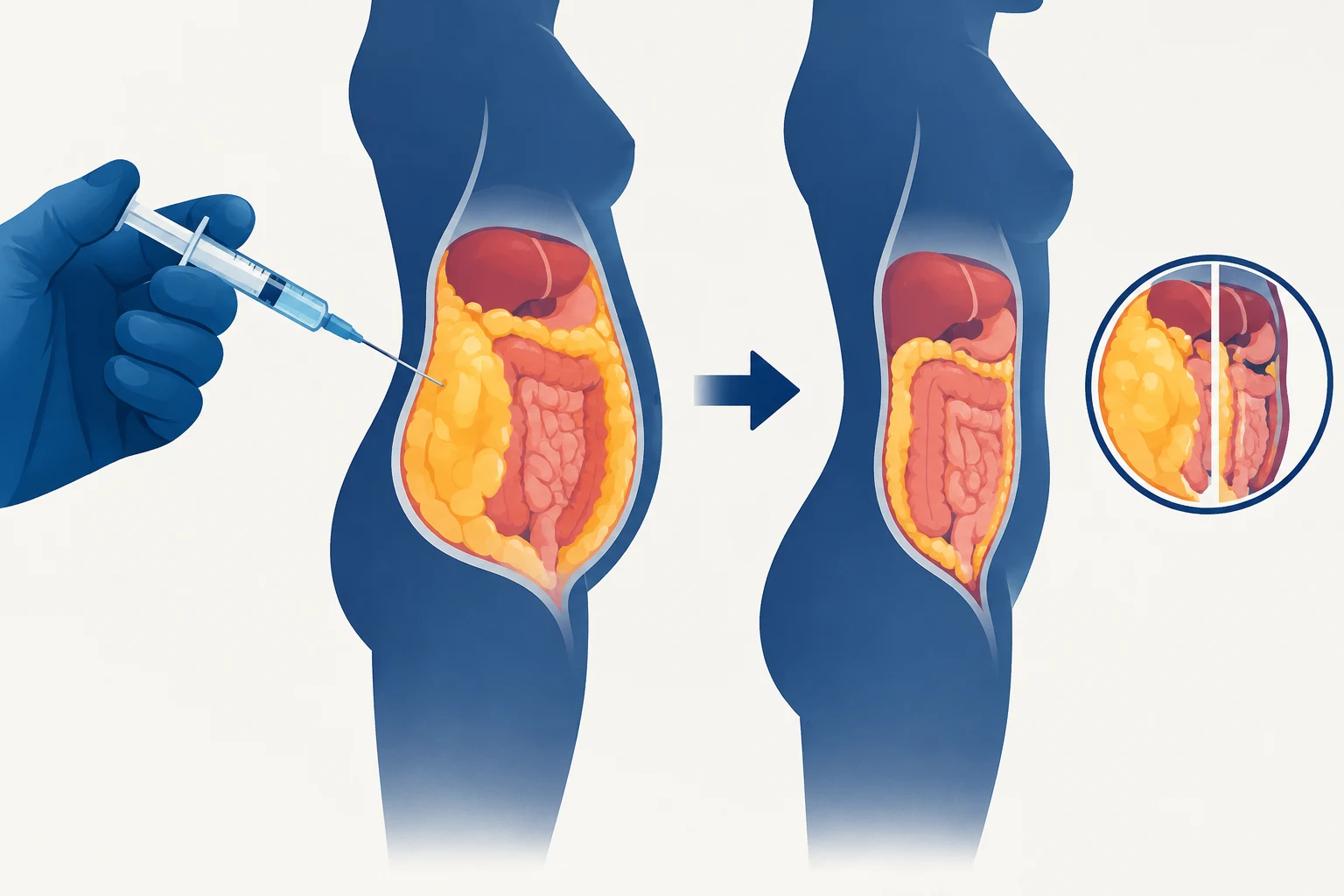
An experimental injection called CBL-514 was associated with a reduction in visceral fat in MRI results from two phase 2 trials, according to the supplied report. Four weeks after the final treatment, participants who received the drug had an average 12.01% decrease in visceral fat volume. The placebo group recorded an average 5.68% increase.
Visceral fat is stored deep in the abdomen around internal organs. The report describes its links to metabolism and insulin resistance, and notes that it can affect the development of type 2 diabetes. It also cites separate American Heart Association research published in March that found visceral fat was more strongly associated with heart-failure risk than body mass index. That finding is separate from the CBL-514 trials.
The phase 2 trial participants received injections in the lower abdomen every three weeks for up to 12 weeks, at doses reaching 600 milligrams. The number of injections depended on the thickness of each participant’s abdominal fat, the report says. CBL-514 is designed to trigger cell death in fat cells while sparing nearby cells.
The trials were conducted by Dr. W. Timothy Garvey of the University of Alabama at Birmingham and Yu-Fang Ling of Caliway Biopharmaceuticals in Taiwan. Earlier phase 2 trials had examined the drug’s effect on subcutaneous fat, which lies beneath the skin.
The findings are early and do not, by themselves, show that CBL-514 prevents diabetes, heart failure or other illnesses. The supplied material does not provide details on the number of participants, adverse events, or longer-term outcomes. Those gaps limit what can be concluded about the injection’s safety and medical benefit. The report also describes potential cosmetic effects, but the trial results cited here concern measured fat-volume changes rather than proof of lasting health improvement.