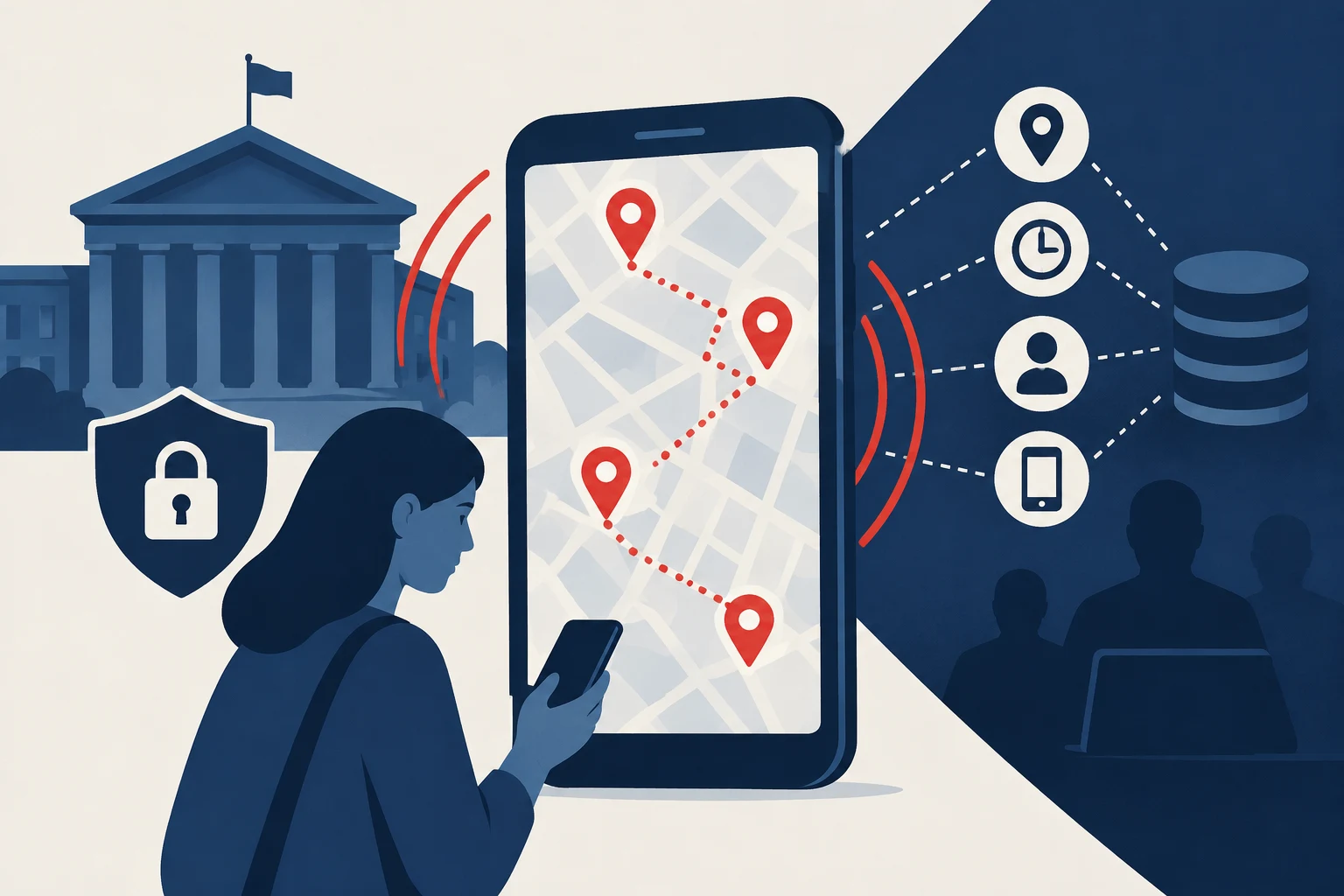
Smartphone location information can reveal visits to places such as medical facilities and houses of worship, particularly when combined with other identifying data, according to the source. Apps may share information with outside advertising or analytics providers, depending on their permissions and privacy practices.
The Federal Trade Commission announced a May 2026 settlement involving data broker Kochava and its subsidiary, barring them from selling, sharing or disclosing sensitive location data without affirmative express consent, subject to the order’s terms. The FTC had alleged that Kochava sold data from hundreds of millions of mobile devices that could track people to sensitive locations. The source says Kochava did not admit wrongdoing.
The FTC also took action in December 2024 against Gravy Analytics and Mobilewalla over allegations related to sensitive location data. Separately, in January 2025, a hacker claimed to have posted 17 terabytes of data stolen from Gravy Analytics. Security researchers who examined a sample reportedly found more than 30 million location points. The source does not establish the full scope or circumstances of the alleged breach.
Consumers can review which apps have location access, limit background access where it is not needed, and check advertising identifier or tracking settings on their devices. These measures may reduce some future collection or use, but do not prevent all tracking or remove information already gathered. The source recommends reviewing permissions rather than disabling all location services, which can affect useful phone features.