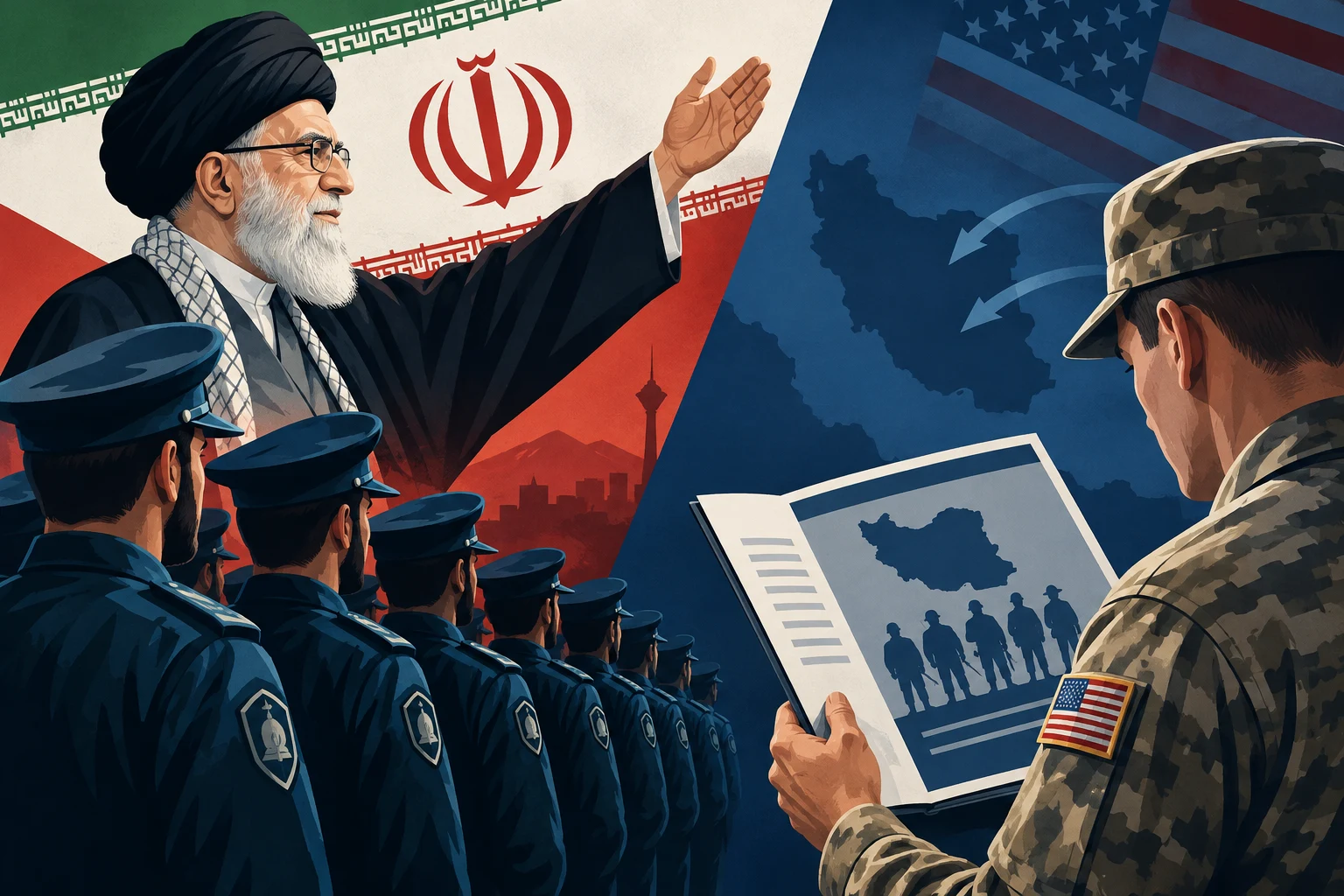
Iranian Supreme Leader Mojtaba Khamenei praised the country’s police force in an Oct. 8 statement, asserting that U.S. and Israeli attacks had not shaken its personnel or their role in maintaining domestic security. His remarks referred to FARAJA, Iran’s Law Enforcement Command, which is responsible for public order and internal security.
Khamenei called for FARAJA to receive more personnel, equipment and technology, including artificial intelligence tools for data analysis. The source reports that the United States sanctioned FARAJA commander Brig. Gen. Ahmadreza Radan in 2010 over his role in abuses following Iran’s disputed 2009 presidential election. Those allegations are attributed to the U.S. Treasury Department.
The comments came amid a separate U.S. Army effort to help troops identify Iran’s conventional military, known as the Artesh. The Army’s Training and Transformation Command published a recognition guide on Sept. 24; Defense News highlighted it on Oct. 9. The guide depicts an Iranian special forces soldier and lists weapons troops might encounter, including AKM and G3 rifles, machine guns and RPG-7 launchers.
The Artesh is distinct from Iran’s Islamic Revolutionary Guard Corps and its Basij militia. A June estimate by the Jerusalem Institute for Strategy and Security put the Artesh Ground Forces at approximately 350,000 personnel, including 220,000 conscripts. The institute said the ground forces remained structurally intact because there had been no ground invasion, while other conventional military branches suffered severe losses during the opening phase of the U.S.-Israeli campaign.
The source says the extent of Iran’s military recovery remains unclear. It also reports that President Donald Trump said Oct. 8 the United States would not resume strikes before the Nov. 3 midterm elections, citing productive discussions. These statements and assessments are attributed to the named speakers and organizations; the material does not independently establish their claims.