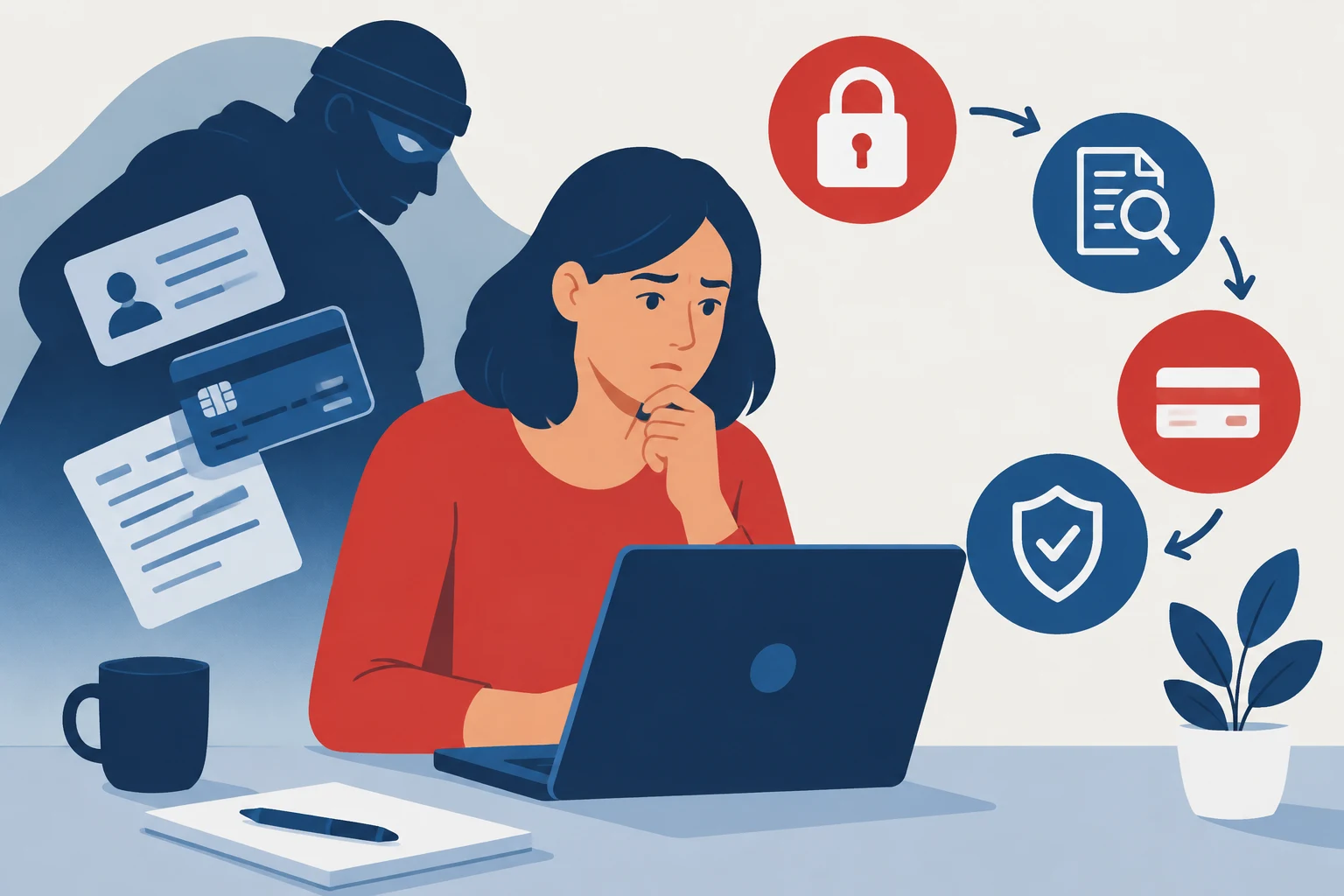
A CyberGuy identity-theft guide published Oct. 15, 2026, lays out steps for limiting damage after discovering that personal information has been misused. The article says the first priority is to stop ongoing fraud and secure accounts, while recognizing that a full recovery may take weeks or months.
The guide recommends contacting a financial institution immediately if money has been taken or an unauthorized transaction is found. It notes that federal protections and reporting deadlines differ depending on the account and transaction type, so consumers should not assume one timeline applies to every case.
It also advises securing accounts that could expose other personal or financial information. Email is a particular concern in the article’s examples: access to an email account could let a thief request password resets for banking, shopping or other services. The guide says to focus on compromised accounts and active fraud rather than treating its suggested time frames as strict deadlines.
To make it harder for someone to open new accounts in a victim’s name, the article recommends freezing credit. It says a freeze can be lifted temporarily when a person needs to apply for a loan or credit card. The guide also points to fraud alerts and reporting identity theft through IdentityTheft.gov as steps people can take without paying for a protection service.
The article says an identity theft report from the Federal Trade Commission may help people exercise certain rights under federal law, including seeking a block of fraudulent information from credit bureaus. It adds that an FTC report generally is not a prerequisite to telling a bank about unauthorized transactions.
Keeping a record of the incident is another part of the recovery process. The guide recommends documenting communications and organizing paperwork, then continuing to dispute fraudulent charges and accounts, follow up with creditors and seek corrections to credit reports. It says victims should continue monitoring accounts because further attempts at fraud may occur after the initial incident is addressed.
The article also discusses helping a relative or another person through recovery. The same basic steps apply, it says, but a helper may need permission or legal authority to speak with financial institutions on that person’s behalf. It recommends assisting with calls, documents and deadlines, especially when the affected person is uncomfortable handling financial matters online.
The guide presents identity-protection services as a possible source of monitoring and recovery assistance, but warns they cannot prevent every kind of fraud or guarantee stolen funds will be returned. It stresses that initial actions such as freezing credit and reporting the theft are available without purchasing a service.
The article’s overall advice is to prioritize immediate financial threats, protect exposed accounts and maintain records while working through disputes. It cautions that resolving more complicated cases can take months, and says that completing every recovery task in the first day is not realistic.